
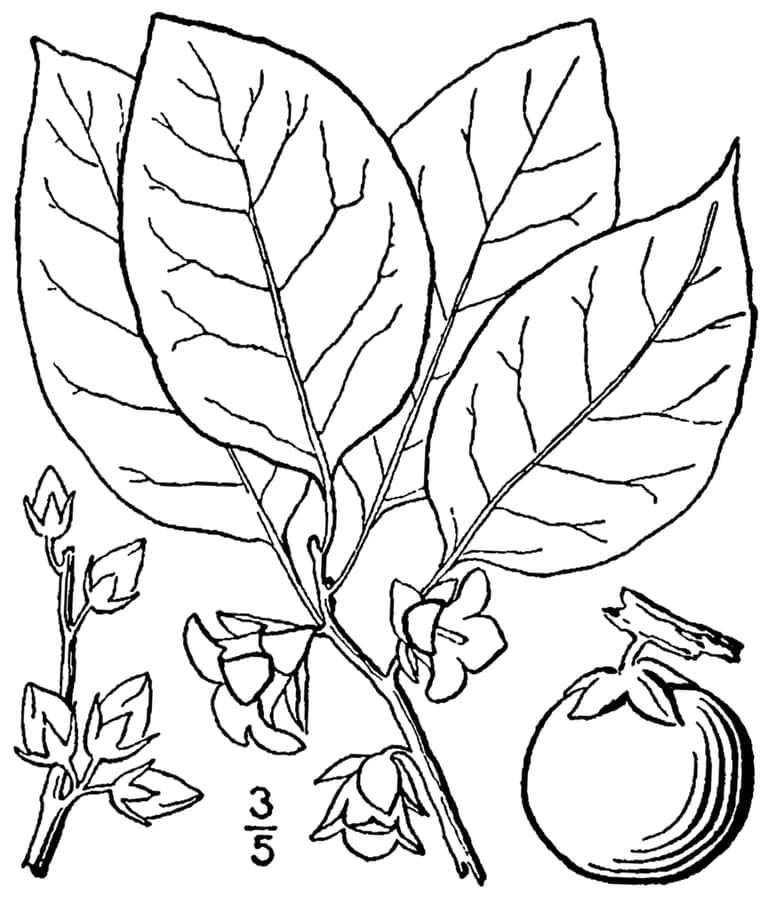
Britton, N.L., and A. Brown. 1913. An illustrated flora of the northern United States, Canada and the British Possessions. 3 vols. Charles Scribner's Sons, New York. Vol. 2: 720. Courtesy of Kentucky Native Plant Society. Scanned by Omnitek Inc. / Public domain, via Wikimedia Commons
American Persimmon: complete guide
Diospyros virginiana
¿Quieres ver American Persimmon: complete guide en tu jardín?
1 minuto, sin tarjeta de crédito
Overview
The American Persimmon (Diospyros virginiana) is a frost-hardy fruit tree native to eastern North America. This tree is becoming increasingly popular outside its native range, particularly for its delicious, sweet fruits and spectacular autumn foliage.
At full maturity, the tree reaches heights of 7 to 15 meters with a round, open crown. The tree grows slowly but eventually achieves a respectable size. The fruits fully ripen in October to November and are then very sweet and flavorful.
Appearance & Bloom
The American Persimmon is an elegant tree with elongated, glossy green leaves that turn spectacular reddish-purple in fall. Leaves are approximately 5 to 10 centimeters long.
The flowers are small, inconspicuous, and greenish-yellow. They appear in May-June. Male and female trees are usually separate, although monoecious specimens exist.
The fruits are round, approximately 3 to 5 centimeters in diameter, and golden-orange when fully ripe. Each fruit contains several large seeds. The fruit flavor is sweet but can contain tannins if not fully ripe.
Ideal Location
The American Persimmon thrives best in full-sun locations with at least 6 hours of direct sunlight daily. The tree can also grow in light shade but produces fewer fruits.
The tree is frost-hardy to at least -20 degrees Celsius and tolerates many climates. It is less suitable for very hot, dry regions where growth may stagnate.
A sheltered location is desirable but not essential. The tree is reasonably wind-resistant.
Soil
The American Persimmon is not particular about soil type but thrives best in well-draining soil. The tree tolerates a broad pH range of 4.7 to 7.5, from acidic to neutral.
Heavy clay soils should be amended with sand and organic matter. In pots, standard potting soil can be used.
The tree tolerates dry soil well once established but grows faster with regular nutrient supply.
Watering
The American Persimmon is fairly drought-tolerant once established. Young trees, however, need regular water during their first years.
Water deeply but infrequently. Ensure the soil dries between waterings. Excessive water can cause root rot.
During dry periods, especially for container plants, regular watering is necessary. Once established, the tree can survive long periods without water.
Diseño gratis
¿Quieres ver American Persimmon: complete guide en tu jardín? Crea un diseño gratis ahora.
Pruning
The American Persimmon naturally grows into a pleasant form. Regular pruning is not essential but can be useful for removing dead wood and improving shape.
Pruning is best done in late winter before the growing season. Remove dead, diseased, or crossing branches.
Young trees can be trained to a single trunk or multiple stems. This depends on your preference and intended use.
Maintenance Calendar
Spring (March-May): Begin regular watering as weather warms. Feed every two weeks. Perform pruning on young trees.
Summer (June-August): Ensure consistent moisture, especially for young trees. Provide potassium-rich feeding to prevent nutrient deficiency.
Autumn (September-October): This is the harvest period. Collect falling fruits. Feeding can be reduced.
Winter (November-February): The tree is dormant. Minimal care needed. In very cold regions, protection can be useful.
Winter Hardiness
The American Persimmon is very winter-hardy and tolerates frost from -20 to -25 degrees Celsius. This makes it suitable for most temperate climates.
Leaf and branch damage can occur with extreme frost, but the tree recovers well. Young trees can benefit from some protection their first winter.
The tree expends energy on regrowth after frost damage, which can reduce fruit production that year.
Companion Plants
The American Persimmon is excellent for wildlife food and supports many animals. Combinations can include:
Other native fruit trees, such as serviceberry or chokecherry, create fruit bushes.
Shade-loving plants beneath the tree can be locally adapted plants that enjoy humus-rich soil.
Birds and wildlife greatly appreciate the fruits, so place the tree near natural areas if desired.
Closing Thoughts
The American Persimmon is a valuable addition to any frost-hardy garden, especially for those who value wildlife food and fruit production. With minimal maintenance and many benefits, this is a tree with much potential. Enjoy its autumn beauty and delicious fruits.
Looking for plant material? Various tree nurseries carry this native species. Visit gardenworld.app/en or gardenworld.app/nl for more information.
¿Quieres ver American Persimmon: complete guide en tu jardín? Crea un diseño gratis ahora.
Sube una foto, elige un estilo y obtén un diseño fotorrealista con lista de plantas en menos de un minuto.
Más de 10.000 jardines diseñados
Sin tarjeta de crédito


Plantas similares
Diospyros malabarica: complete guide
Diospyros malabarica
Malabar ebony: a tropical tree from Asia with narrow leaves and edible fruits. For warmer climates. Decorative tree form and bird-attracting qualities.
Mabolo: complete guide
Diospyros discolor
Diospyros discolor, or Mabolo, is an exotic tropical fruit tree with distinctive velvety fruits. Learn cultivation, care, and harvesting techniques for this unique Southeast Asian treasure.
Diospyros mespiliformis: complete guide
Diospyros mespiliformis
African ebony brings dramatic structure to tropical landscapes. Discover distinctive foliage, attractive fruit production, and how to cultivate this impressive specimen.