
H. Zell / CC BY-SA 3.0, via Wikimedia Commons
Dioscorea esculenta: complete guide
Dioscorea esculenta
¿Quieres ver Dioscorea esculenta: complete guide en tu jardín?
1 minuto, sin tarjeta de crédito
Overview
Dioscorea esculenta, known as Chinese yam or lesser yam, is a compact tropical climbing plant from Tropical Asia. This plant produces smaller, but highly flavorful tubers used in many Asian dishes. It is an ideal choice for gardeners with limited space who want to grow yams.
The name "Chinese yam" refers to the origin region and preference in Chinese cuisine. "Lesser yam" references the relatively smaller size of the tubers compared to greater yams.
Appearance and Growth
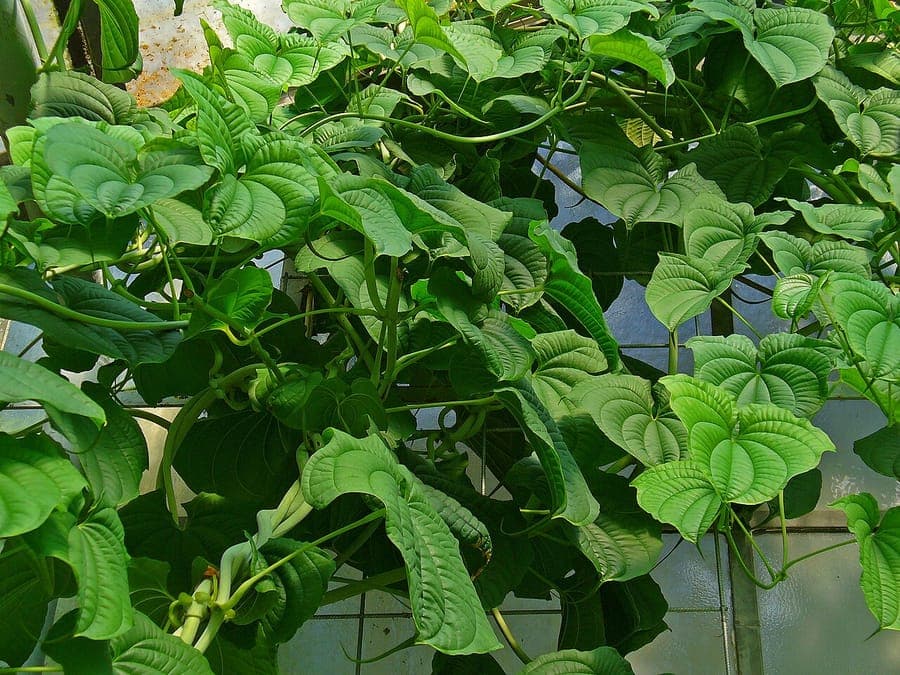
Dioscorea esculenta is a more compact climbing plant with elegant, heart-shaped leaves that can be 5-15 cm wide. The plant grows more slowly and more controlled than other Dioscorea species.
The stems are slender and climb well along trellises. The underground tubers are usually 15-30 cm long and can reach weights of 500 grams to 2 kg.
The plant thrives in warm conditions and can reach 1-2 meters tall.
Ideal Location
Chinese yam grows best in full sun to partial shade. Provide a lightweight trellis or support - the plant does not grow too heavily. Protect from strong winds.
The plant loves warm weather. Temperatures below 15°C seriously inhibit growth.
Soil
Well-draining, fertile soil with pH 5.5-7.0 is ideal. The plant grows well in sandy to light clay soils.
Add organic matter when planting - compost, leaf mould, or composted plant material. Good drainage is essential.
Watering
Keep soil consistently moist, especially during growth and tuber formation. Daily watering may be necessary in warm, dry periods.
Reduce watering toward the end of the growing season (October-November) to encourage tuber bulking. Mulch aids moisture retention.
Pruning and Support
Provide a lightweight trellis or support. Train the plant gently along its support.
Minimal pruning is required. Remove only dead or diseased foliage. The plant usually develops itself well.
Diseño gratis
¿Quieres ver Dioscorea esculenta: complete guide en tu jardín? Crea un diseño gratis ahora.
Maintenance Calendar
June to August: Growth period - regular watering, monthly feeding with balanced fertilizer. September to October: Tuber development - maintain stable moisture, reduce feeding. November to May: Dormant season - minimal watering, store tubers in ground or carefully preserve.
Harvest
Tubers can typically be harvested 6-9 months after planting. Carefully dig around the plant searching for tubers. This species usually produces 4-8 tubers per plant.
Dry harvested tubers well for storage. They can be stored for months in cool, dry conditions.
Culinary Value
Chinese yam tubers have a soft, slightly sweet flavor. They are less starchy than greater yams and can be boiled, roasted, or stewed. In Asian cuisine, it is often used in soups and sweet dishes.
The tubers contain valuable vitamins and minerals.
Winter Hardiness
Dioscorea esculenta is not winter hardy - it cannot tolerate frost. Grow as an annual crop in temperate climates or carefully preserve tubers for next year.
In tropical regions, it grows as a perennial crop.
Companion Plants
Grows well with other tropical climbing plants. Can be successfully grown with beans, corn, and other vegetables in polyculture systems.
Closing Thoughts
Dioscorea esculenta is a fantastic choice for gardeners wanting to grow yams with limited space. The smaller size and elegant plant make it ideal for small to medium gardens. With regular watering and good support, your plant will produce delicious harvests.
Available at Intratuin and Gamma in the Netherlands. More information at gardenworld.app.
Available at OBI and Hornbach in Germany. More information at gardenworld.app.
¿Quieres ver Dioscorea esculenta: complete guide en tu jardín? Crea un diseño gratis ahora.
Sube una foto, elige un estilo y obtén un diseño fotorrealista con lista de plantas en menos de un minuto.
Más de 10.000 jardines diseñados
Sin tarjeta de crédito


Plantas similares
Cush-cush yam: complete guide
Dioscorea trifida
Everything about Dioscorea trifida, the tropical cush-cush climbing yam with ornamental lobed leaves and edible tubers from South America.
Dioscorea villosa: complete guide
Dioscorea villosa
Discover Dioscorea villosa (Wild yam), an elegant climbing vine from North America. Growing tips, care, and ornamental applications.
Dioscorea hispida: complete guide
Dioscorea hispida Dennst.
Explore the Asiatic bitter yam, an exotic climbing tuber with dramatic foliage. Perfect for warm-season growing and tropical front yard effects.