
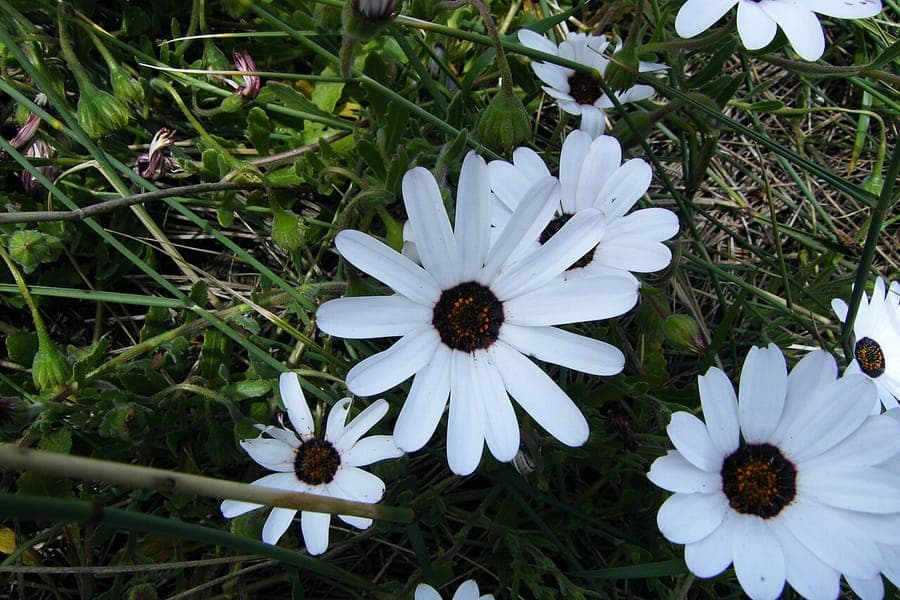
Andrew massyn / Public domain, via Wikimedia Commons
Dimorphotheca pluvialis: complete guide
Dimorphotheca pluvialis
¿Quieres ver Dimorphotheca pluvialis: complete guide en tu jardín?
1 minuto, sin tarjeta de crédito
Overview
Dimorphotheca pluvialis, also known as Cape rain daisy, weather prophet, or Cape marigold, is a captivating annual from South Africa. This plant is renowned for its beautiful white flowers with dark markings that, according to folklore, close their blooms when rain is approaching. The plant is popular in gardens across Europe due to its carefree growth and extended flowering period.
Appearance and bloom
The Cape rain daisy forms compact, bushy plants measuring 25 to 45 centimeters in height. The flowers are spectacular white with a dark purplish-brown center, with the inner sides of the petals sometimes tinged soft pink or purple. The blooms measure approximately 5 centimeters in diameter and are held on long stems above the foliage. The leaves are green, linear, and finely branched. The plant blooms continuously from May through October.
Ideal location
The Cape rain daisy is a true sun lover and flourishes best in locations receiving at least 6 to 8 hours of full sun daily. The plant tolerates partial shade but will produce fewer blooms. Ensure adequate air circulation for disease prevention. This annual is also very wind-resistant and can therefore be planted in exposed garden areas.
Soil
The Cape rain daisy is undemanding regarding soil. A well-draining, slightly sandy soil works excellently. The plant also feels at home in poor soils and will grow on underplanted ground. The essential factor is good drainage to prevent root rot. Heavy, compacted soils can be improved by working in sand or coarse sand.
Diseño gratis
¿Quieres ver Dimorphotheca pluvialis: complete guide en tu jardín? Crea un diseño gratis ahora.
Watering
Provide regular but moderate watering, especially during the growing season. As an annual, the Cape rain daisy does not thrive in waterlogged conditions. Allow the soil surface to dry out between waterings. Once established, this plant is fairly drought-tolerant and can withstand some dry periods. Avoid wet feet and water directly onto the soil.
Pruning
The Cape rain daisy requires little pruning work and grows naturally compact. However, you can pinch off spent flower buds to stimulate blooming. This significantly extends the flowering period. In July, you can give a gentle overall trim to encourage bushiness.
Maintenance calendar
March-April: Begin sowing under glass or in containers in a warm location. May: Harden off and plant out after the last frost. June-July: Water regularly and occasionally remove spent flowers. August-October: Deadhead for continuous bloom. October-November: Let seeds ripen for next year or remove depending on preferences.
Winter hardiness
The Cape rain daisy is not winter hardy and can only be cultivated as an annual. The plant dies after the first frost. This makes it ideal for summer gardens and seasonal arrangements.
Companion plants
The Cape rain daisy combines beautifully with other sun lovers such as rockfoil, salvias, and other Mediterranean annuals. Plant in groups of at least three to five plants for maximum visual impact. They perform well in hanging baskets, containers, and border fronts.
Conclusion
The Cape rain daisy is an easily cultivated annual requiring minimal maintenance and offering extended bloom. By placing this plant in a sunny spot and regularly removing spent flowers, you'll enjoy beautiful white blooms through October. Order this magnificent annual now through gardenworld.app for expert advice and inspiration. For all information about cultivation and care of garden plants, visit gardenworld.app.
¿Quieres ver Dimorphotheca pluvialis: complete guide en tu jardín? Crea un diseño gratis ahora.
Sube una foto, elige un estilo y obtén un diseño fotorrealista con lista de plantas en menos de un minuto.
Más de 10.000 jardines diseñados
Sin tarjeta de crédito


Plantas similares
Calendula stellata: complete guide
Calendula stellata
Complete guide to Calendula stellata, the star-flowered marigold from Sicily: location, soil, watering and companion planting tips.
Korean chrysanthemum: complete guide
Chrysanthemum x rubellum
Chrysanthemum x rubellum is a hardy autumn perennial with single pink to copper flowers from August to November. Care and combinations.
Helianthus divaricatus: complete guide
Helianthus divaricatus
Helianthus divaricatus is a North American woodland sunflower with yellow summer blooms, ideal for naturalistic borders and shady edges.