
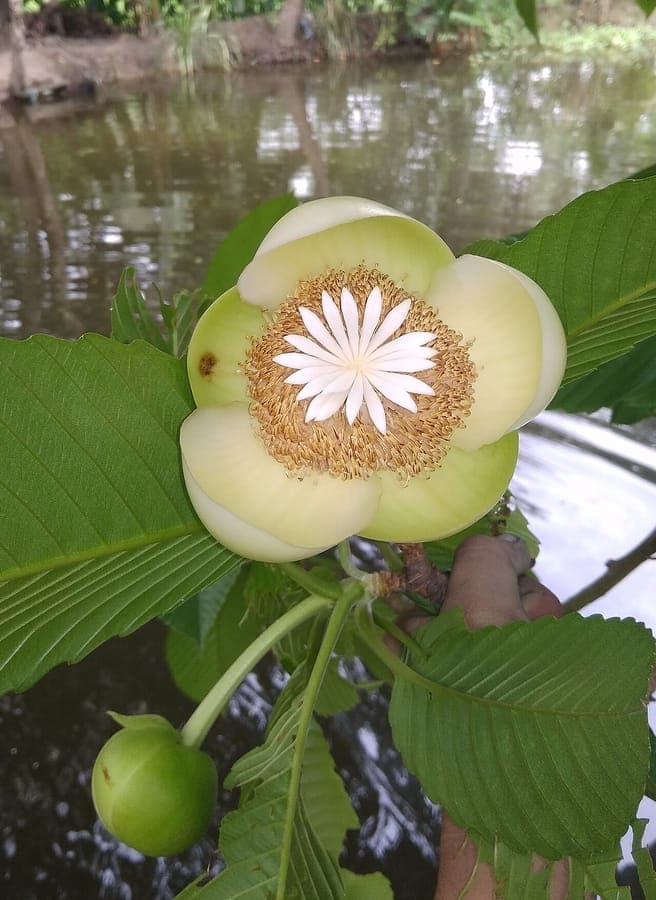
Manjur545 / CC BY-SA 4.0, via Wikimedia Commons
Dillenia: complete guide
Dillenia indica
¿Quieres ver Dillenia: complete guide en tu jardín?
1 minuto, sin tarjeta de crédito
Overview
Dillenia indica, commonly known as the elephant-apple or chulta, is an impressive tropical tree originating from India through South China. This tree is renowned for its spectacular golden-yellow flowers and distinctive large, apple-like fruits. It thrives in warm climates and is popular in botanical gardens worldwide.
The name "elephant-apple" refers to the robust fruits, historically reported as a favorite food source for wild elephants. In its native habitat, Dillenia grows into a substantial tree with a broad, dense crown that provides excellent shade.
Appearance and Bloom
Dillenia indica is a deciduous tree with glossy, dark green leaves that can reach 30 cm in length. The foliage is elegant and textured, creating a full and attractive silhouette year-round during the growing season.
The flowers are truly spectacular - large, golden-yellow sepals surround creamy petals with numerous prominent stamens. Each bloom can reach 15 cm across and appears throughout the warm season. These showy flowers attract pollinators and create a stunning garden display.
The resulting fruits are pale yellow-brown, round, and can reach 10 cm in diameter. They have a smooth texture and sour taste, though they can be used for making preserves or chutneys in tropical regions.
Ideal Location
Dillenia grows best in full sun to partial shade conditions. Minimum 4 to 6 hours of direct sunlight daily is ideal for optimal flowering. Protect the tree from strong winds, especially when young.
Ensure the tree has sufficient space - plant it at least 5 to 8 meters away from buildings and other large trees. This promotes good air circulation and prevents competition for nutrients.
Soil
Dillenia indica thrives in well-draining, fertile soil. The ideal pH range is 5.5 to 7.0, slightly acidic to neutral.
Amend the soil generously with organic matter such as leaf mould and composted plant material. Add perlite or gravel if your soil tends to retain water. The tree will not tolerate waterlogging - excellent drainage is essential for long-term health.
Diseño gratis
¿Quieres ver Dillenia: complete guide en tu jardín? Crea un diseño gratis ahora.
Watering
Regular watering is crucial, especially during active growth and warm seasons. Keep the soil consistently moist but never soggy. In dry periods, daily misting may be necessary, particularly for young trees.
Reduce watering during cooler months, but ensure the plant never fully dries out. Mulching around the base helps retain moisture and maintain consistent soil temperatures.
Pruning
Dillenia indica naturally develops an attractive form, so heavy pruning is usually unnecessary. Remove dead, diseased, or damaged branches whenever noticed.
Formative pruning can occur in early spring if you wish to guide the shape. Avoid pruning immediately after flowering, as this may compromise future bloom production. Use sharp, clean tools to prevent tearing.
Maintenance Calendar
February to May: Growing season - increase watering, begin monthly feeding with balanced fertilizer. June to August: Peak flowering period - ensure regular watering and protection from extreme heat. September to October: Flowering declines - gradually reduce watering. November to January: Dormant season - minimal watering, no feeding, protect from cold temperatures.
Winter Hardiness
Dillenia indica is a tropical tree and cannot tolerate frost. It can only be grown outdoors in warm regions (USDA zones 10b-12). In temperate climates, container cultivation with winter protection indoors is recommended.
When temperatures fall below 10°C, the plant will suffer serious damage. Moving to a protected location or greenhouse is essential.
Companion Plants
Dillenia grows well alongside other tropical species such as mango, avocado, and orchids in protected gardens. In smaller spaces, underplanting with shade-tolerant tropical herbs can be interesting.
Avoid planting with vigorous root competitors like passion fruit in the same location.
Closing Thoughts
Dillenia indica is a spectacular choice for anyone wanting a true tropical tree in their garden. The magnificent flowers and interesting fruits make it a valuable ornamental specimen. With proper placement and care, this tree will provide years of enjoyment and tropical beauty.
Available at Intratuin and Gamma in the Netherlands. More information at gardenworld.app.
Available at OBI and Hornbach in Germany. More information at gardenworld.app.
¿Quieres ver Dillenia: complete guide en tu jardín? Crea un diseño gratis ahora.
Sube una foto, elige un estilo y obtén un diseño fotorrealista con lista de plantas en menos de un minuto.
Más de 10.000 jardines diseñados
Sin tarjeta de crédito


Plantas similares
Acer pycnanthum: complete guide
Acer pycnanthum
Acer pycnanthum, the Japanese swamp maple, is a fast-growing tree with early red flowers and brilliant autumn color, ideal for damp garden settings.
Freeman maple: complete guide
Acer × freemanii
Everything about the Freeman maple (Acer x freemanii): a fast-growing shade tree with spectacular autumn colour for large gardens.
Silver vine: complete guide
Actinidia polygama
Discover silver vine (Actinidia polygama): a hardy climbing plant with silvery foliage, loved by gardeners and cats alike.