
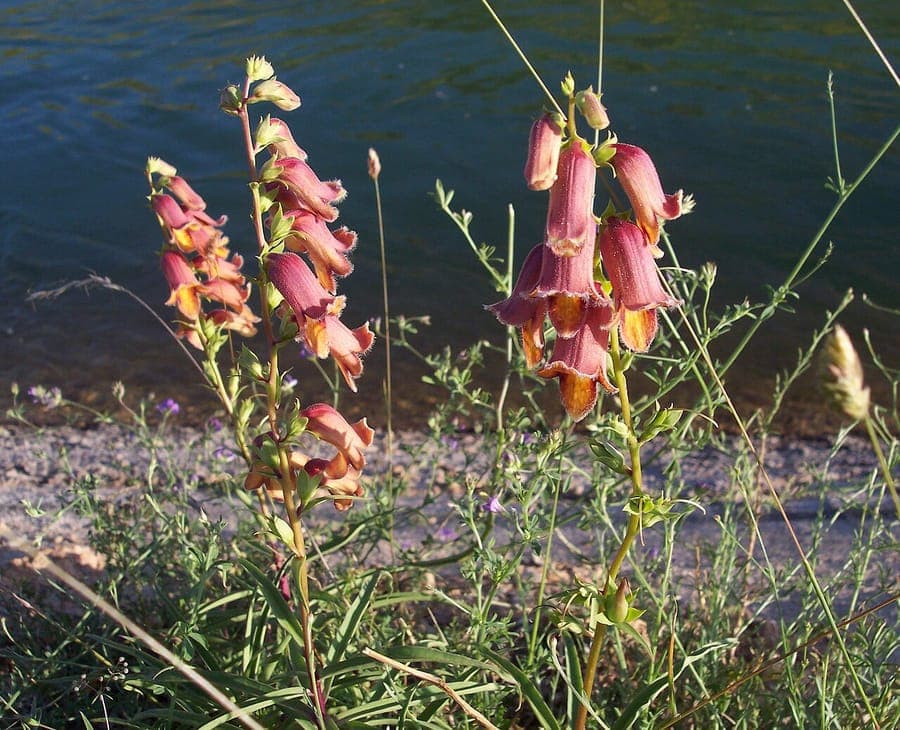
Cillas / CC BY-SA 4.0, via Wikimedia Commons
Digitalis obscura: complete guide to the Spanish rusty foxglove
Digitalis obscura
¿Quieres ver Digitalis obscura: complete guide to the Spanish rusty foxglove en tu jardín?
1 minuto, sin tarjeta de crédito
Overview
Digitalis obscura, known as Spanish rusty foxglove or willow-leaf foxglove, is an elegant alpine plant native to the mountain regions of Spain and Morocco. This distinctive species stands out for its striking rusty-red to orange flowers.
Unlike the common purple foxglove (D. purpurea), Digitalis obscura is smaller and more compact. The plant functions as a biennial or short-lived perennial depending on climate and care.
Appearance and bloom
Digitalis obscura develops into a compact plant reaching 60-90 centimetres in height. The plant produces dense, upright flower spikes during May-July with tubular flowers in warm rusty-red to orange. These blooms possess a subtle velvety texture.
The foliage is dark green, lance-shaped, and has a rough surface. After flowering, seeds develop in characteristic upright seed capsules. This plant attracts hummingbirds and bees, proving valuable for pollinators.
Ideal location
Digitalis obscura thrives in sunny to partial shade locations. A minimum of 4-5 hours daily direct sunlight ensures good flowering. Partial shade can however benefit plants in very hot climates.
The plant prefers open, well-ventilated locations. This prevents fungal diseases. Protected mountain locations or drier garden corners prove ideal.
Soil
Digitalis obscura prefers well-drained, poor to moderately fertile soil (pH 6-7). The plant thrives even on stony, mountain soils. Excessive feeding leads to weak, loose growth.
Ensure good drainage above all. This plant cannot tolerate waterlogging. Add humus, but not excessively. Sand or gravel improves drainage.
Diseño gratis
¿Quieres ver Digitalis obscura: complete guide to the Spanish rusty foxglove en tu jardín? Crea un diseño gratis ahora.
Watering
Digitalis obscura requires moderate water. Water regularly during the growing season, especially during dry spells. Once established, the plant becomes relatively drought-tolerant.
Avoid waterlogging and overhead watering. This causes leaf diseases. Allow soil to dry slightly between waterings.
Pruning
Digitalis obscura requires minimal pruning. Remove spent flowers after blooming to prevent seed set unless you want to collect seeds. In autumn, remove dead foliage.
Allow some plants to self-seed if you want more plants next year. This plant self-seeds readily in good gardens.
Maintenance calendar
May-July: Flowering period August-September: Seed collection and cleanup October-January: Winter dormancy February-March: Seed sowing or seedbed preparation April-May: Young plant growth
Winter hardiness
Digitalis obscura is frost-sensitive below -8 to -10 degrees Celsius. As a biennial it grows well in milder parts of the Netherlands. In harsher climates, protect young plants with reed matting during winters.
Through seeding, you can have fresh plants yearly. This reduces frost problems.
Companion plants
Digitalis obscura combines beautifully with:
- Salvia species
- Lavender
- Liatris (blazing star)
- Echinacea (purple coneflower)
- Achillea species
- Dry alpine plants
Closing
Digitalis obscura brings warmth and texture to alpine gardens and dry planting schemes. With its unique rusty-red flowers and compact growth, this remarkable plant attracts bird visits. Perfect for xeriscapes and Mediterranean gardens.
Available from specialist plant nurseries and seed companies.
Discover more garden inspiration on gardenworld.app/en
Discover more garden inspiration on gardenworld.app/en
¿Quieres ver Digitalis obscura: complete guide to the Spanish rusty foxglove en tu jardín? Crea un diseño gratis ahora.
Sube una foto, elige un estilo y obtén un diseño fotorrealista con lista de plantas en menos de un minuto.
Más de 10.000 jardines diseñados
Sin tarjeta de crédito


Plantas similares
White Beardtongue: complete guide
Penstemon albidus
Discover white beardtongue (Penstemon albidus) - elegant perennial with white to cream flowers. Drought-resistant, perfect for prairie and dry gardens.
Longsepal Beardtongue: complete guide
Penstemon calycosus
Discover longsepal beardtongue (Penstemon calycosus) - beautiful perennial with lilac-blue flowers. For partial shade and moist soil. Ideal for naturalized.
Penstemon cusickii: complete guide
Penstemon cusickii
Discover Cusick's beardtongue, a compact alpine flowering plant with violet-pink blooms. Perfect choice for rock gardens and water-wise landscaping.