
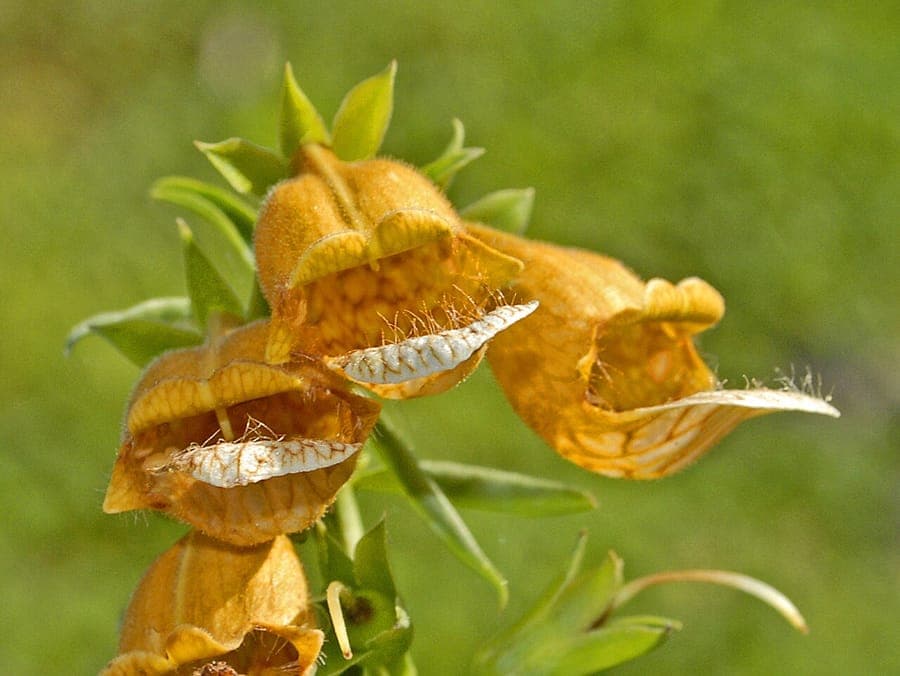
Hectonichus / CC BY-SA 3.0, via Wikimedia Commons
Smooth-leaved foxglove: complete guide
Digitalis laevigata
¿Quieres ver Smooth-leaved foxglove: complete guide en tu jardín?
1 minuto, sin tarjeta de crédito
Smooth-leaved foxglove (Digitalis laevigata) is an elegant, lesser-known foxglove species originating from Southeast Europe. This stately plant grows naturally in the Balkan region, primarily in woodlands, mountain slopes, and rocky outcrops. Unlike the far more popular Digitalis purpurea, this species has soft pale yellow flowers and relatively smooth leaves, giving rise to its botanical name.
Overview
Digitalis laevigata is a biennial or short-lived perennial plant from the Plantaginaceae family (formerly classified under Scrophulariaceae). Native to the Balkan Peninsula, this plant thrives in shade and partial shade situations where many other foxgloves struggle. The plant achieves moderate height and presents a more cautious, elegant appearance than its more famous relatives.
Appearance and Bloom
The plant grows upright, typically 50 to 100 centimeters tall, with thin, erect stems bearing leaves neatly positioned along them. Leaves are oblong-lanceolate, smooth (hence the name laevigata = smooth), green to grayish-green with subtle texture. Flowers appear in dense spikes, small to medium-sized, in pale yellow color. Each flower is tubular, about 2-3 centimeters long, arranged in a single flower spike. Blooming period runs from June to August in Europe.
Ideal Location
Smooth-leaved foxglove prefers partial shade to full shade. In direct sun, it may suffer scorching, especially where summers are hot. Choose locations under leafy trees or on the north side of structures where 2-4 hours of indirect light are available. The plant also thrives in woodland edge situations. Avoid dry spots; this plant prefers moist, shaded corners.
Soil
Soil should be fertile, rich in humus, and consistently moisture-retentive. Add abundant organic material before planting. pH can be slightly acidic to neutral (6.0-7.0). Heavy clay soils can be improved with compost and sand. Very fast-draining soils require more organic material or mulching. This plant grows better in richer soils than many other foxgloves.
Diseño gratis
¿Quieres ver Smooth-leaved foxglove: complete guide en tu jardín? Crea un diseño gratis ahora.
Watering
Consistent moisture is essential. Water regularly, especially during warm periods. Mulch around the plant to help retain soil moisture. During dry summers, water several times weekly. Ensure water goes directly to soil, not leaves, to prevent fungal disease. Deep rooting helps tolerate drought once established, but regular watering promotes better blooming.
Pruning
Remove spent flowers to stimulate continued blooming. Cut back exhausted spikes just above the base. If the plant becomes too tall, gentle pruning in early season helps maintain compact form. No fertilizing usually needed, though feeding in spring helps growth. Digitalis can be long-lived; many gardeners grow new plants from seed.
Maintenance Calendar
Spring (March-May): New growth begins. Water regularly as temperature rises. Prune dead parts from previous year. Summer (June-August): Blooming occurs. Water when dry. Remove spent flowers. Autumn (September-October): Seed heads can remain for birds or seed collection. Reduce watering. Winter (November-February): Dormancy in temperate zones. Minimal care needed.
Winter Hardiness
Smooth-leaved foxglove is quite winter hardy and grows in USDA zones 4-8. In colder zones, shelter may help young plants overwinter. In Northern Europe (Netherlands, Belgium, France, Germany), it grows well as a hardy plant with light shelter where needed. Many garden centers in the region stock seed and plants.
Companion Plants
Smooth-leaved foxglove grows well in shaded gardens with other shade-loving plants. Combine with Hosta, Astilbe, ferns, Geranium, other woodland plants. In partial shade, it also grows with Heuchera, Carex, Tiarella. This combination creates a classic woodland appearance. On woodland garden margins, plant near other wildlife food sources.
Closing
Smooth-leaved foxglove is an elegant, underrated foxglove that adds value to shaded corners. With good moisture care and partial shade, you'll enjoy years of pale yellow blooms. This is the foxglove for gardeners seeking something more refined than the far more common species.
This plant represents the rich plant flora of Southeast Europe and brings elegance to woodland gardens where many other species struggle to thrive.
¿Quieres ver Smooth-leaved foxglove: complete guide en tu jardín? Crea un diseño gratis ahora.
Sube una foto, elige un estilo y obtén un diseño fotorrealista con lista de plantas en menos de un minuto.
Más de 10.000 jardines diseñados
Sin tarjeta de crédito


Plantas similares
White Beardtongue: complete guide
Penstemon albidus
Discover white beardtongue (Penstemon albidus) - elegant perennial with white to cream flowers. Drought-resistant, perfect for prairie and dry gardens.
Longsepal Beardtongue: complete guide
Penstemon calycosus
Discover longsepal beardtongue (Penstemon calycosus) - beautiful perennial with lilac-blue flowers. For partial shade and moist soil. Ideal for naturalized.
Penstemon cusickii: complete guide
Penstemon cusickii
Discover Cusick's beardtongue, a compact alpine flowering plant with violet-pink blooms. Perfect choice for rock gardens and water-wise landscaping.