
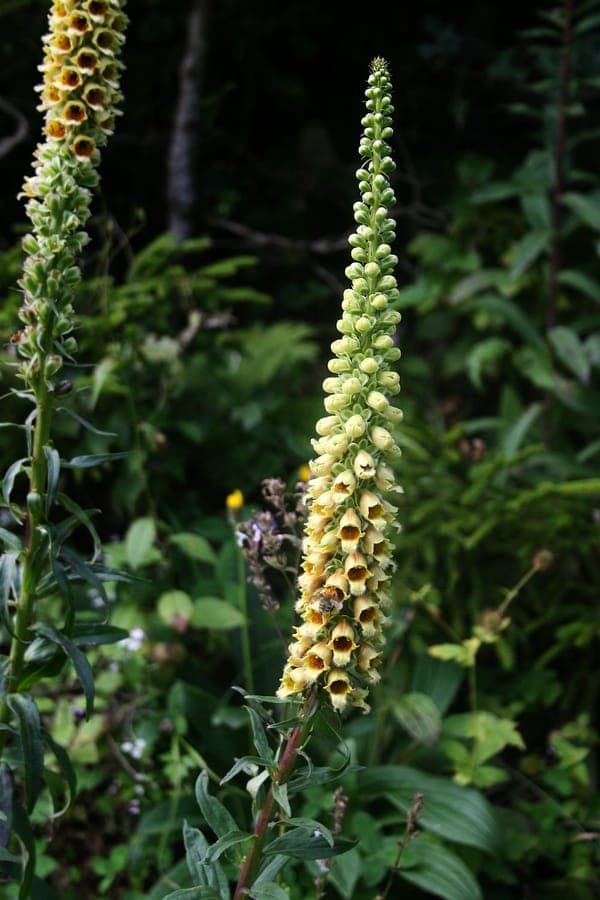
Franz Xaver / CC BY-SA 3.0, via Wikimedia Commons
Digitalis ferruginea: complete guide
Digitalis ferruginea
¿Quieres ver Digitalis ferruginea: complete guide en tu jardín?
1 minuto, sin tarjeta de crédito
Digitalis ferruginea, commonly known as rusty foxglove or brown foxglove, is an elegant biennial plant from the Plantaginaceae family. This species originates from mountainous regions from Hungary through the Caucasus and Lebanon. Unlike the more commonly grown red Digitalis purpurea, this species features distinctive rust-colored brown and red flowers creating a completely different visual effect. It is a biennial plant, meaning it completes two growing seasons before producing flowers. During the first year, the plant forms a rosette of long, narrow leaves, and in the second year, a tall flowering spike emerges reaching 60-120 centimeters in height.
The appearance of Digitalis ferruginea is notably distinct from other Digitalis species. Leaves are lanceolate, dark green, and approximately 10-20 centimeters long. During the second year, a stiff, unbranched flower spike rises densely bearing small flowers. The flowers measure approximately 1-1.5 centimeters long and display subtle rust-brown to reddish-brown coloration with considerable yellow in the throat and typically dark brown or red spots internally. Flowers arrange in a densely packed, elongated spike explaining the species name ferruginea. These flowers bloom sequentially from bottom to top, extending the flowering period across several weeks. Following bloom, seed capsules develop containing hundreds of tiny seeds.
Successfully cultivating Digitalis ferruginea requires sunny to partially shaded location. Position the plant where it receives minimum 4-5 hours direct sunlight daily. The plant grows adequately in partial shade, though it becomes less robust. Full shade significantly reduces flowering. Digitalis ferruginea performs well in windy positions, so avoid very sheltered locations. The plant tolerates maritime climates well.
Soil requirements for Digitalis ferruginea are moderate. The plant performs well on standard garden soil with pH between 5.5 and 7.5. The species tolerates drought better than many Digitalis types and can grow on poor, infertile soils. Avoid very rich soils with excessive nitrogen as this promotes lush leaf growth at the expense of flowering. Well-draining soil is important, particularly during winter. Heavy clay soils improve substantially with sand and compost amendments.
Watering Digitalis ferruginea is straightforward. During the first year when the plant develops its rosette leaves, water regularly keeping soil moderately moist. During the second year when the plant flowers, water less frequently as mature plants tolerate drought well. Overwatering presents greater risk than underwatering. During wet winters, monitor carefully for moisture-related diseases.
Pruning of Digitalis ferruginea is minimal. You can cut the flower spike once all flowers have finished, preventing seed formation and extending plant youth slightly. However, many gardeners leave some seed stalks allowing plants to self-sow. If you wish to collect seed personally, allow several seed capsules to mature and harvest before capsules burst.
The maintenance calendar for Digitalis ferruginea is straightforward since it is a biennial. During the first year (first growing season), plant seedlings or seed and allow rosette leaf development. From April through October, the plant grows primarily vegetatively. During the second year (second growing season), from February through May the plant develops its flower spike and subsequently flowers intensively from May through July. Seed capsules mature from August through October. Old plants can be removed following bloom or left to self-sow for subsequent generations.
Digitalis ferruginea exhibits hardiness to approximately minus 15 degrees Celsius. Throughout the Netherlands and Belgium, the plant can usually grow permanently outdoors when planted in well-draining soil. Excessive winter moisture represents the greatest threat, more so than frost itself. The plant thrives in alpine troughs and along bird-friendly pergolas.
Companion plants working well with Digitalis ferruginea include other tall, bee-friendly species. Excellent compatible selections include other Digitalis species (particularly D. purpurea and D. lanata), Verbascum species (mulleins), Liatris species, and Echinops (globe thistles). For backdrop, use Coreopsis, Rudbeckia, and other summer bloomers. Note that Digitalis ferruginea is toxic, so avoid planting where children or livestock can graze.
Finally, Digitalis ferruginea represents a unique choice for gardeners seeking something different from red foxgloves. With its subtle rust-brown flowers and slender form, it provides elegant emphasis in flower gardens. The plant attracts numerous bees and other pollinators. Consult Gardenworld.app for additional information on bee plants and biennials.
¿Quieres ver Digitalis ferruginea: complete guide en tu jardín? Crea un diseño gratis ahora.
Sube una foto, elige un estilo y obtén un diseño fotorrealista con lista de plantas en menos de un minuto.
Más de 10.000 jardines diseñados
Sin tarjeta de crédito


Plantas similares
White Beardtongue: complete guide
Penstemon albidus
Discover white beardtongue (Penstemon albidus) - elegant perennial with white to cream flowers. Drought-resistant, perfect for prairie and dry gardens.
Longsepal Beardtongue: complete guide
Penstemon calycosus
Discover longsepal beardtongue (Penstemon calycosus) - beautiful perennial with lilac-blue flowers. For partial shade and moist soil. Ideal for naturalized.
Penstemon cusickii: complete guide
Penstemon cusickii
Discover Cusick's beardtongue, a compact alpine flowering plant with violet-pink blooms. Perfect choice for rock gardens and water-wise landscaping.