
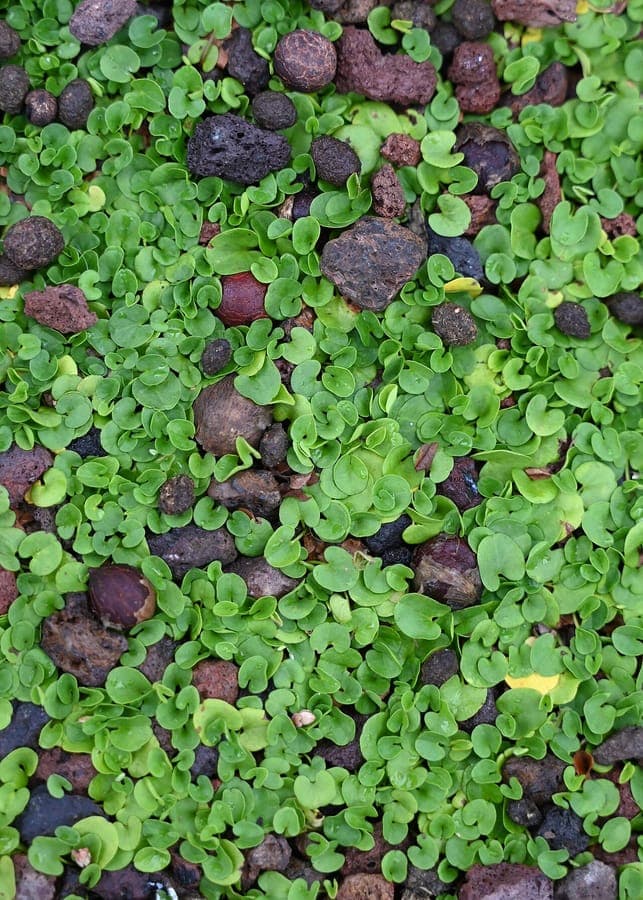
Krzysztof Ziarnek, Kenraiz / CC BY-SA 4.0, via Wikimedia Commons
Dichondra micrantha: complete guide
Dichondra micrantha
¿Quieres ver Dichondra micrantha: complete guide en tu jardín?
1 minuto, sin tarjeta de crédito
Overview
Dichondra micrantha, better known as kidneyweed or lawnleaf, is a charming trailing plant originating from Mexico and the Caribbean. This plant is famous for its exceptionally small, heart-shaped leaves that elegantly cascade over the edges of pots. It is an excellent choice for hanging baskets, shelves, and terrariums due to its gentle growth pattern.
The plant is valued for its compact growth and ability to grow quickly without ever becoming overly large. For many plant enthusiasts, kidneyweed is a favorite that can grow endlessly while maintaining its delicate appearance. With basic care, this plant thrives and creates a stunning trailing effect.
Appearance and growth
Dichondra micrantha is a low-growing trailing plant with very small, round leaves. These leaves are approximately 3-8 millimeters large and have a heart-shaped or kidney-shaped structure. The stems grow elegantly downward, creating a waterfall-like effect.
The plant is widely used as a groundcover in gardens and as a trailer in pots and baskets. In pot cultivation, it can easily reach 30-50 centimeters long, depending on support and care.
Flowers are very small and inconspicuous, usually white or cream-colored. These flowers rarely appear in indoor cultivation and are not the main reason for growing this plant.
Ideal location
Kidneyweed grows best in places with bright, indirect light. The plant thrives in hanging situations where light comes from above and sides. Direct scorching midday sun can burn the leaves and should be avoided.
Indoors, the plant does well in rooms where the temperature remains between 15-25 degrees Celsius. The plant also tolerates temperatures down to 10 degrees, but prolonged cold will slow growth.
Kidneyweed is particularly suitable for bathrooms due to high humidity. It can also grow on balconies and terraces, as long as it is protected from drafts.
Potting soil and soil type
Kidneyweed grows best in light, well-draining potting soil. Use standard houseplant soil mixed with some extra perlite or sand for better drainage. This prevents waterlogging.
Natural fiber hanging baskets work well for this plant, especially with a water tray underneath. This ensures water doesn't drip onto furniture.
Every three to four months, fresh potting soil can be mixed into the top layer to replenish nutrients.
Diseño gratis
¿Quieres ver Dichondra micrantha: complete guide en tu jardín? Crea un diseño gratis ahora.
Watering and feeding
Kidneyweed loves moist soil but not waterlogged. Water when the top centimeter of soil feels dry. In summer, this may be daily; in winter, less frequently.
Use lukewarm water, preferably rainwater. Water carefully so water doesn't splash on the leaves.
From March to September, liquid fertilizer can be applied once every two weeks. In winter months, less feeding is needed. Use a weakly concentrated liquid plant fertilizer.
Pruning and shaping
Pruning helps keep the plant compact and full. Regularly pinch the tips of stems to encourage branching. This creates a denser, more beautiful trailing effect.
Remove yellow or damaged leaves. This helps the plant concentrate energy on proper growth.
The best time to prune is in early spring.
Maintenance calendar
January-February: Minimal watering. No feeding needed. Inspect for pests.
March-May: Beginning of growth. Water regularly, start feeding. Possibly move to larger hanging basket.
June-August: Peak growth period. Water daily, continue feeding. Plant can be placed outside in shade.
September-October: Gradually reduce watering and feeding. Move plant indoors.
November-December: Minimal maintenance. Ensure plant is not in cold drafts.
Winter hardiness
Kidneyweed is not winter hardy in temperate climates. Ensure the plant never experiences temperatures below 10 degrees Celsius. This can cause serious damage.
In southern gardens, the plant may overwinter outdoors under shelter in some years, but this is risky.
Companion plants
Kidneyweed combines beautifully with other trailing plants such as Hoya, String of Pearls (Senecio rowleyanus), and Tradescantia. This combination creates a beautiful trailing effect in rooms.
In groundcover situations outdoors, kidneyweed can be combined with other tropical groundcover plants.
Conclusion
Kidneyweed is a charming, reliable trailing plant that will last for years with basic care. With its elegant growth pattern and easygoing nature, it is ideal for both beginners and experienced plant enthusiasts.
Proper care with regular watering, warm climate, and indirect light ensures this plant thrives excellently. Available year-round at garden centers.
Want to freshen up your interior with this elegant trailing plant? Visit gardenworld.app for more inspiration. Kidneyweed is definitely worth trying. Also be sure to check gardenworld.app regularly for other beautiful trailing plants.
The plant is highly suitable for gardeners seeking an air-purifying plant. Studies show that this plant effectively filters harmful substances from the air, making it a perfect choice for office or bedroom.
Propagation is possible through seedlings or by dividing rootstocks. This can be done in spring with guaranteed success.
¿Quieres ver Dichondra micrantha: complete guide en tu jardín? Crea un diseño gratis ahora.
Sube una foto, elige un estilo y obtén un diseño fotorrealista con lista de plantas en menos de un minuto.
Más de 10.000 jardines diseñados
Sin tarjeta de crédito


Plantas similares
Spreading alkaliweed: complete guide
Cressa truxillensis
Full growing guide for Cressa truxillensis, the salt-tolerant groundcover of alkaline flats: location, soil, watering, pruning and winter care.
Betony-leaved bindweed: complete guide
Convolvulus betonicifolius
Full guide to betony-leaved bindweed (Convolvulus betonicifolius): origin, appearance, ideal site, soil, watering and garden uses.
Ivyleaf morning glory: complete guide
Ipomoea hederacea
Everything about Ipomoea hederacea: location, soil and climbing care. A fast-growing annual vine with blue funnel flowers for sunny walls and pergolas.