
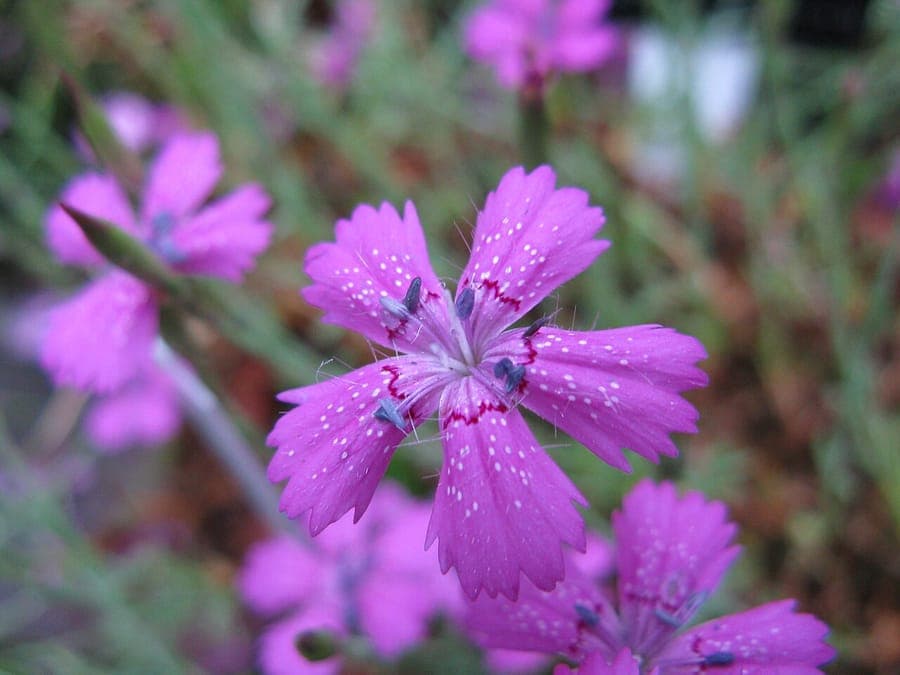
KENPEI / CC BY-SA 3.0, via Wikimedia Commons
Dianthus glacialis: complete guide
Dianthus glacialis
¿Quieres ver Dianthus glacialis: complete guide en tu jardín?
1 minuto, sin tarjeta de crédito
Overview
Dianthus glacialis, the glacier pink, is an exceptional alpine carnation species native to the Eastern Alps and Carpathian Mountains. This diminutive, rugged perennial grows on rocky slopes and alpine meadows at high elevations where extreme conditions prevail. With its compact habit and delicate pink blooms, it is a true gem for specialized gardeners.
Appearance and bloom
Dianthus glacialis forms tight, cushion-like mats of narrow, grey-green foliage, rarely exceeding 10 centimeters in height. The tiny pink flowers appear from June through August, with five notched petals characteristic of the genus. Blooms cluster above the foliage and provide soft alpine charm. The flowering period extends for many weeks and attracts butterflies and bees.
Ideal location
This species thrives in full sun on extremely well-drained sites. Rock gardens and alpine beds are ideal, particularly on south or west-facing slopes. Avoid shade entirely. In flat gardens, raised beds with rock walls suit it best. Protection from winter moisture is essential for success.
Soil
Poor, gritty, well-draining soil is required - the leaner the better. A mix of sand, fine gravel, and stone chips forms the perfect growing medium. Add just 20 percent compost if needed. Target a pH between 6.5 and 7.5. Avoid rich garden soil; it promotes foliage at the expense of flowers.
Watering
Once established, these alpine dwarfs require minimal watering. Water moderately during the growing season. Good drainage matters more than frequent watering. Excessive moisture invites rot. In dry spells, light misting is fine; do not allow water to pool.
Diseño gratis
¿Quieres ver Dianthus glacialis: complete guide en tu jardín? Crea un diseño gratis ahora.
Pruning
Minimal pruning is required. Remove spent flower heads to encourage further blooming. Clear dead foliage in spring. After blooming, light trimming helps maintain shape, but proceed cautiously - avoid cutting into old wood.
Maintenance calendar
February-March: Check drainage after snowmelt; remove dead tissue. April-May: Growth season begins. June-August: Blooming period; enjoy the flowers. September-October: Leave seed heads for natural distribution. November-January: Dormancy; minimal care needed.
Winter hardiness
Extremely hardy down to -25 degrees Celsius. This is a plant for mountain regions. Snow cover is not needed, but moisture protection is essential. In lowland gardens, high winter humidity can be problematic. A rain shelter over winter helps greatly.
Companion plants
Pair with other alpine dwarfs: Salix herbacea, Silene acaulis, and Sempervivum species. Drought-tolerant Sedums and saxifrage varieties work well. Small Carex grasses provide structure without competition. Avoid vigorous spreading neighbors.
Closing thoughts
Dianthus glacialis is for plant enthusiasts who value alpine specialties. While this species imposes certain growing requirements, a well-tended specimen rewards you with years of modest beauty.
Find this plant at garden centers specializing in alpine species. UK garden centers and specialist nurseries stock alpine collections. German OBI and Hornbach offer comprehensive alpine plant ranges. French Truffaut and Jardiland provide alpine gardening materials.
Want more details on growing alpine dwarfs? Visit gardenworld.app/en for design tools. Or explore gardenworld.app/en for additional plant profiles.
¿Quieres ver Dianthus glacialis: complete guide en tu jardín? Crea un diseño gratis ahora.
Sube una foto, elige un estilo y obtén un diseño fotorrealista con lista de plantas en menos de un minuto.
Más de 10.000 jardines diseñados
Sin tarjeta de crédito


Plantas similares
Dianthus karami: complete guide
Dianthus karami
Dianthus karami is a rare Lebanese mountain pink with fringed pink blooms on limestone cliffs, ideal for rock gardens and troughs.
Sicilian pink: complete guide
Dianthus siculus
Discover Dianthus siculus, an elegant purple bloomer from Sicily. Cultivation, June-September flowering and garden combinations.
Alpine mouse-ear chickweed: complete guide
Cerastium pedunculatum
Full growing guide for Cerastium pedunculatum: ideal location, soil, watering, winter hardiness, and companion plants for rock gardens.