
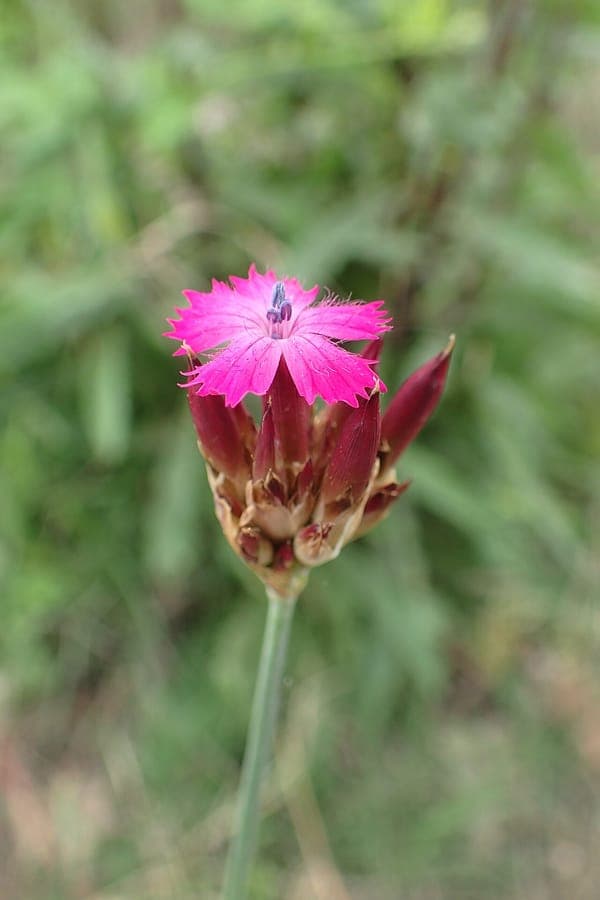
Krzysztof Ziarnek, Kenraiz / CC BY-SA 4.0, via Wikimedia Commons
Dianthus giganteus: complete guide
Dianthus giganteus
¿Quieres ver Dianthus giganteus: complete guide en tu jardín?
1 minuto, sin tarjeta de crédito
Overview
Dianthus giganteus, the giant carnation or giant pink, is an impressive alpine flower from Balkan regions. Belonging to the Caryophyllaceae family, this striking plant grows 50-80 centimeters tall and is renowned for its large, pink flowers on long stems. This impressive dianthus is much larger than typical carnation species.
This plant is ideal for borders, cut flowers, and alpine gardens. With its dramatic stature and beautiful pink blooms, it creates immediate impact in any planting scheme.
Appearance and Bloom
Dianthus giganteus grows as an upright, sturdy plant with long, slender stems clothed with narrow, blue-green foliage. Characteristic large, pink flowers appear atop stems in June-July and measure 2-3 centimeters across.
Flowers are typically single (non-double) and display soft pink color with occasionally darker eyes. The plant grows fairly rapidly and forms dense, full clumps.
Ideal Location
Dianthus giganteus demands full sun, minimum 6-8 hours direct sunlight daily. The more sunlight, the stronger growth and flowering. In partial shade, the plant becomes leggy.
Place this plant in warm, sheltered borders. Also suitable for rock gardens and alpine terraces where it adds height. A south-facing wall or sunny terrace is ideal.
Soil
Dianthus giganteus demands well-draining, balanced soil. A mixture of garden soil, sand, and fine gravel works well. Neutral to slightly alkaline pH is preferred (pH 7-7.5).
This plant grows better in poor to moderately fertile soil. Rich compost promotes vegetative growth at the expense of flowers. Avoid heavy, wet soils.
Watering
Dianthus giganteus requires regular watering during growth period, but avoid waterlogging. Allow soil to dry slightly between waterings. Once established, very drought-tolerant.
In full summer growth, weekly watering may be needed. In winter, provide minimal water. Good drainage is essential to prevent root rot.
Diseño gratis
¿Quieres ver Dianthus giganteus: complete guide en tu jardín? Crea un diseño gratis ahora.
Pruning
Dianthus giganteus should be deadheaded after flowering to encourage additional blooms. This can extend flowering into August-September.
In early spring, dead portions from previous year can be removed. Heavy cutting is not needed; this plant grows vigorously naturally.
Maintenance Calendar
Spring (March-May): Remove dead growth. Provide deep watering. Begin active growth.
Summer (June-September): Full growth and flowering. Regular watering. Deadhead for additional blooms.
Autumn (October-November): Growth slows. Reduce watering. Prepare for dormancy.
Winter (December-February): Minimal watering. Plant may die back if frozen, but will regrow from roots.
Winter Hardiness
Dianthus giganteus is very cold hardy, naturally growing in cold Balkan mountain regions. This plant tolerates temperatures to -20 degrees Celsius. In northern European gardens, no winter protection is needed.
The plant is better adapted to dry, cold winters than wet conditions.
Companion Plants
Dianthus giganteus grows beautifully in borders with other alpine plants and perennials. Combine with lower-growing plants like Alchemilla mollis, Salvia, and Geranium.
It contrasts beautifully with silver-foliage plants like Artemisia and Senecio. Group three or more plants for maximum visual impact.
Closing
Dianthus giganteus is a spectacular plant for alpine enthusiasts seeking height and drama. With its imposing stature, long stems, and beautiful pink blooms, it commands attention. Plant in well-drained soil, water regularly, and enjoy this giant carnation. For more alpine designs, visit gardenworld.app/en. Find seeds and plants at specialized suppliers.
¿Quieres ver Dianthus giganteus: complete guide en tu jardín? Crea un diseño gratis ahora.
Sube una foto, elige un estilo y obtén un diseño fotorrealista con lista de plantas en menos de un minuto.
Más de 10.000 jardines diseñados
Sin tarjeta de crédito


Plantas similares
Dianthus karami: complete guide
Dianthus karami
Dianthus karami is a rare Lebanese mountain pink with fringed pink blooms on limestone cliffs, ideal for rock gardens and troughs.
Sicilian pink: complete guide
Dianthus siculus
Discover Dianthus siculus, an elegant purple bloomer from Sicily. Cultivation, June-September flowering and garden combinations.
Alpine mouse-ear chickweed: complete guide
Cerastium pedunculatum
Full growing guide for Cerastium pedunculatum: ideal location, soil, watering, winter hardiness, and companion plants for rock gardens.