
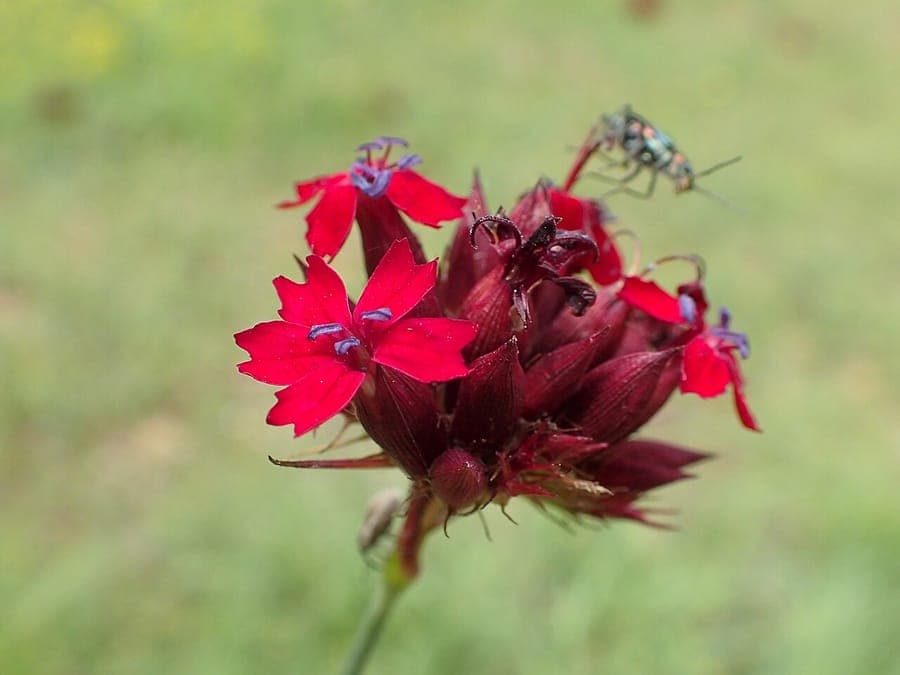
Krzysztof Ziarnek, Kenraiz / CC BY-SA 4.0, via Wikimedia Commons
Dianthus cruentus: complete guide
Dianthus cruentus
¿Quieres ver Dianthus cruentus: complete guide en tu jardín?
1 minuto, sin tarjeta de crédito
Overview
Dianthus cruentus, also known as Bloody Pink, is an elegant carnation originating from Southeast Europe and Iran. This member of the Caryophyllaceae family is valued for its deep red flowers and compact growth habit. The plant is native to Albania, Bulgaria, Greece, Iran, Transcaucasus, Turkey, Yugoslavia and has also been introduced to Sweden.
This carnation is a beautiful addition to borders or rock gardens. With its rich red-colored flowers and compact nature, it provides reliable, long-term beautification. It is a plant that thrives in dry, sunny environments.
Appearance and Bloom
Dianthus cruentus forms a compact, densely clad plant with linear, grayish leaves. The plant reaches approximately 30-60 centimeters in height, depending on growing conditions. It has a neat, orderly growth habit that works well in border arrangements.
The flowers are the main attraction. They are small to medium-sized, bright red to deep red colored flowers, individually or in small clusters. The flowers often have dentate or serrated edges that add to their interest. The fragrance is weak to absent, but the visual impact is strong.
The blooming period runs from June through August in temperate climates, though this may begin earlier in warmer regions.
Ideal Location
Dianthus cruentus thrives best in full sun. The plant needs at least 6-8 hours of direct sun daily for optimal growth and flowering. More sun is always better.
The plant is suitable for warm, dry locations. It works well in Mediterranean or xeric gardens. Ensure the site has good drainage.
Soil
Dianthus cruentus requires well-draining soil. Sandy, stony, or gravelly soil is preferred. The plant handles poor soils well and tolerates calcareous soil.
A pH range of 6.0-7.5 is recommended. Add sand or gravel when planting if the soil is too clay-based. No extra feeding is needed in most cases.
Diseño gratis
¿Quieres ver Dianthus cruentus: complete guide en tu jardín? Crea un diseño gratis ahora.
Watering
Once established, Dianthus cruentus is drought-tolerant. During the first growing season, water regularly until the plant is well-established. After this, watering frequency can be significantly reduced.
During severe dry periods, supplementary water can be helpful. Avoid excessive watering, especially in winter. The plant cannot tolerate waterlogging.
Pruning
Spent flowers can be removed for a tidier appearance and possible repeated flowering. After the flowering period, plants can be lightly cut back.
In spring, dead winter parts can be removed. Regular pruning is not recommended.
Maintenance Calendar
March-May: Soil preparation; plant young specimens; regular watering until establishment.
June-August: Flowering period; regular watering; remove spent flowers.
September-October: Light cutback; stop feeding.
November-February: Minimal activity; winter protection in cold regions.
Winter Hardiness
Dianthus cruentus is hardy through approximately USDA zone 5-9. In cold regions, a light mulch layer can help. In milder climates, the plant blooms almost year-round.
The plant can usually withstand winters with frost.
Companion Plants
Dianthus cruentus combines well with other drought-tolerant plants:
- Santolina
- Helichrysum
- Cistus
- Phlomis
- Lavandula
Together they create authentic Mediterranean gardens.
Closing Thoughts
Dianthus cruentus is a beautiful choice for Mediterranean or dry gardens. The bright red flowers and compact growth habit make it ideal for borders and rock gardens. With minimal care once established, this plant will bring joy for years.
Seeds can be ordered online, or potted specimens can be purchased at garden centers. Visit gardenworld.app for designs with Mediterranean plants.
With the right location, this is a reliable performer year after year.
¿Quieres ver Dianthus cruentus: complete guide en tu jardín? Crea un diseño gratis ahora.
Sube una foto, elige un estilo y obtén un diseño fotorrealista con lista de plantas en menos de un minuto.
Más de 10.000 jardines diseñados
Sin tarjeta de crédito


Plantas similares
Dianthus karami: complete guide
Dianthus karami
Dianthus karami is a rare Lebanese mountain pink with fringed pink blooms on limestone cliffs, ideal for rock gardens and troughs.
Sicilian pink: complete guide
Dianthus siculus
Discover Dianthus siculus, an elegant purple bloomer from Sicily. Cultivation, June-September flowering and garden combinations.
Alpine mouse-ear chickweed: complete guide
Cerastium pedunculatum
Full growing guide for Cerastium pedunculatum: ideal location, soil, watering, winter hardiness, and companion plants for rock gardens.