
Tigerente / CC BY 4.0, via Wikimedia Commons
Alpine Pink: complete guide
Dianthus alpinus
¿Quieres ver Alpine Pink: complete guide en tu jardín?
1 minuto, sin tarjeta de crédito
Overview
The Alpine Pink (Dianthus alpinus) is a treasure from the Austrian Alps, where it grows wild in steep mountain meadows above 1500 meters. This compact plant belongs to the Caryophyllaceae family and is prized for its striking pink flowers with dark markings. In gardens, it thrives in alpine troughs, rock gardens, and scree beds where drainage is perfect and competition is minimal.
Alpine Pink is ideal for gardeners seeking mountain flora or planning a low-maintenance alpine border. The plant flowers from June through August and forms tight, cushion-shaped mounds reaching just 15–20 cm tall. For those passionate about alpine flowers, this is a timeless classic.
Appearance and bloom cycle
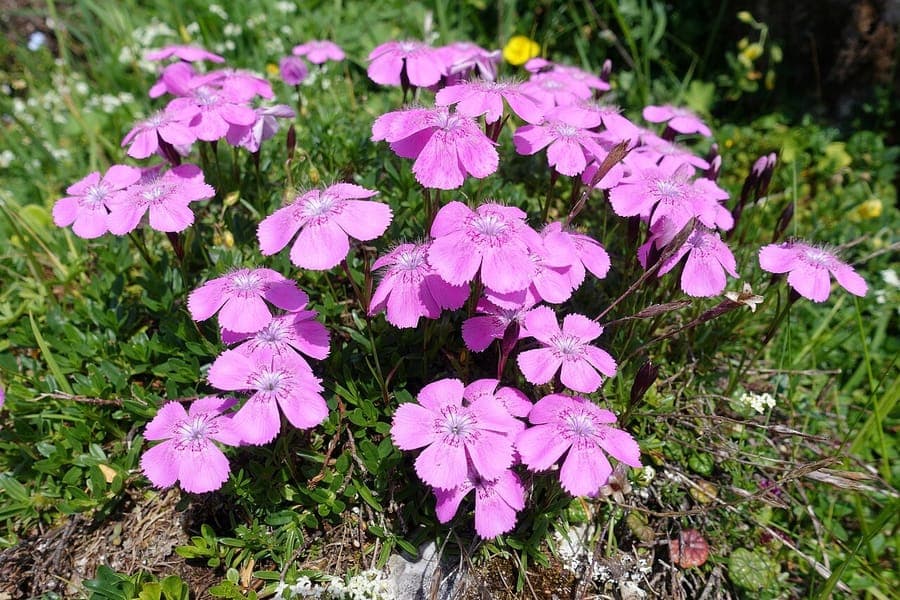
Alpine Pink creates dense, low cushions of fine, greyish-green needle-like leaves typical of alpine Dianthus species. Flowers range from pink to magenta, usually with a dark "eye" at the center. Each bloom consists of five fringed petals, making them exceptionally decorative. Flowers can reach 2 cm across and appear on stiff stems above the leaf cushion.
The bloom cycle runs from June through August, with peak flowering in July. After blooming, the plant develops seed capsules that ripen in September. If you leave spent flowers in place, many seeds self-sow and seedlings appear in nearby crevices and suitable spots.
Ideal location
Alpine Pink loves full sun to partial shade. At least four to five hours of direct sunlight daily is essential for optimal growth and abundant flowers. In warmer climates (USDA zone 7 and up), afternoon shade provides benefits.
The location must drain well, preferring rocky or raised areas where standing water is impossible. In low-lying gardens or clay soil, the plant will suffer root rot. Many gardeners plant it in scree, steep banks, or alpine troughs where water drains rapidly.
Wind exposure is not a problem – alpine plants evolved in windy mountains. Protection from excessive winter moisture is critical, though.
Soil requirements
Alpine Pink demands well-draining, loamy to sandy soil with a pH between 6.0 and 7.5. Add grit or sharp sand to standard potting soil – at least 40% of the mix should be mineral fraction.
Organic matter should be used sparingly. Too much compost or peat promotes wet conditions that cause rot. In gardens, enrich the soil with fine gravel or stone chips in the root zone. Well-draining rocky soil is ideal.
Crucially, add no fertilizer. Alpine plants evolved in nutrient-poor terrain and actually grow stronger in poor soil.
Diseño gratis
¿Quieres ver Alpine Pink: complete guide en tu jardín? Crea un diseño gratis ahora.
Watering
Alpine Pink doesn't need much water. During the growing season (April–October), water moderately so the soil almost dries between waterings. Summer rains usually suffice – extra water is rarely needed unless conditions are extremely dry.
In winter (October–March), water hardly at all. Letting moisture levels drop slightly helps the plant build winter hardiness. Container plants need more cautious watering than garden specimens.
Moisture around the crown (between leaves) must be avoided at all costs, especially in cold months. It promotes fungal disease and plant rot. Water from the side or base only.
Pruning and maintenance
Alpine Pink requires minimal pruning. Sunny, dry conditions keep it naturally tidy. Remove spent flowers during the growing season – this encourages more blooms. Don't wait until all flowers fade.
Autumn cleanup is minimal. Leave the leaf cushion intact and don't cut back to bare soil. This risks damage and makes the plant vulnerable to winter loss. If plant parts are clearly brown or rotten, carefully remove them.
Replacement occurs after 4–5 years, when plants age and develop gaps. Growing new plants from seed is the most practical approach.
Maintenance calendar
January–March: Minimal care. Monitor for frost damage and waterlogging. April–May: Growth begins. Light feeding with potassium-rich fertilizer may help. June–August: Peak flowering. Remove spent blooms regularly. September–October: Flowering ends. Collect seeds if desired. November–December: Winter dormancy. Stop watering almost entirely.
Winter hardiness
Alpine Pink is extremely hardy in USDA zones 3–8, tolerating temperatures down to -25°C (zone 3). In temperate climates, no winter protection is needed if drainage is perfect.
Moisture, not cold, is the enemy. A wet plant in January will die; a dry one survives -20°C easily. Sandy-rocky soil is therefore essential.
In wet winters, you can place protective glazed frames over scree specimens – glass or slate panels that allow air circulation.
Companion plants
Alpine Pink pairs beautifully with other alpine flowering groundcovers:
- Other Dianthus species (Dianthus pavonius, Dianthus freynii)
- Saxifrages (Saxifraga oppositifolia, Saxifraga alba)
- Edelweiss (Leontopodium nivale)
- Alpine bells (Campanula cochlearifolia)
- Alpine forget-me-nots (Eritrichium nanum)
Combinations of pink and blue flowers are especially striking in alpine designs. Explore gardenworld.app for alpine garden combinations and design inspiration.
Conclusion
Alpine Pink is a hardy, low-maintenance accent for gardeners wanting mountain flora in their front garden. With good drainage and minimal watering, this alpine bloom thrives reliably. For rock gardens or alpine containers, it remains a justified classic.
Want more ideas for using alpine plants in your garden? Check gardenworld.app for design examples featuring successful alpine plantings.
¿Quieres ver Alpine Pink: complete guide en tu jardín? Crea un diseño gratis ahora.
Sube una foto, elige un estilo y obtén un diseño fotorrealista con lista de plantas en menos de un minuto.
Más de 10.000 jardines diseñados
Sin tarjeta de crédito


Plantas similares
Dianthus karami: complete guide
Dianthus karami
Dianthus karami is a rare Lebanese mountain pink with fringed pink blooms on limestone cliffs, ideal for rock gardens and troughs.
Sicilian pink: complete guide
Dianthus siculus
Discover Dianthus siculus, an elegant purple bloomer from Sicily. Cultivation, June-September flowering and garden combinations.
Alpine mouse-ear chickweed: complete guide
Cerastium pedunculatum
Full growing guide for Cerastium pedunculatum: ideal location, soil, watering, winter hardiness, and companion plants for rock gardens.