
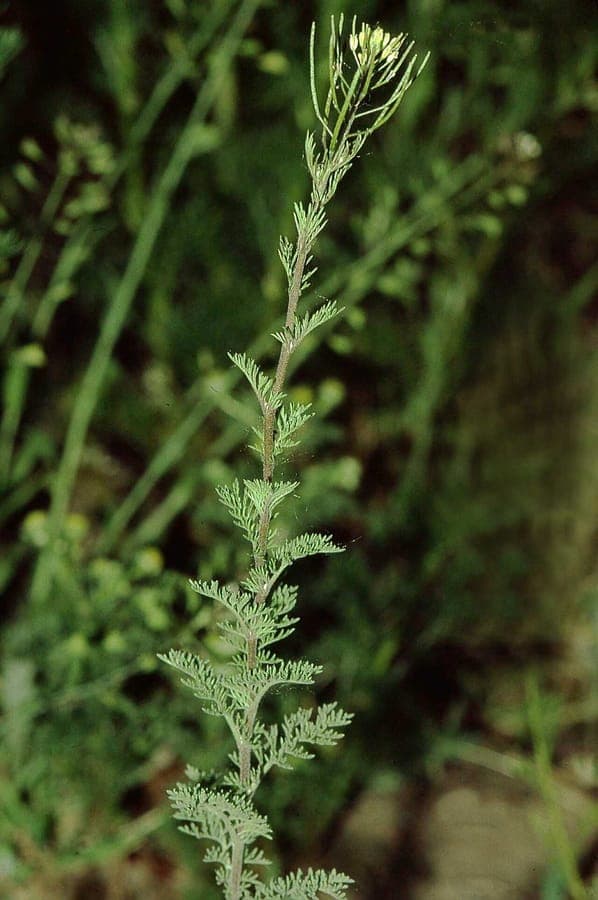
Fornax (talk · contribs) / CC BY-SA 3.0, via Wikimedia Commons
Tansy mustard: complete guide
Descurainia sophia
¿Quieres ver Tansy mustard: complete guide en tu jardín?
1 minuto, sin tarjeta de crédito
Overview
Tansy mustard (Descurainia sophia), also known as Russian mustard or flixweed, is a delicate annual native to central Asia and the Mediterranean region. This airy, elegant plant thrives on undisturbed soils and neglected ground. Fine, feathery foliage and countless small yellow flowers give it a hazy, ethereal appearance. Though often considered a weed, tansy mustard can be valued in gardens with dry, sunny conditions.
Appearance and Bloom Cycle
Tansy mustard grows 30–60 cm tall, sometimes higher in rich soil. Slender, branched stems are clothed in finely divided, feathery, grey-green leaves. Tiny yellow flowers appear in dense, upright racemes from May to August. After pollination, narrow seed pods (siliques) form, 15–20 mm long. The plant presents an airy, delicate appearance.
Ideal Location
Tansy mustard thrives in full sun - minimum 6 hours direct daily light. In half-shade, growth becomes leggy and flowers sparse. The plant is wind-tolerant, actually flourishing in exposed sites. Suitable for wild gardens, dry borders, gravel paths, or rocky banks. Avoid areas requiring consistent moisture.
Soil Requirements
Descurainia sophia is highly adaptable. It grows on poor, dry, sandy, gravelly, even rocky soils. Prefers neutral to slightly acidic pH (6–7). Good drainage is essential; the plant abhors waterlogging. Rich soil promotes foliage at expense of blooms. No fertilizer needed; this is a pioneer species on neglected ground.
Watering
Sow in dry seedbed, ensuring good seed-soil contact. Once seedlings emerge, water minimally - only in severe drought. Growing plants need little water; they actually perform best on dry sites. Avoid wetting foliage, which can cause fungal issues.
Diseño gratis
¿Quieres ver Tansy mustard: complete guide en tu jardín? Crea un diseño gratis ahora.
Pruning and Deadheading
No pruning needed. Spent flowers can be pinched off for neater appearance, but the plant self-seeds prolifically. Allow some plants to set seed for next year's self-sown generation. Avoid cutting back seed heads if self-seeding is desired.
Maintenance Calendar
March–April: Sow seed directly into full sun on prepared, dry seedbed.
May: Seedlings emerge; minimal watering.
June–July: Peak bloom; plant self-perpetuates.
August–September: Seed ripens; allow some plants to drop seed naturally.
October: Most plants die back; seed disperses naturally.
Winter Hardiness
Tansy mustard is not winter-hardy - it is a true annual. Even in temperate zones, plants die back after seed production. Following spring, seedlings reappear from dropped seed. In milder winters, early spring sowing (March) may produce biennial plants that overwinter and flower next spring.
Companion Plants
Pair with other drought-loving annuals: corn poppy (Papaver rhoeas), cornflower, or Silene. Mix with ornamental grasses like Stipa or Briza media. The airy, pale yellow flowers complement dark-toned blooms beautifully. Drifts of self-sown tansy mustard create natural, cottage-garden charm.
Conclusion
Tansy mustard is a delicate, ephemeral annual brightening dry, sunny corners with subtle yellow blooms. Use gardenworld.app to design dry-site plantings with full-sun annuals. Plan seed gardens for relaxed, low-maintenance borders through gardenworld.app.
¿Quieres ver Tansy mustard: complete guide en tu jardín? Crea un diseño gratis ahora.
Sube una foto, elige un estilo y obtén un diseño fotorrealista con lista de plantas en menos de un minuto.
Más de 10.000 jardines diseñados
Sin tarjeta de crédito


Plantas similares
Brassica cretica: complete guide
Brassica cretica
Brassica cretica, the Cretan cabbage, grows wild on Aegean cliffs. Discover how to grow this drought-tolerant, yellow-flowered Mediterranean perennial.
Corsican cabbage: complete guide
Brassica insularis
Corsican cabbage is a rare Mediterranean rock cabbage with white flowers and blue-green leaves. Location, soil and winter protection.
Prostrate cabbage: complete guide
Brassica procumbens
Prostrate cabbage is a creeping North African cliff plant with yellow flowers. Discover location, soil type and winter protection.