
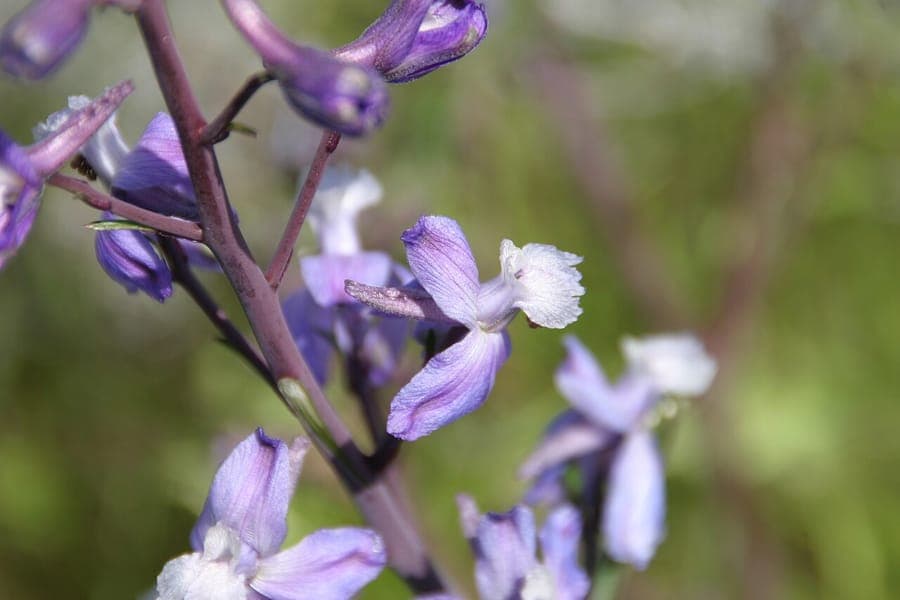
joedecruyenaere / CC BY-SA 2.0, via Wikimedia Commons
Recurved larkspur (Delphinium recurvatum): complete guide
Delphinium recurvatum
¿Quieres ver Recurved larkspur (Delphinium recurvatum): complete guide en tu jardín?
1 minuto, sin tarjeta de crédito
Overview
Recurved larkspur (Delphinium recurvatum) is a fascinating wildflower endemic to central California, growing on dry mountain meadows and open grasslands. This species is remarkable for its distinctive flower morphology - the petals characteristically curve or recurve backward, giving the plant its descriptive name. This is a true wildflower for gardeners willing to experiment with less common California natives.
Appearance and bloom
Recurved larkspur grows as an upright herbaceous plant reaching 40-70 cm in height. The flowers are the plant's most distinctive feature: petals are dramatically recurved or rolled backward, creating a highly characteristic silhouette. Flower color ranges from bright blue to purple. Blooming occurs March through May. The plant has finely divided leaves typical of Delphinium species.
Ideal location
Recurved larkspur thrives in:
- Full sun (minimum 6-8 hours direct light)
- Dry to semi-dry growing conditions
- Well-draining soil without waterlogging
- Open, sunny positions
- Protection from strong winds helpful
Soil requirements
This plant prefers light, well-draining soil, ideally rocky or gravelly. Like many California wildflowers, it will not tolerate heavy, waterlogged soils. Poor to moderately fertile soil is ideal, matching the natural mountain meadow habitat.
Watering
Recurved larkspur is drought-tolerant. During the first season:
- Water regularly until well-established
- Once blooming begins, reduce watering significantly
- After bloom, provide minimal water
- This is an extremely drought-tolerant plant
Diseño gratis
¿Quieres ver Recurved larkspur (Delphinium recurvatum): complete guide en tu jardín? Crea un diseño gratis ahora.
Pruning and maintenance
Minimal maintenance required. Deadhead spent flowers to extend bloom slightly. After flowering, cut stems to ground level. Self-seeding is usually desirable in garden settings.
Maintenance calendar
- March-May: Flowering period; enjoy the unique recurved blooms
- June: Seed production; allow seeds to drop for next season
- July-August: Plant dies back
- September-February: Dormancy; awaiting spring
Winter hardiness
Recurved larkspur is hardy to USDA Zone 8-9 (-12 to -7 degrees C). In colder regions it may behave as an annual or short-lived perennial. In milder climates it performs better as a true perennial.
California wildflower characteristics
As a true California native, this larkspur prefers Mediterranean-type climates with wet winters and dry summers. This means it adapts better to drier gardens than to temperate maritime climates. Autumn sowing (for winter vernalization) produces superior results.
Companion plants
Combine with other drought-preferring wildflowers:
- Gaillardia californica: for red-yellow contrast
- Lupinus species: for purple layer
- Eschscholzia californica (California poppy): for orange-yellow accent
- Stipa species (needlegrass): for texture and movement
Propagation and seeding
Recurved larkspur germinates readily from seed. Sow in autumn in gritty seed compost for winter stratification. Germinates readily in warm spring days.
Closing thoughts
Recurved larkspur is a fascinating choice for gardeners appreciating botanical rarities and willing to experiment with California wildflowers. With dry growing conditions, full sun, and well-draining soil, this unique plant will add botanical interest to any front garden. Wildflower seed specialists regularly stock this species.
¿Quieres ver Recurved larkspur (Delphinium recurvatum): complete guide en tu jardín? Crea un diseño gratis ahora.
Sube una foto, elige un estilo y obtén un diseño fotorrealista con lista de plantas en menos de un minuto.
Más de 10.000 jardines diseñados
Sin tarjeta de crédito


Plantas similares
Drummond's anemone: complete guide
Anemone drummondii
Discover Drummond's anemone (Anemone drummondii): a silvery-grey mountain plant for cool rock gardens and alpine troughs.
Korean clematis: complete guide
Clematis serratifolia
Clematis serratifolia is a hardy climber with fragrant yellow bell flowers in August-September. Pruning group 3, location and care tips.
Aquilegia brevistyla: complete guide
Aquilegia brevistyla
Discover Aquilegia brevistyla, the elegant North American columbine. Growing tips, shade tolerance, and design ideas for woodland and shadowed gardens.