
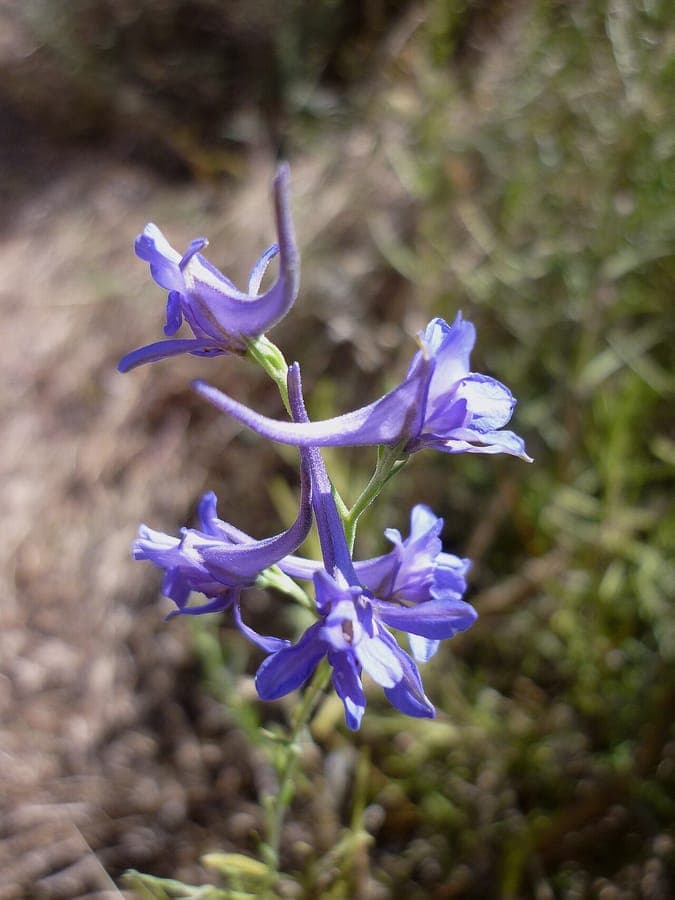
Isidre blanc / CC BY-SA 3.0, via Wikimedia Commons
Violet larkspur: complete guide
Delphinium peregrinum
¿Quieres ver Violet larkspur: complete guide en tu jardín?
1 minuto, sin tarjeta de crédito
Overview
Violet larkspur (Delphinium peregrinum), also called wandering larkspur, is an elegant annual or biennial hailing from southeastern Europe and western Asia. With its striking violet-blue blooms and fine, delicate foliage, this delphinium species brings airyness and color to borders and wild gardens. Smaller and more modest than its grand cousins, violet larkspur suits cottage gardens and mixed borders.
Appearance and Bloom Cycle
Violet larkspur grows as a graceful annual to 40–60 cm tall, sometimes taller in rich soil. Stems are slender and branching, clothed in finely divided, hand-shaped leaves. Flowers are intense violet-blue to indigo, sometimes with purple tones, arranged in loose, upright spikes. Each bloom bears the distinctive rearward spur (nectarium) characteristic of delphiniums. Flowering spans June through September, contingent on sowing date and conditions.
Ideal Location
Violet larkspur thrives in full sun - minimum 6–8 hours of direct daily sunlight. In shade, growth becomes leggy and blooms sparse. The plant enjoys a breezy position; gentle wind encourages compact, sturdy growth. Choose locations not heavily shaded by neighboring plants. Ideal for drifts in borders, meadow gardens, or wildflower mixes.
Soil Requirements
Sow in light, sandy, well-draining soil. Heavy clay should be lightened with sand and compost before sowing. Violet larkspur prefers neutral to slightly acidic pH (6–7.5). Avoid heavy organic matter, which promotes foliage at the expense of flowers. The plant is relatively drought-tolerant once established.
Watering
Keep seedbed and emerging seedlings consistently moist but not waterlogged. As seedlings grow, gradually increase air exposure. Water growing plants when soil feels dry 2 cm below the surface. Mature plants tolerate dry spells, though regular watering during spring and summer growth produces fuller blooms. Avoid standing water, which invites root rot.
Diseño gratis
¿Quieres ver Violet larkspur: complete guide en tu jardín? Crea un diseño gratis ahora.
Pruning and Deadheading
No pruning required, but regular deadheading extends bloom duration well into September. Removing spent flowers channels energy into new blossoms. Pinching main stems when 15 cm tall encourages bushier, more-flowered plants. Thin overcrowded seedlings promptly, allowing strong plants space.
Maintenance Calendar
March–April: Sow seed directly into prepared, sunny seed beds. Direct sowing is preferable to transplanting.
May–June: Thin seedlings to 20 cm spacing. Early flowers possible by late June.
July–August: Peak bloom; deadhead regularly; water during drought.
September: Bloom winds down; allow some flowers to set seed if desired.
October–November: Plants typically die; prepare beds for following year.
Winter Hardiness
Violet larkspur is not winter-hardy in harsh climates. It is annual or biennial depending on sowing season. Early spring sowing (March–April) yields annual plants flowering summer; autumn sowing (September) can produce biennials overwintering (with frost protection) and blooming the following spring.
Companion Plants
Pair with other summer bloomers: salvias, lavender, Gaura, or penstemons. Slender stems work well beside ornamental grasses (Miscanthus, Stipa). Early spring annuals like Papaver rhoeas (corn poppy) can share space. A drift of 3–5 plants creates fuller impact than scattered singles.
Conclusion
Violet larkspur is an elegant, ephemeral jewel transforming sunny borders in summer blue. Use gardenworld.app to design annual color schemes offering seasonal interest. Plan successive sowings for continuous bloom through summer.
¿Quieres ver Violet larkspur: complete guide en tu jardín? Crea un diseño gratis ahora.
Sube una foto, elige un estilo y obtén un diseño fotorrealista con lista de plantas en menos de un minuto.
Más de 10.000 jardines diseñados
Sin tarjeta de crédito


Plantas similares
Drummond's anemone: complete guide
Anemone drummondii
Discover Drummond's anemone (Anemone drummondii): a silvery-grey mountain plant for cool rock gardens and alpine troughs.
Korean clematis: complete guide
Clematis serratifolia
Clematis serratifolia is a hardy climber with fragrant yellow bell flowers in August-September. Pruning group 3, location and care tips.
Aquilegia brevistyla: complete guide
Aquilegia brevistyla
Discover Aquilegia brevistyla, the elegant North American columbine. Growing tips, shade tolerance, and design ideas for woodland and shadowed gardens.