
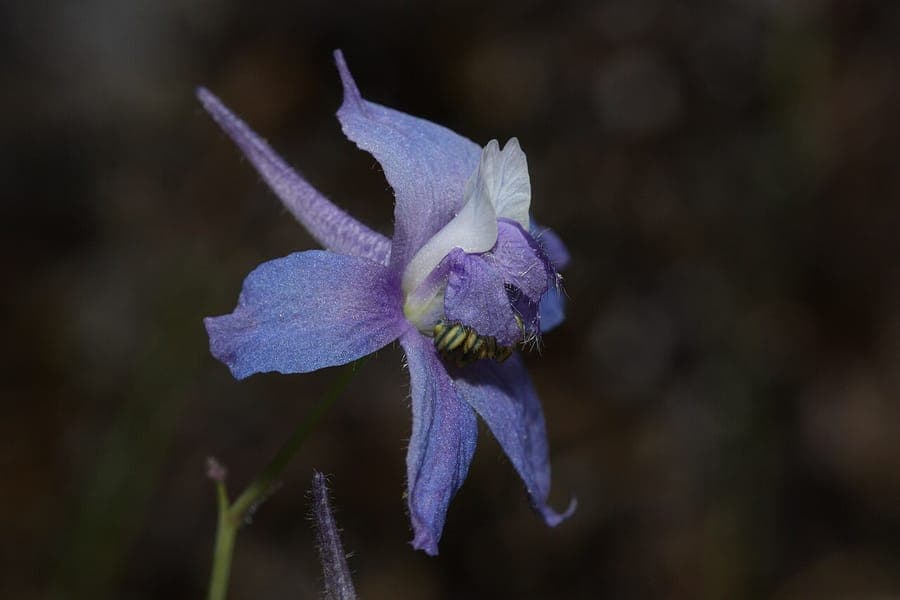
Walter Siegmund (talk) / CC BY-SA 3.0, via Wikimedia Commons
Delphinium menziesii: complete guide
Delphinium menziesii
¿Quieres ver Delphinium menziesii: complete guide en tu jardín?
1 minuto, sin tarjeta de crédito
Overview
Menzies larkspur (Delphinium menziesii) is a delicate wildflower originating from the Pacific Northwest of North America, from Canada to Oregon. This beautiful low-growing plant is known for its fine blue flowers and intricate leaf formations. Despite its modest appearance, it is a valuable ornament for alpine and wildflower gardens.
Appearance and bloom
Menzies larkspur grows to approximately 20 to 40 cm in height, making it a small, compact plant. The stems are slender and finely branched. The leaves are deeply cut and feathery, providing an elegant texture.
The flowers are the highlight: small, blue to purple flowers in a loose raceme. Blooming occurs from May to July. Each flower has a deep nectar spur, making the plant very interesting for pollinators.
Ideal location
This plant thrives best in full sun. Ensure the plant receives at least 6 hours of direct sunlight per day. In very warm climates, light afternoon shade may be beneficial. Well-draining soil is equally important as sunlight.
Soil
Menzies larkspur prefers well-draining, rocky to sandy soils. Heavy clay soils are unfavorable. In garden settings you can add sand and gravel to improve drainage. The plant tolerates lean soil well. pH neutrality is ideal.
Watering
After planting, water regularly until established. Once established, the plant tolerates drought well. Water carefully and let the soil dry somewhat between waterings. Avoid waterlogging absolutely, as this leads to root rot.
Diseño gratis
¿Quieres ver Delphinium menziesii: complete guide en tu jardín? Crea un diseño gratis ahora.
Pruning
Remove wilted flowers to encourage further blooming. If the plant becomes large, you can carefully cut it back after blooming. This helps prevent seeds from spreading everywhere (although self-seeding may be desired in alpine gardens).
Maintenance calendar
January-February: Cold stratification of seeds in preparation for spring.
March-April: Sow seeds in well-draining sand/peat mix.
May-June: Bloom period. Water carefully but regularly.
July-August: Blooms decrease. Seed capsules ripen.
September-October: Plants die back. Seeds can be collected.
November-December: Winter rest. Protect against excessive moisture.
Winter hardiness
Menzies larkspur is hardy to -15 degrees Celsius. In temperate climates it is winter hardy outside without protection. However, good winter drainage is essential. In very wet winters, protect with gravel or sand.
Particularly good with this plant
The plant fits well in alpine troughs, rock gardens and mountain groupings. Combine with other alpine flowers like phlox, silene and draba. Also beautiful in wildflower gardens among grasses. The plant attracts pollinators.
Final remarks
Menzies larkspur is an ornamental plant with high garden value. Although modest in size, its flowers are of high quality. Perfect for lovers of alpine and wildflower plants. You can find seeds at specialized seed suppliers. Gardenworld.app is happy to help with integration of this rare plant. Visit gardenworld.app for more ideas.
¿Quieres ver Delphinium menziesii: complete guide en tu jardín? Crea un diseño gratis ahora.
Sube una foto, elige un estilo y obtén un diseño fotorrealista con lista de plantas en menos de un minuto.
Más de 10.000 jardines diseñados
Sin tarjeta de crédito


Plantas similares
Drummond's anemone: complete guide
Anemone drummondii
Discover Drummond's anemone (Anemone drummondii): a silvery-grey mountain plant for cool rock gardens and alpine troughs.
Korean clematis: complete guide
Clematis serratifolia
Clematis serratifolia is a hardy climber with fragrant yellow bell flowers in August-September. Pruning group 3, location and care tips.
Aquilegia brevistyla: complete guide
Aquilegia brevistyla
Discover Aquilegia brevistyla, the elegant North American columbine. Growing tips, shade tolerance, and design ideas for woodland and shadowed gardens.