
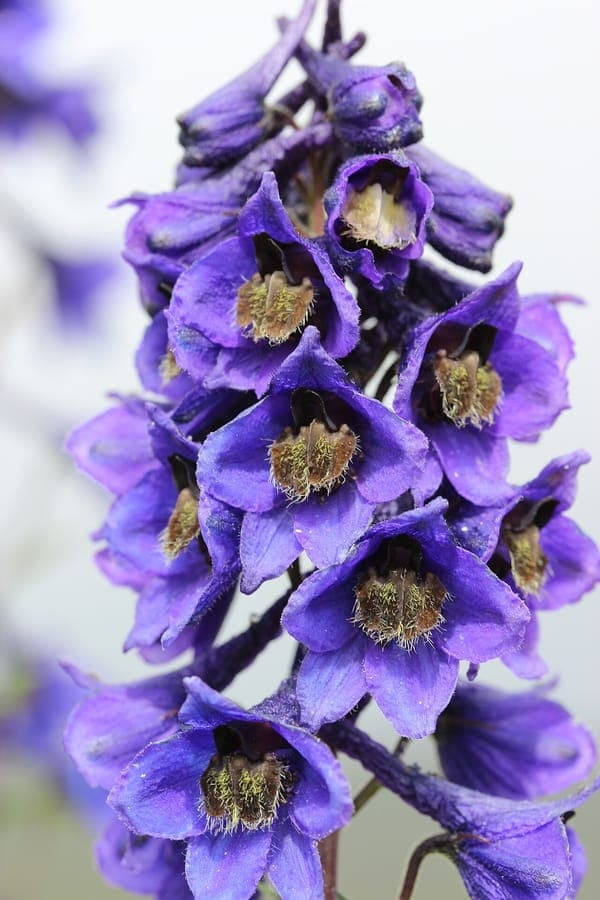
Björn S. / CC BY-SA 3.0, via Wikimedia Commons
Alpine Delphinium: complete guide
Delphinium elatum
¿Quieres ver Alpine Delphinium: complete guide en tu jardín?
1 minuto, sin tarjeta de crédito
Overview
Alpine delphinium (Delphinium elatum) is a majestic perennial from the buttercup family (Ranunculaceae). This impressive plant inhabits mountain regions from Europe to Mongolia naturally.
This plant is a true show-stopper with its long flower spikes in deep blue, violet, or white tones. Ideal for classical borders and cut flower gardens.
Appearance and bloom cycle
Alpine delphinium grows 120-200 cm tall, forming sturdy, upright stems with densely-packed flower spikes. Flowers are characteristic spurred blooms, usually deep blue to violet, sometimes white.
Flowers appear from June through August. The plant is spectacular in full bloom, providing months of beauty.
Leaves are palmately divided and green. Foliage remains attractive even outside the flowering season.
Ideal location
Alpine delphinium grows best in full sun. At least 6-8 hours of direct sunlight daily is essential for strong growth and rich flowering. Avoid partial shade due to weak growth.
This tall bloomer is perfect for the mid-to-back of borders. Also excellent as a cut flower for arrangements.
Soil requirements
Alpine delphinium prefers nutrient-rich, well-drained soil. Rich soil with adequate organic matter promotes vigorous growth. Optimal pH is neutral to slightly alkaline (pH 6.5-7.5).
Improve poor soils with compost and feeding. Waterlogging is extremely harmful; good drainage is essential.
Watering
Water regularly, especially during growth and flowering. Soil should remain moist but never waterlogged. Extra water needed in dry periods.
Mulching helps retain moisture. Regular watering increases plant vigor.
Diseño gratis
¿Quieres ver Alpine Delphinium: complete guide en tu jardín? Crea un diseño gratis ahora.
Pruning
Provide support with sturdy stakes as height makes plants susceptible to wind damage. Strong support is essential.
Deadheading spent flowers extends the blooming period. Cut back after blooming to about 30 cm above ground to promote second bloom in autumn. Cut back to ground level in late autumn.
Maintenance calendar
March-April: Young shoots appear. Install support. Start monthly feeding.
May-June: Obvious growth. Regular watering. Adjust supports.
June-August: Flowering period. Remove spent flowers. Continue watering and feeding regularly.
August-September: Second bloom possible after cutback. Continue feeding.
October-November: Growth slows. Cut back in late autumn.
December-February: Dormant period. Minimal water.
Winter hardiness
Alpine delphinium is hardy to USDA zone 3 (-35°C). No winter protection needed in temperate climates. Well-draining soil helps in wet winters.
Old foliage can provide protection in very cold periods.
Companion plants
Combine beautifully with other tall bloomers like liatris, filipendula, and vernonia. Lower-growing perennials like salvia and geranium offer nice contrast.
Works well in borders next to other delphiniums in different colors. Perfect element for a cut flower garden.
Closing thoughts
Alpine delphinium is a spectacular choice for classical and formal gardens. With its impressive height and rich flowering, it adds drama and elegance. Check your local garden center for plant material and seeds. Explore more garden inspiration on gardenworld.app.
¿Quieres ver Alpine Delphinium: complete guide en tu jardín? Crea un diseño gratis ahora.
Sube una foto, elige un estilo y obtén un diseño fotorrealista con lista de plantas en menos de un minuto.
Más de 10.000 jardines diseñados
Sin tarjeta de crédito


Plantas similares
Drummond's anemone: complete guide
Anemone drummondii
Discover Drummond's anemone (Anemone drummondii): a silvery-grey mountain plant for cool rock gardens and alpine troughs.
Korean clematis: complete guide
Clematis serratifolia
Clematis serratifolia is a hardy climber with fragrant yellow bell flowers in August-September. Pruning group 3, location and care tips.
Aquilegia brevistyla: complete guide
Aquilegia brevistyla
Discover Aquilegia brevistyla, the elegant North American columbine. Growing tips, shade tolerance, and design ideas for woodland and shadowed gardens.