
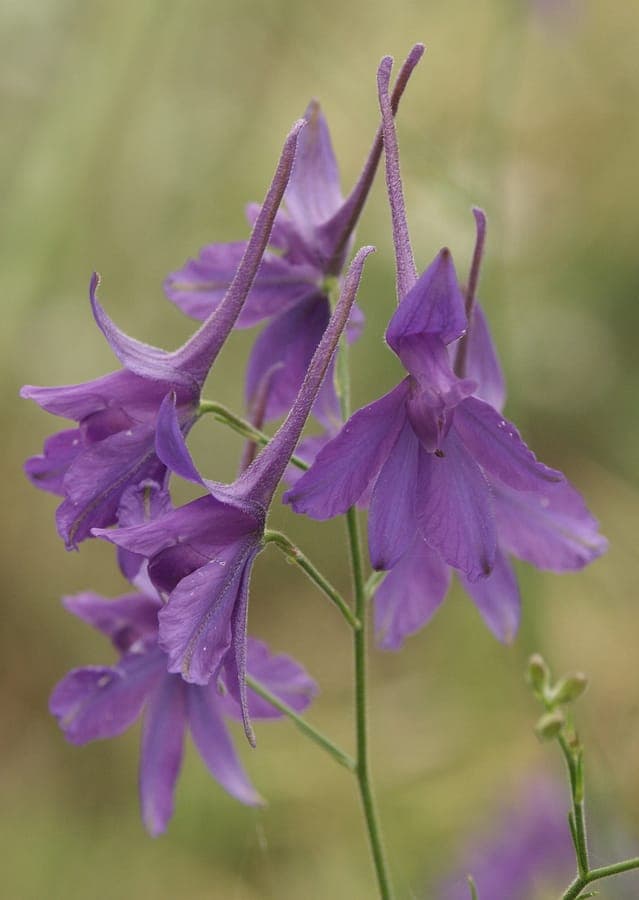
Picture taken by BerndH / CC BY-SA 2.5, via Wikimedia Commons
Delphinium consolida: complete guide
Delphinium consolida
¿Quieres ver Delphinium consolida: complete guide en tu jardín?
1 minuto, sin tarjeta de crédito
Overview
Delphinium consolida, commonly known as larkspur or consolida, is a wonderfully beautiful flower originating from Europe, Siberia, and the Caucasus. This plant belongs to the Ranunculaceae family and is renowned for its elegant, upright flowers in shades of blue, purple, and pink. The plant has a long history of cultivation in European gardens and remains a favorite among lovers of classical gardens today.
This article explores how to successfully sow, plant, and maintain Delphinium consolida to enjoy these magnificent blooms year after year. This is a plant for gardeners who love upright, characterful flowers.
Appearance and Bloom
Delphinium consolida grows as a slender, upright plant reaching 40 to 100 cm tall, depending on the variety and growing conditions. The plant has delicate, finely divided leaves that can display purple tints, adding extra ornamental value.
The flowers are the most striking feature. They appear in dense flower spires along the stems, with each flower featuring an open spur-shaped structure. The flowers typically appear in shades of sky blue, deep purple, pink, and white, with many displaying a contrasting dark blotch in the center that explains the name "larkspur."
The blooming period begins in early summer and extends through late summer, depending on when you sow. By sowing at different times, you can achieve nearly continuous blooming.
Ideal Location
Delphinium consolida thrives in full sun, receiving at least six hours of direct sunlight daily. In partial shade the plant still grows but produces fewer flowers.
The plant dislikes wind, so plant it where it has some wind protection. Strong winds can bend or break the tall stems.
In Dutch gardens, a south-facing location near a wall or in a sheltered corner is ideal. This also provides extra warmth the plant appreciates.
Soil
Delphinium consolida prefers well-draining, moderately fertile soil. Heavy clay is unsuitable; sandy and clayey soils should be improved with compost before sowing.
The plant prefers neutral pH around 7, but can also grow in slightly acidic soil. Test your soil beforehand.
Ensure good drainage. Wet roots lead to rot and fungal issues. If your soil holds much water, improve it by adding sand and compost.
Watering
Delphinium consolida requires regular water, especially during growth and flowering periods. The soil should be moist but not waterlogged.
During dry periods, water when the top 2-3 cm feels dry. This might be once to twice weekly, depending on weather and soil.
Excess water promotes fungal diseases. Always ensure good drainage and water at the roots rather than on foliage.
Diseño gratis
¿Quieres ver Delphinium consolida: complete guide en tu jardín? Crea un diseño gratis ahora.
Pruning
When the plant reaches approximately 10-15 cm tall, pinch out the growing tip above the first few leaf pairs. This encourages bushier, more branched growth.
When flowers appear, you can harvest them for vases. This stimulates continued flowering rather than seed production.
If you don't want the plant to self-seed (as it sometimes can), deadhead all flowers before seed sets.
Maintenance Calendar
February-March: Start seeds indoors or sow directly outside if frozen ground (stratified germination).
April-May: Prick seedlings and plant at final location once strong enough.
May-June: Growth phase. Ensure adequate watering and support if needed.
June-July: Flowering period begins. Water regularly. Resow for later succession.
July-September: Peak blooming period. Deadhead regularly for continuous flowers.
September-October: Flowering declines. Allow some plants to set seed or clean all.
October-November: Plant dies back. Remove material or leave for bird food.
Winter Hardiness
Delphinium consolida is an annual in the Dutch climate, though in some warmer places it can overwinter as a biennial. Most gardeners resow each year.
In very mild winters some plants might survive, but this is unreliable. It's safest to treat the plant as annual and resow each spring.
You can collect seed from your own plants and store dry for next season, making this an economical, self-perpetuating option.
Companion Plants
Delphinium consolida combines beautifully with other classic garden plants like roses, peonies, and sage. The blue color makes a fine contrast with yellow-flowering plants like calendula or marigold.
Placed between low growers like blue flax and white feathery plumes, stunning classical border effects emerge.
The plant fits well in cutting gardens where you harvest flowers for vases.
Closing Thoughts
Delphinium consolida invites classical gardening. The elegant, upright flowers have something timeless about them reminiscent of Victorian gardens and classic bouquets.
This is a plant where sowing seed and watching it grow is part of the pleasure. By sowing at different times, you can enjoy flowers throughout the summer.
Visitors to your garden will be fascinated by the elegance of this old garden plant. It's a plant that sparks conversation and evokes nostalgia.
For gardeners who love blue, this is a must-have. For cut flower enthusiasts, perfect. For classical gardeners, indispensable.
Visit specialist nurseries for seed and plant material. Seeds are inexpensive and sow easily. Follow packet instructions carefully.
Enjoy years of blue elegance with this magnificent European flower. With minimal effort you get maximum beauty, renewing itself year after year.
¿Quieres ver Delphinium consolida: complete guide en tu jardín? Crea un diseño gratis ahora.
Sube una foto, elige un estilo y obtén un diseño fotorrealista con lista de plantas en menos de un minuto.
Más de 10.000 jardines diseñados
Sin tarjeta de crédito


Plantas similares
Drummond's anemone: complete guide
Anemone drummondii
Discover Drummond's anemone (Anemone drummondii): a silvery-grey mountain plant for cool rock gardens and alpine troughs.
Korean clematis: complete guide
Clematis serratifolia
Clematis serratifolia is a hardy climber with fragrant yellow bell flowers in August-September. Pruning group 3, location and care tips.
Aquilegia brevistyla: complete guide
Aquilegia brevistyla
Discover Aquilegia brevistyla, the elegant North American columbine. Growing tips, shade tolerance, and design ideas for woodland and shadowed gardens.