
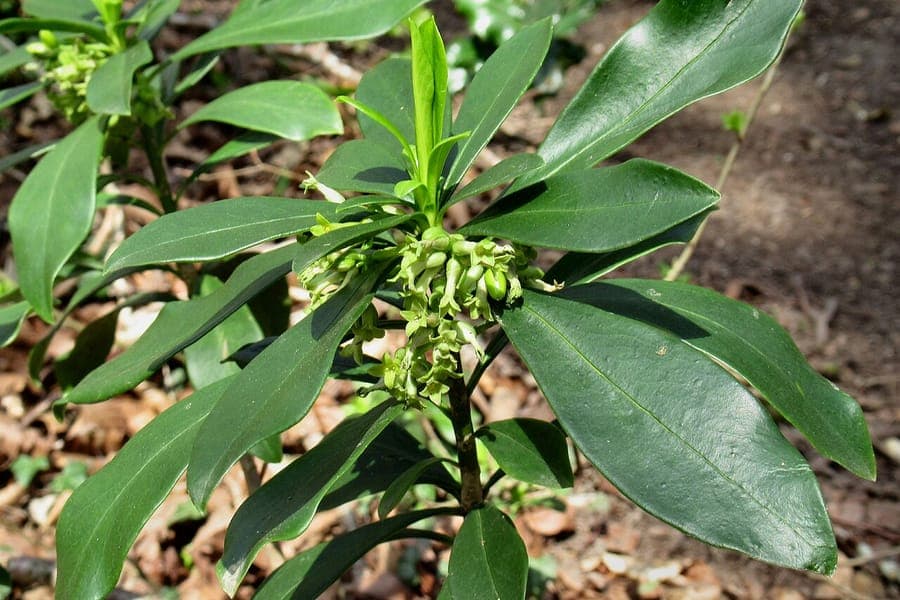
AndyScott / CC BY-SA 4.0, via Wikimedia Commons
Spurge-laurel: complete guide
Daphne laureola
¿Quieres ver Spurge-laurel: complete guide en tu jardín?
1 minuto, sin tarjeta de crédito
Overview
Spurge-laurel (Daphne laureola), known as black pepper tree or wood laurel, is an evergreen shrub celebrated for its fragrant flowers in the depths of winter. Blooming from January through April, this European native brings welcome color and scent when most gardens appear dormant. It thrives in temperate regions and grows reliably in well-drained positions with some shelter.
Appearance and Bloom Cycle
Spurge-laurel forms a compact, upright shrub reaching 60–120 cm in height. Its glossy, dark green leaves are lance-shaped and remain on the plant year-round. Small, yellowish-green flowers cluster densely at stem tips, releasing a powerful fragrance - particularly intense in late afternoon and evening. Flowering begins in January and continues through April. Dark red berries follow the flowers, maturing by summer.
Ideal Location
Choose dappled shade or semi-shade; the plant tolerates full sun but benefits from afternoon protection in hot climates. Plant where wind exposure is minimal, as stems are somewhat brittle. A position beneath deciduous trees works well, providing winter light and summer relief from intense sun. Ensure good air circulation to reduce fungal issues.
Soil Requirements
Daphne laureola needs well-draining, humus-rich soil slightly acidic to neutral (pH 6–7). Amend heavy clay with organic matter - leaf mold, compost, or aged bark - at planting. The plant detests wet roots; add coarse sand or gravel to improve drainage if needed. Once established, it tolerates occasional dryness, though consistent moisture supports better growth.
Watering
Keep soil evenly moist during the first season after planting. Established plants need water mainly during dry spells in spring and summer. Winter watering is rarely necessary unless conditions are exceptionally dry. Avoid wetting foliage to prevent fungal disease. Drip irrigation or soaker hoses work better than overhead spraying.
Diseño gratis
¿Quieres ver Spurge-laurel: complete guide en tu jardín? Crea un diseño gratis ahora.
Pruning
Minimal pruning is required. Remove dead, diseased, or crossing stems in spring after flowering. If the shrub outgrows its space, prune gently after bloom - severe cutting weakens the plant. Deadheading spent flowers keeps the shrub tidy and can extend bloom duration. Never cut into old wood, as recovery is slow.
Maintenance Calendar
January–February: Enjoy the fragrant blooms; monitor for standing water around roots.
March–April: Bloom period winds down; apply balanced, organic fertilizer as growth resumes.
May–August: Main growing season; water during dry spells; no pruning needed.
September–October: Plant hardens off for winter; hold back fertilizer.
November–December: Provide frost protection in harsh climates; reduce watering.
Winter Hardiness
Spurge-laurel tolerates temperatures to about −15°C (5°F). In northern Europe, mulch the base with 5–10 cm of leaf mold or compost to insulate roots. Young plants are more frost-sensitive than mature specimens. In maritime regions (UK, Netherlands, Belgium), winter hardiness is rarely a concern.
Companion Plants
Pair with other winter bloomers: snowdrops, winter jasmine, winter-flowering viburnum, or hellebores. Underplant with evergreen groundcovers such as ivy, vinca, or winter-green ferns. The fragrance and early season make spurge-laurel a valuable anchor in winter interest combinations.
Conclusion
Spurge-laurel is a long-lived, reliable shrub that rewards patient gardeners with fragrant winter blooms year after year. Discover this and similar winter-blooming specimens through design tools on gardenworld.app. Use gardenworld.app to plan garden compositions that ensure year-round visual and sensory interest.
¿Quieres ver Spurge-laurel: complete guide en tu jardín? Crea un diseño gratis ahora.
Sube una foto, elige un estilo y obtén un diseño fotorrealista con lista de plantas en menos de un minuto.
Más de 10.000 jardines diseñados
Sin tarjeta de crédito


Plantas similares
Thymelaea sanamunda: complete guide
Thymelaea sanamunda
Full guide to growing Thymelaea sanamunda, a rare Mediterranean subshrub from southern France and Spain. Care, soil and location tips.
Daphne pontica: complete guide to Pontic daphne
Daphne pontica
Pontic daphne from southeast Europe: compact evergreen shrub, intensely fragrant spring flowers, toxic. Prefers partial shade and well-drained soil.
Winter daphne (Daphne odora): complete guide
Daphne odora
Learn how to grow fragrant winter daphne for year-round garden interest. This cold-hardy shrub blooms in winter and fills gardens with intoxicating perfume.