
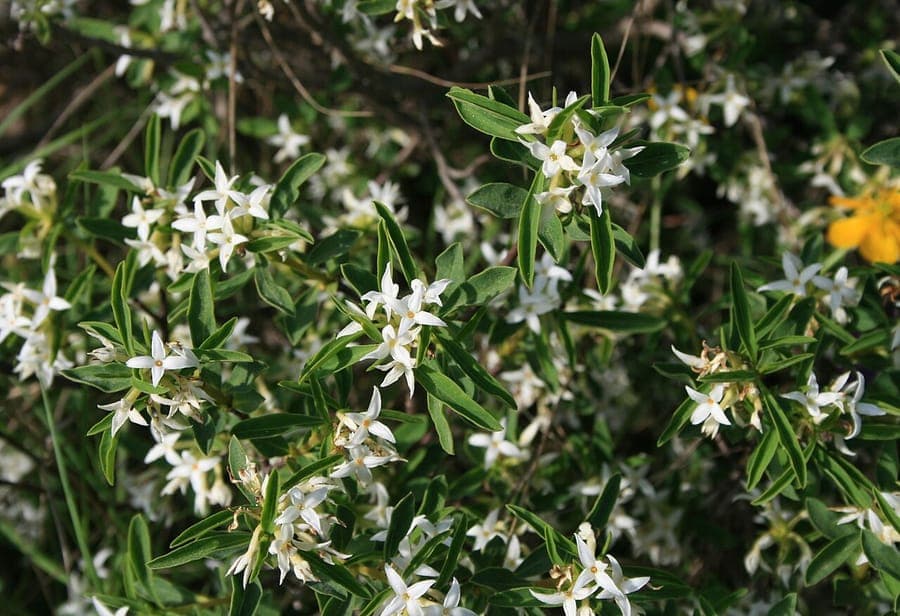
Franz Xaver / CC BY-SA 3.0, via Wikimedia Commons
Daphne alpina: complete guide
Daphne alpina
¿Quieres ver Daphne alpina: complete guide en tu jardín?
1 minuto, sin tarjeta de crédito
Overview
Daphne alpina, commonly known as Alpine Daphne or Alpine Mezereon, is a compact flowering shrub native to the Alps of southern Europe. This member of the Thymelaeaceae family naturally grows on rocky alpine slopes. The plant is renowned for its beautiful white flowers that appear in late spring.
Alpine Daphne is a rewarding plant for gardeners seeking something special. It grows slowly and remains compact. In the right conditions, it thrives for decades with minimal intervention.
Appearance & Bloom Cycle
Daphne alpina is a semi-deciduous to semi-persistent shrub, typically 30-50 centimeters tall. The leaves are narrow, lance-shaped, bright green and glossy. The plant reaches its most attractive during May and June when numerous small but striking white flowers open.
The flowers grow in dense clusters at branch ends and emit a pleasant, delicate fragrance. After flowering, red berries develop. These berries are toxic to humans.
Ideal Location
Daphne alpina thrives in full sun to partial shade. In warmer climates, afternoon shade is preferable. The plant does not tolerate dense shade. Ensure good air circulation.
Position your Daphne alpina where you can enjoy its delicate fragrance near seating areas. Since it is a mountain plant, it feels at home in scree gardens or raised beds.
Diseño gratis
¿Quieres ver Daphne alpina: complete guide en tu jardín? Crea un diseño gratis ahora.
Soil Requirements
Excellent drainage is essential for Daphne alpina. The plant cannot tolerate waterlogged conditions. Incorporate coarse sand or grit into the planting area. Ideal pH is neutral to slightly acidic (6.0-7.0).
Integrate organic matter sparingly. The plant naturally grows in lean mountain soil.
Watering
Daphne alpina is moisture-loving but cannot tolerate waterlogging. Keep soil lightly moist. In winter, after foliage drops, established plants need less water.
Pruning
Daphne alpina requires no formal pruning. Allow the plant to maintain its natural form. Only dead wood should be carefully removed.
Caution: Daphne stems can irritate skin. Wear gloves.
Maintenance Calendar
April: Growing season begins. May-June: Bloom period. July: Post-bloom care. August-September: Growing season winds down. October: Leaf drop begins. November-March: Dormancy.
Winter Hardiness
Daphne alpina is exceptionally winter hardy, naturally growing on mountain slopes. It tolerates temperatures below -25 degrees Celsius.
Companion Plants
Daphne alpina combines beautifully with alpine asters, saxifraga, sedum, dianthus and phlox.
Closing Thoughts
Daphne alpina is a must-have for alpine enthusiasts. With its delicate white flowers, it brings spring charm to your garden. For more information, visit gardenworld.app.
¿Quieres ver Daphne alpina: complete guide en tu jardín? Crea un diseño gratis ahora.
Sube una foto, elige un estilo y obtén un diseño fotorrealista con lista de plantas en menos de un minuto.
Más de 10.000 jardines diseñados
Sin tarjeta de crédito


Plantas similares
Thymelaea sanamunda: complete guide
Thymelaea sanamunda
Full guide to growing Thymelaea sanamunda, a rare Mediterranean subshrub from southern France and Spain. Care, soil and location tips.
Daphne pontica: complete guide to Pontic daphne
Daphne pontica
Pontic daphne from southeast Europe: compact evergreen shrub, intensely fragrant spring flowers, toxic. Prefers partial shade and well-drained soil.
Winter daphne (Daphne odora): complete guide
Daphne odora
Learn how to grow fragrant winter daphne for year-round garden interest. This cold-hardy shrub blooms in winter and fills gardens with intoxicating perfume.