
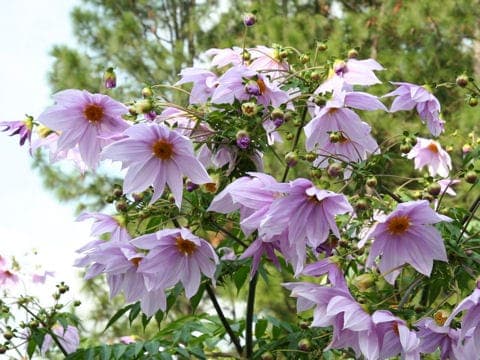
Shu Suehiro / CC BY 3.0, via Wikimedia Commons
Dahlia imperialis: complete guide
Dahlia imperialis
¿Quieres ver Dahlia imperialis: complete guide en tu jardín?
1 minuto, sin tarjeta de crédito
Overview
Dahlia imperialis, commonly known as Tree Dahlia or Bell Tree Dahlia, is a spectacular and colossal flowering plant originating from Mexico and Colombia. This member of the Asteraceae (daisy family) grows in a single season to a remarkable height sometimes reaching 4 meters in favorable conditions.
This is absolutely no ordinary dahlia. Instead of a compact border dahlia, this plant develops into a genuine tree with woody stems. Flowers appear at season's end (October through December) displaying large, spectacular pink to red blooms.
Appearance and Bloom
Dahlia imperialis grows rapidly into a thick, wooden-looking stem with large, winged leaves reaching 60 centimeters long. Each leaf is finely divided with linear leaflets. Foliage is deep green and highly attractive throughout the growing season.
The flowers are where true beauty emerges. They appear in October, November, and December at the top of tall stems in impressive displays. Each flower measures up to 15 centimeters diameter, fully double with numerous petals in pink, red, or purple shades. They emit a frosted fragrance resembling eucalyptus.
Ideal Location
Dahlia imperialis requires a sunny position with at least 6-8 hours of direct sunlight daily for optimal growth and flowering. A south-facing planting location is ideal. The plant grows faster in warm climates.
Ensure the plant has wind protection - the tall plant can topple in strong winds without support. Stakes or sturdy frames are usually necessary.
The plant also grows well in lightly shaded locations but flowers more abundantly in full sun.
Soil
Dahlia imperialis grows best in nutrient-rich, well-draining soil. For optimal growth incorporate generous amounts of compost or rotted organic matter at planting. This plant requires substantial nutrition.
Ensure good drainage - waterlogging can damage roots. Mulching helps retain moisture and improve nutrient availability.
The plant grows well in containers with rich potting soil, though ground planting is preferred.
Diseño gratis
¿Quieres ver Dahlia imperialis: complete guide en tu jardín? Crea un diseño gratis ahora.
Watering
Dahlia imperialis requires regular, deep watering, especially during dry periods and rapid growth phases. Water two to three times weekly, depending on weather.
During critical growing season (summer) consistent watering is essential for rapid stem development. Drip irrigation or soaker hoses enable efficient watering.
In containers water when soil surface feels dry, which may be daily in heat.
Pruning
Dahlia imperialis requires no traditional pruning. Let the plant develop its natural form. For bushier plants, pinch the growing point when the plant reaches approximately 60 centimeters height.
Remove dead leaf material as it browns. After flowering, in December or January, you can remove the plant if growing it as annual.
Later in season the plant can be cut to ground level for protection.
Maintenance Calendar
April-May: Start seeds in warmth. June-August: Strong growth, regular watering and fertilizing. August-September: Install stakes for support. October: Growth slows, first flowers appear. November-December: Maximum flowering, continuous watering. January: Flowering ends, plant can be removed.
Winter Hardiness
Dahlia imperialis is not winter-hardy and cannot survive outdoors in frost-prone regions. The plant dies in freezing conditions.
In very warm climates (USDA zone 10+) the plant may overwinter and grow as perennial. Most gardeners grow it as annual from seed.
Tuber formation occurs under certain conditions, which would allow winter storage in very warm regions.
Companion Plants
Dahlia imperialis works best as specimen plant given its spectacular height. Surround with low-growing plants for contrast - Begonias, Impatiens, or low-growing grasses.
Group with other Mexican plant material like Helianthus or Zinnia for exotic effect.
Closing
Dahlia imperialis is the ultimate statement plant for large gardens where impact matters. With spectacular growth and magnificent autumn blooms, this plant brings drama and beauty. For seeds or plants visit specialized nurseries or seed companies. Grow a genuine flowering tree - let gardenworld.app help plan large garden designs. Discover more dahlia guides at gardenworld.app.
¿Quieres ver Dahlia imperialis: complete guide en tu jardín? Crea un diseño gratis ahora.
Sube una foto, elige un estilo y obtén un diseño fotorrealista con lista de plantas en menos de un minuto.
Más de 10.000 jardines diseñados
Sin tarjeta de crédito


Plantas similares
Calendula stellata: complete guide
Calendula stellata
Complete guide to Calendula stellata, the star-flowered marigold from Sicily: location, soil, watering and companion planting tips.
Korean chrysanthemum: complete guide
Chrysanthemum x rubellum
Chrysanthemum x rubellum is a hardy autumn perennial with single pink to copper flowers from August to November. Care and combinations.
Helianthus divaricatus: complete guide
Helianthus divaricatus
Helianthus divaricatus is a North American woodland sunflower with yellow summer blooms, ideal for naturalistic borders and shady edges.