
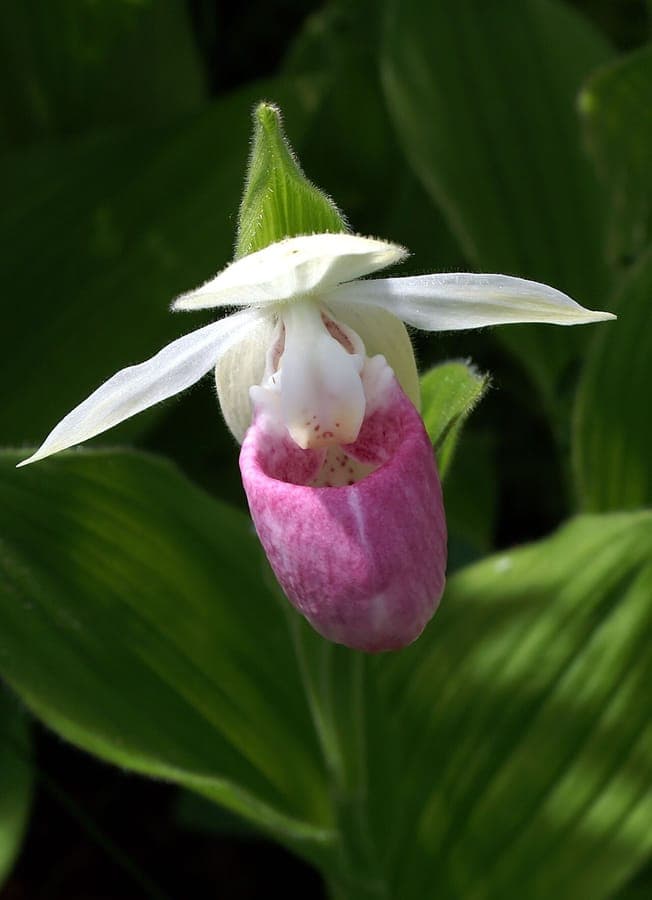
Orchi / CC BY-SA 3.0, via Wikimedia Commons
Cypripedium reginae: complete guide
Cypripedium reginae
¿Quieres ver Cypripedium reginae: complete guide en tu jardín?
1 minuto, sin tarjeta de crédito
Overview
Cypripedium reginae, known as queen lady's-slipper or showy lady's-slipper, is an exceptionally beautiful North American orchid considered one of the most impressive wild orchids of North America. This plant from the Orchidaceae family grows in wetland and boggy environments in Canada and the northern United States.
The plant is famous for its spectacular flowers with white and pink-red coloration. It is a slow-growing, moisture-loving plant that is difficult to grow in gardens but very rewarding when successful. The plant is protected in many regions and wild collection is forbidden.
Appearance and bloom
Cypripedium reginae presents itself as an elegant, upright-growing plant with elongated leaves and sturdy stems. The leaves are long, lance-shaped and green. The plant grows to approximately 45-90 centimeters tall.
The flowers are spectacular with large white petals and a large pink-red labellum (lip). The flower resembles a lady's slipper - the plant owes its name to this. The flowers appear in May-June and have a light scent. The plant usually blooms once per year and can go many years without blooming.
Ideal location
Cypripedium reginae thrives best in a moisture-loving spot with full to partial shade. The plant loves morning sun but afternoon shadow. In its natural habitat, the plant grows at marsh edges and wet forests.
The plant prefers cool temperatures (USDA zones 3-8). Ensure the plant is protected from hot summers and severe drought. In gardens, a location near a pool or fountain is ideal.
Soil
Cypripedium reginae prefers very moist, acidic, peaty soil with plenty of organic matter. An ideal soil mixture consists of garden soil, garden peat and sand in equal proportions. Add plenty of organic matter.
The pH should be acidic (pH 5.5-6.5). Ensure excellent drainage yet moisture retention. This is the most challenging aspect of cultivation. In containers, pots can be placed in larger pots with water to maintain constant moisture.
Watering
Cypripedium reginae must remain consistently moist, almost boggy, but without standing water around roots. This is critical. Water regularly, especially in growing season. The plant disappears when too dry.
In winter, watering can be slightly reduced but the plant must never dry completely. Ensure consistent moisture levels with thick mulch layer. Lime-free water is beneficial. In container cultivation, place pots in water trays for capillary moisture rise.
Diseño gratis
¿Quieres ver Cypripedium reginae: complete guide en tu jardín? Crea un diseño gratis ahora.
Pruning
Cypripedium reginae requires virtually no pruning. Remove dead leaves as soon as you notice them. The plant forms a beautiful shape naturally.
Remove spent flowers after blooming. This helps the plant retain energy. The plant takes a long time to develop from seedling to bloom (3-5 years or more).
Maintenance calendar
APRIL-MAY: Plant emerges from dormancy. Increase moisture levels. Monitor for insects. Blooming may occur.
JUNE-JULY: Growth reaches peak. Ensure adequate moisture. Apply fertilizer at half strength.
AUGUST-SEPTEMBER: Growth begins to decline. Gradually reduce feeding and watering.
OCTOBER-NOVEMBER: Plant enters dormancy. Reduce watering but maintain moisture levels. Stop feeding.
DECEMBER-MARCH: Dormancy period. Minimal watering. Ensure plant does not freeze.
Winter hardiness
Cypripedium reginae is highly winter-hardy in temperate climates to USDA zone 3. The plant survives frost periods and even needs cold for blooming. In too-warm winters, the plant may bloom less or not at all.
In warm climates, the plant must be grown in cooler, shady locations. Provide winter protection in very cold regions.
Companion plants
Cypripedium reginae grows well with other moisture-loving woodland plants. Good companions include:
Trillium - similar moisture-loving plant Solomon's seal - shade-loving Asterilbe - moisture-loving Hosta - shade-loving Ferns - moisture-loving
Closing
Cypripedium reginae is one of the most beautiful North American orchids and a challenge to grow, but very rewarding when successful. The plant requires patience, consistent moisture and cool temperatures.
Although difficult, growing this protected plant from seed in private gardens is a way to preserve this beautiful species. Never collect plants from the wild - instead choose seedlings or cultivated plant material.
Availability: Seedlings can be purchased from specialized orchid growers. For more information on orchid care and garden design, visit gardenworld.app. Learn more about wild orchids at gardenworld.app.
¿Quieres ver Cypripedium reginae: complete guide en tu jardín? Crea un diseño gratis ahora.
Sube una foto, elige un estilo y obtén un diseño fotorrealista con lista de plantas en menos de un minuto.
Más de 10.000 jardines diseñados
Sin tarjeta de crédito


Plantas similares
Ram's-head lady's slipper: complete guide
Cypripedium arietinum
Everything you need to know about growing Cypripedium arietinum, a rare woodland orchid for cool, moist garden settings. Soil, care and planting tips.
Sparrow's-egg lady's slipper: complete guide
Cypripedium passerinum
Everything about growing Cypripedium passerinum, a cold-hardy subarctic orchid suited to cool, moist, shaded garden spots. Soil, care and companion plants.
Algerian Butterfly-orchid: complete guide
Platanthera algeriensis
Everything about Platanthera algeriensis, the rare Mediterranean orchid with greenish flowers native to Algeria, Morocco, Corsica and Spain.