
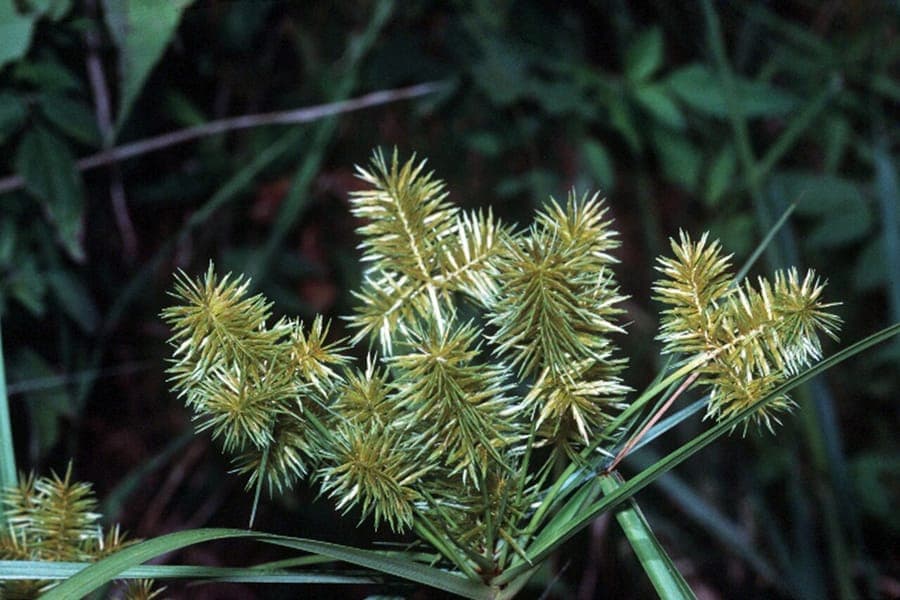
Robert H. Mohlenbrock / Public domain, via Wikimedia Commons
Cyperus strigosus: complete guide
Cyperus strigosus
¿Quieres ver Cyperus strigosus: complete guide en tu jardín?
1 minuto, sin tarjeta de crédito
Overview
Cyperus strigosus, commonly called False Nut Sedge or Straw-colored Flatsedge, is a North American sedge from the Cyperaceae family. Native from Canada through the United States to Cuba, this plant offers unique visual appeal with fine foliage and showy red fruits.
Appearance and Bloom
The plant displays bunch-form growth with slender, consistently green foliage. Brown flowers are inconspicuous, but distinctive red fruits become the main attraction, creating vibrant color against green leaves. The plant achieves moderate height and self-seeds readily in suitable conditions.
Ideal Location
False nut sedge thrives in half-shade to full sun along water margins, in seasonally inundated grasslands, and at marsh transitions. The plant tolerates variable groundwater levels and performs best where seasonal flooding occurs. Allow space for natural self-seeding.
Soil
This sedge grows on slightly acidic to neutral substrate (pH 6.4-7). Soil fertility is not critical but moderate nutrients (5 on 10-scale) yield best results. Water drainage can be moderate - the plant prefers seasonally wet to moist ground. Heavy clay soils perform well.
Watering
During growing season (May-October) water regularly - 2-3 times weekly in dry periods. The plant tolerates winter drying well. Resume watering when growth restarts (April). In garden settings, regular misting supports establishment.
Pruning
Pruning is minimal. Remove dead foliage before growing season (late March-April). After seed ripening (October-November), remove spent seed heads unless you want self-seeding. Allow natural bunch form to develop.
Diseño gratis
¿Quieres ver Cyperus strigosus: complete guide en tu jardín? Crea un diseño gratis ahora.
Maintenance Calendar
April: Begin growing season, start regular watering and feeding. May-June: Full growth, water 2-3 times weekly. July-August: Flower preparation, monitor moisture. September-October: Fruit set, allow seeds to ripen for sowing. November-February: Minimal care, water only during prolonged drought. March: Clean dead material, prepare for new season.
Winter Hardiness
Cyperus strigosus is moderately hardy - survives to -2 degrees in temperate climates. In Netherlands and Belgium it tolerates mild winters but temperatures below -5 degrees risk damage. Deeper water features (80+ centimeters) prevent winter mortality. Many populations self-seed annually for renewal.
Companion Plants
False nut sedge pairs beautifully with other North American marsh plants like yellow loosestrife, white marsh St. John's-wort, and various buttercup species. Smaller sedges provide fine textural contrast. In wild gardens, combine with reeds, arrowhead, and marsh ironweed.
Final Thoughts
Straw-colored flatsedge deserves wider recognition in North European gardens. With minimal care requirements, self-seeding ability, and persistent red fruits providing year-round bird food, this sedge offers lasting ecological and aesthetic value. Perfect for wild water features and ecological garden designs. Available at Intratuin and Gamma.
Design wild water features with gardenworld.app for more inspiration and plant combinations!
¿Quieres ver Cyperus strigosus: complete guide en tu jardín? Crea un diseño gratis ahora.
Sube una foto, elige un estilo y obtén un diseño fotorrealista con lista de plantas en menos de un minuto.
Más de 10.000 jardines diseñados
Sin tarjeta de crédito


Plantas similares
Flat-stemmed club-rush: complete guide
Bolboschoenus planiculmis
Everything about Bolboschoenus planiculmis: growing conditions, watering, care, and use as a pond margin or wetland plant in garden design.
Great Plains flatsedge: complete guide
Cyperus lupulinus
Everything about Great Plains flatsedge (Cyperus lupulinus): growing conditions, care, garden uses, and ecological value. Tips for pond margins and dry sandy soils.
Golden beak sedge: complete guide
Rhynchospora corymbosa
Everything about golden beak sedge (Rhynchospora corymbosa): a dramatic tropical marginal for pond edges, bog gardens, and wet habitats.