
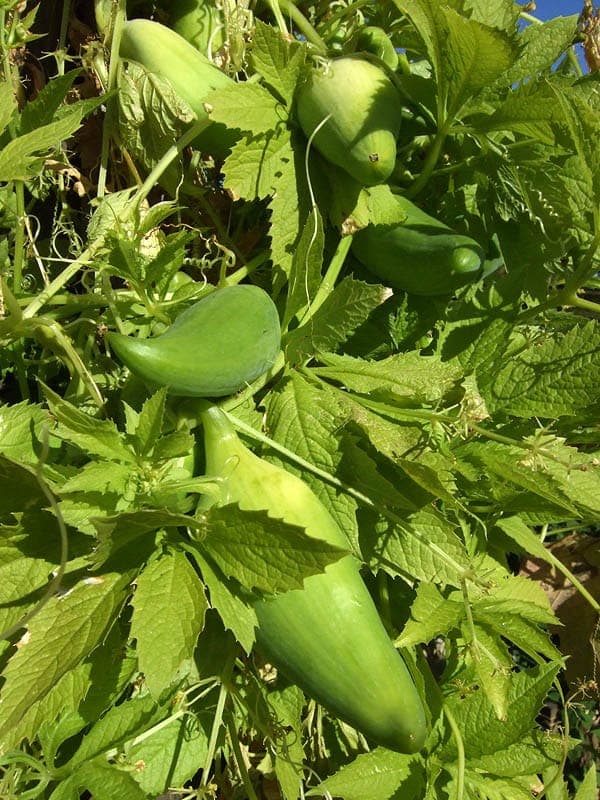
Zyance / CC BY-SA 3.0, via Wikimedia Commons
Cyclanthera pedata: complete guide
Cyclanthera pedata
¿Quieres ver Cyclanthera pedata: complete guide en tu jardín?
1 minuto, sin tarjeta de crédito
Overview
Cyclanthera pedata, commonly known as achocha, slipper gourd or sparrow gourd, is a fascinating and nutritious vegetable plant from South America. This plant originally comes from Mexico, Peru and other Andean countries where it is locally grown as food. It is a climbing plant from the Cucurbitaceae family (cucumber family) that produces small, green-white fruits with a unique shape.
The plant grows quickly and can reach considerable length in one season. The fruits resemble small cucumbers with characteristic bumps. They are very nutritious and can be prepared in various ways. The plant thrives in warm climates and is ideal for vertical gardening.
Appearance and bloom
Cyclanthera pedata presents itself as a fine, hairy tendril-climbing plant with toothed leaves and tendrils. The stems are green and covered with fine hair. The leaves are hand-shaped divided into approximately five lobes.
The flowers are small, yellow-white and appear in clusters along the stems. They bloom continuously from June to October in temperate climates. The fruits develop quickly after pollination and reach maturity after approximately 4-6 weeks. They are about 4-6 centimeters long and have a characteristic shape with small protrusions or "feet".
Ideal location
Cyclanthera pedata thrives best in a warm, full sunny location. The plant needs at least 6-8 hours of direct sunlight daily. The plant is a strong climber, so vertical trellis or pergola support is essential.
The plant prefers warm temperatures of 18-28 degrees Celsius. At lower temperatures, growth slows. In cold regions, the plant can be grown as an annual crop in warm seasons. Provide space at the top of support structures so the plant can grow.
Soil
Cyclanthera pedata prefers rich, well-draining soil with plenty of organic matter. An ideal soil mixture consists of garden soil, compost and sand in equal proportions. Add extra compost for better water retention. The plant responds well to nutrient-rich soils.
The pH should be neutral to slightly acidic (6.5 to 7.5). Ensure good drainage. Mulching with 5 centimeters of compost around the plant helps moisture retention and soil temperature moderation.
Diseño gratis
¿Quieres ver Cyclanthera pedata: complete guide en tu jardín? Crea un diseño gratis ahora.
Watering
Cyclanthera pedata likes to receive regular water, especially in hot periods. Keep the soil moist but not waterlogged. In hot summers, daily watering may be necessary. Ensure water is well absorbed into the soil.
Water early in the morning or late in the evening to reduce evaporation. Avoid water on leaves to prevent fungal diseases. Ensure consistent watering, as irregular watering can lead to fruit splitting.
Pruning
Cyclanthera pedata requires minimal pruning, but you can shape the plant by shortening side shoots. This encourages more flowers and fruit production. Remove damaged or weak shoots.
Remove lower leaves when the plant becomes large to improve air circulation. This also helps prevent fungal diseases. However, leave enough foliage for photosynthesis and shade for the fruits.
Maintenance calendar
APRIL-MAY: Sow indoors in pots or directly in the garden after frost danger. Provide warm soil (at least 18 degrees).
JUNE-JULY: Plants grow quickly. Provide support and regular watering. Apply feeding every two weeks.
AUGUST-SEPTEMBER: Peak of fruit production. Harvest regularly for larger production. Ensure adequate watering.
OCTOBER-NOVEMBER: Growth begins to decline at lower temperatures. Continue harvesting until first frost.
DECEMBER-MARCH: Plant dies at frost. Collect seed for next season.
Winter hardiness
Cyclanthera pedata is not winter-hardy in temperate climates. The plant is very frost-sensitive and will die at temperatures below 5 degrees Celsius. In subtropical regions, the plant can grow as a perennial crop.
In cold regions, the plant is grown as an annual summer crop. Seed can be saved in dry form for the next season.
Companion plants
Cyclanthera pedata grows well with other heat-loving climbing plants. Good companions include:
Beans - vertical growth Peas - similar needs Corn - support and shade Squashes - similar family members Tomatoes - sun and heat lovers
Closing
Cyclanthera pedata is a fascinating vegetable plant that provides nutritious produce. With its fast-growing nature and continuous fruit production throughout the season, it is an excellent choice for self-sufficient gardeners.
The fruits can be prepared in many ways and add an exotic dimension to home-grown vegetables. With warm temperatures, full sun and regular care, you can harvest abundantly.
Availability: Seed can be ordered online or from specialized seed merchants. For more information on vegetable growing and garden design, visit gardenworld.app. Explore vertical garden designs at gardenworld.app.
¿Quieres ver Cyclanthera pedata: complete guide en tu jardín? Crea un diseño gratis ahora.
Sube una foto, elige un estilo y obtén un diseño fotorrealista con lista de plantas en menos de un minuto.
Más de 10.000 jardines diseñados
Sin tarjeta de crédito


Plantas similares
Kiwano: complete guide
Cucumis metuliferus
Everything about growing kiwano: location, soil, watering, and harvesting this striking African horned cucumber with spiny orange fruits.
Sponge gourd: complete guide
Luffa aegyptiaca
Full guide to growing sponge gourd (Luffa aegyptiaca): sowing, care, harvesting edible fruits and drying natural loofah sponges in your garden.
Cucumis prophetarum: complete guide
Cucumis prophetarum
Wild cucumber is a fascinating climbing plant with remarkable spiky fruits. Learn how to grow this exotic annual from seed to harvest for decorative interest.