
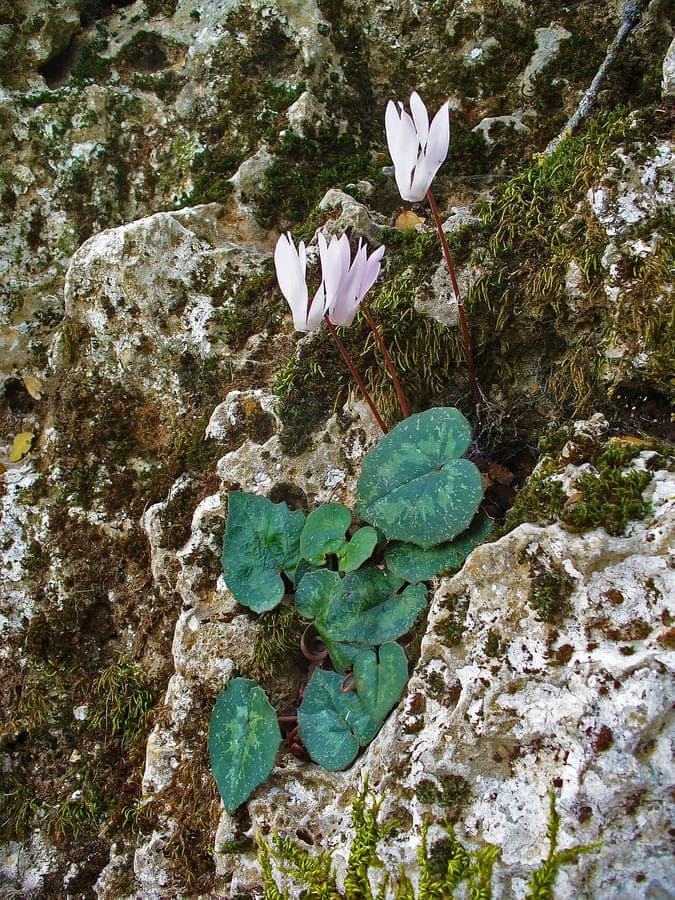
H. Zell / CC BY-SA 3.0, via Wikimedia Commons
Cyclamen creticum: complete guide
Cyclamen creticum
¿Quieres ver Cyclamen creticum: complete guide en tu jardín?
1 minuto, sin tarjeta de crédito
Overview
Cretan cyclamen (Cyclamen creticum), also known as Cretan sowbread, is a charming bulb plant from the Primulaceae family. This rare species originates from the island of Crete in Greece and is renowned for its fragile pink flowers and attractive heart-shaped leaves with silver markings. This plant brings subtle elegance to shaded garden corners.
Appearance and bloom
Cretan cyclamen grows to approximately 10 to 15 cm in height. The flowers are small, approximately 1 cm large, with fringed petals in soft pink tones. The flowers appear in March to April, making the plant an early spring bloomer. The leaves are a real asset: dark green with silver patterns and red undersides. These leaves remain attractive throughout the season.
The plant forms small tubers underground that can return season after season. This makes Cretan cyclamen a perennial plant that blooms again each year.
Ideal location
This plant thrives best in partial shade to shade. A spot under deciduous trees or against a north to east-facing wall is ideal. Too much sun, especially in warm climates, can cause leaf scorch. Ensure the plant is somewhat protected from hot afternoon sun in summer.
Soil
Cretan cyclamen prefers well-draining soil, rich in organic matter. Add peat or compost to the planting hole. The plant tolerates chalky soils well, which is fitting for its Mediterranean origin. Ensure water does not stagnate, as this can cause rot.
Watering
After planting, water regularly until the plant is established. Keep the soil evenly moist but not wet. Once established, the plant is quite drought-tolerant because the underground tubers store moisture. During dry periods you can water carefully. Ensure water does not run directly on the tuber.
Diseño gratis
¿Quieres ver Cyclamen creticum: complete guide en tu jardín? Crea un diseño gratis ahora.
Pruning
Pruning is not really necessary for Cretan cyclamen. Remove wilted flowers and leaves to prevent rot. As the leaves turn yellow after flowering, let them die naturally. Do not cut healthy leaves too early, as they feed the tuber.
Maintenance calendar
January-February: Plant tubers in autumn (September-October) in well-draining soil.
March-April: Bloom time. Enjoy the delicate pink flowers.
May-June: Leaves remain green. Continue careful watering.
July-August: Rest period. Keep dry and prevent direct sun.
September-October: Slow growth resumption. First moisture application.
November-December: Winter preparation. Protect in cold climates.
Winter hardiness
Cretan cyclamen has limited winter hardiness. In mild climates (zone 8 and warmer) it can stay outside with protection. In cold regions you need to carefully overwinter it. In temperate climates, mulch and dryness are important. Avoid fully wet winters.
Particularly good with this plant
Cretan cyclamen fits well with other shade-loving bulbs like Trillium, Helleborus and Erythronium. Combine with foliage perennials like hostas or hedera. The fine leaves of cyclamens create a nice contrast with broader-leaved plants.
Final remarks
Cretan cyclamen is a unique plant that enriches your garden with Mediterranean charm. Although somewhat choosy, you are rewarded with years of blooms. Perfect for lovers of rare and delicate plants. You can find this plant at specialty shops. Gardenworld.app is happy to help integrate this precious plant into your garden plan. Visit gardenworld.app for more ideas.
¿Quieres ver Cyclamen creticum: complete guide en tu jardín? Crea un diseño gratis ahora.
Sube una foto, elige un estilo y obtén un diseño fotorrealista con lista de plantas en menos de un minuto.
Más de 10.000 jardines diseñados
Sin tarjeta de crédito


Plantas similares
Primula incana: complete guide to silvery alpine primrose
Primula incana
Silvery primrose (Primula incana), a delicate alpine flower with white blooms and powdered grey-green leaves. Growing, care, and cultivation guide.
Mealy cowslip: complete guide
Primula pulverulenta
Grow the Mealy cowslip (Primula pulverulenta): striking candelabra flowers in red and purple tones, moisture-loving and ideal for shady, damp garden corners.
Cliff dwarf-primrose: complete guide
Androsace laevigata
Full guide to growing Androsace laevigata, a rare Pacific Northwest alpine cushion plant. Planting, care, and garden design tips explained.