
Ian Kirk from Broadstone, Dorset, UK / CC BY 2.0, via Wikimedia Commons
Cyclamen coum: complete guide
Cyclamen coum
¿Quieres ver Cyclamen coum: complete guide en tu jardín?
1 minuto, sin tarjeta de crédito
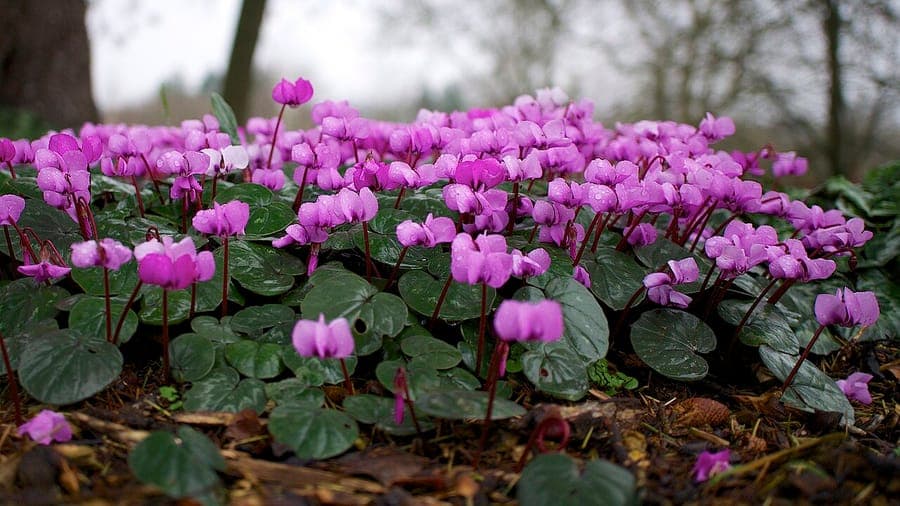
Cyclamen coum, commonly known as spring cyclamen or eastern cyclamen, is a charming tuberous plant belonging to the Primulaceae family. This species originates from mountainous regions of southeastern Europe and the Mediterranean, with distribution ranging from Bulgaria through Israel and the Caucasus. It is a winter-green plant maintaining foliage and flower buds during months when many other plants enter dormancy. Cyclamen coum forms dense clusters reaching approximately 10-15 centimeters tall with beautifully patterned heart-shaped leaves. Flowers emerge during early spring, from January through March in Europe, displaying a fascinating inverted form with distinctly rolled petals.
The appearance of Cyclamen coum is enchanting with its characteristic arrow-shaped or heart-shaped leaves frequently displaying beautiful marbled or silver-patterned markings. These leaves form dense rosettes at or just above ground level. Flowers are small, approximately 1-1.5 centimeters in diameter, with five petals that curl backward toward the apex. Flower color varies from pure white through extremely dark pink and all intermediate shades, with many cultivars exhibiting mixed colorations. The flowers are adapted for pollination by numerous bird species in their natural habitat. Following flowering, small seed capsules develop, disappearing as the plant enters summer dormancy.
Successfully cultivating Cyclamen coum requires suitable location with appropriate light conditions. This plant thrives optimally in shaded garden locations, particularly beneath deciduous trees before spring leafing. Select positions receiving minimum 4-5 hours of indirect light daily, avoiding intense midday sun. In Mediterranean and southern European climates, some shading may be necessary since direct summer sun can cause tuber desiccation. The plant appreciates atmospheric humidity around 60 percent.
Soil composition is absolutely critical for Cyclamen coum success. The plant cannot tolerate waterlogged conditions and requires exceptional drainage. Ideal conditions involve well-draining, humus-rich soil with pH between 5.5 and 7.5. Improve soil prior to planting by incorporating humus, leaf mold, and sand in ratios of approximately 3 parts soil to 1 part sand to 1 part leaf mold. The plant performs poorly on heavy clay soils. Note frequent winter rot and moisture-related diseases resulting from poor drainage.
Watering Cyclamen coum requires careful attention. Although the plant enjoys consistent moisture during growth, excessive water rapidly promotes root rot. Water carefully until soil is evenly moist but not soggy. During growing period, October through April, provide regular moisture. During summer dormancy, May through September, substantially reduce watering frequency as tubers remain inactive. Upon first autumn frost indications, resume regular watering.
Pruning is unnecessary for Cyclamen coum. Following flowering, you can remove spent flowers, though this is optional as the plant naturally disposes of seed capsules. Handle leaves and plant crown carefully as these structures are quite sensitive. If you desire seed collection for propagation, leave several seed capsules on the plant and harvest once mature.
The maintenance calendar for Cyclamen coum begins in September when the plant emerges from summer dormancy. From September through October, leaves and flower buds begin developing. From November through March represents the flowering period with peak bloom during January and February. Individual flowers persist approximately 3-4 weeks. From April through May, flowers cease and leaves begin senescence preparing for summer dormancy. From June through September, tubers remain inactive underground requiring dry conditions.
Cyclamen coum exhibits exceptional winter hardiness to approximately minus 15 to minus 20 degrees Celsius. Throughout the Netherlands and Belgium, the plant can grow permanently outdoors without protection. Snow actually provides additional insulation against extreme cold. During very severe winters, some foliage damage may occur, but underground tubers escape the worst of freezing temperatures. This plant therefore can persist for years without any winter protection.
Companion plants working well with Cyclamen coum include other spring-blooming groundcovers. Excellent compatible selections include Helleborus niger (Christmas rose), Hepatica nobilis (liverleaf), Erythronium (trout lily), and various small spring flowers. The plant grows well beneath Sarcococca (sweet box) and under deciduous winter-green trees. Avoid aggressive groundcovers that might overwhelm Cyclamen coum.
Finally, Cyclamen coum represents an excellent choice for shaded gardens seeking early spring color. With its elegant heart-shaped foliage and charming pink blooms, this species provides years of reliable flowering with minimal maintenance. Consult Gardenworld.app for additional information on shade-loving flowers and bulbous plants.
¿Quieres ver Cyclamen coum: complete guide en tu jardín? Crea un diseño gratis ahora.
Sube una foto, elige un estilo y obtén un diseño fotorrealista con lista de plantas en menos de un minuto.
Más de 10.000 jardines diseñados
Sin tarjeta de crédito


Plantas similares
Primula incana: complete guide to silvery alpine primrose
Primula incana
Silvery primrose (Primula incana), a delicate alpine flower with white blooms and powdered grey-green leaves. Growing, care, and cultivation guide.
Mealy cowslip: complete guide
Primula pulverulenta
Grow the Mealy cowslip (Primula pulverulenta): striking candelabra flowers in red and purple tones, moisture-loving and ideal for shady, damp garden corners.
Cliff dwarf-primrose: complete guide
Androsace laevigata
Full guide to growing Androsace laevigata, a rare Pacific Northwest alpine cushion plant. Planting, care, and garden design tips explained.