
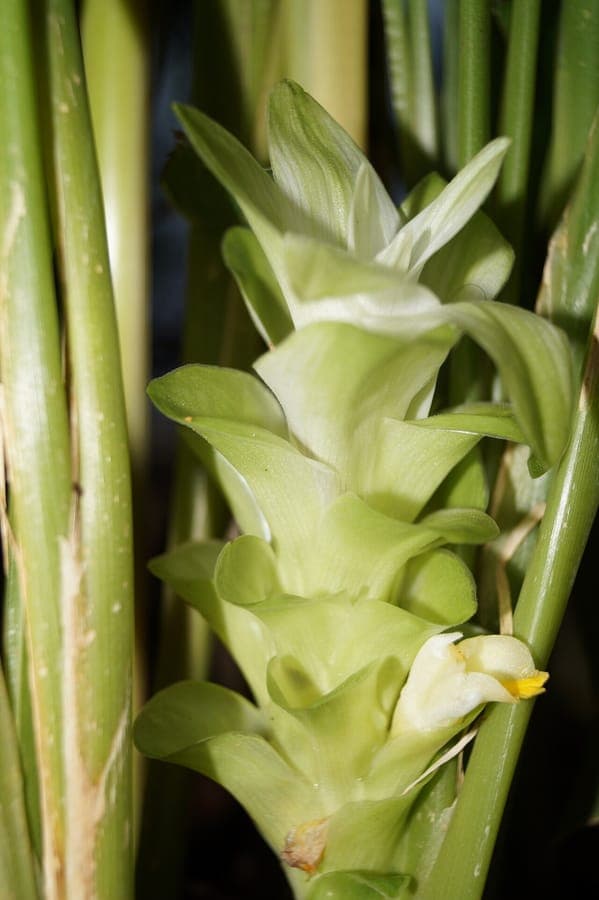
SKsiddhartthan / CC BY-SA 4.0, via Wikimedia Commons
Curcuma longa: complete guide
Curcuma longa
¿Quieres ver Curcuma longa: complete guide en tu jardín?
1 minuto, sin tarjeta de crédito
Overview
Curcuma longa, commonly known as turmeric or Indian saffron, is a fascinating herbaceous plant with a history spanning over 4,000 years. Native to southwestern India, this plant is now cultivated in numerous countries for its significant culinary and medicinal properties. The plant is renowned for its golden-yellow rhizomes containing curcumine, a compound valued across many cultures for health and coloring applications.
The plant grows to approximately 60-90 centimeters in height and produces elongated, lance-shaped green leaves. What truly distinguishes turmeric are the beautiful golden flowers and particularly the aromatic rhizomes (underground stems) that yield the famous yellow-orange powder.
Appearance and bloom
Turmeric presents itself as an elegantly growing plant with distinctive morphological characteristics. The plant grows in clumps with 1 to 3 sturdy, upright stems reaching up to 60 centimeters. The leaves are oblong, green, and can reach 45 centimeters in length with a prominent central vein.
Flowers appear in dense spikes atop the plant, displaying a beautiful yellow-orange hue. They typically bloom from May to August in temperate climates. Underground, numerous branched rhizomes develop, displaying warm yellow coloring and releasing the characteristic aromatic scent.
Ideal location
Turmeric thrives best in a warm, full to partially sunny location. The plant requires at least 4-6 hours of sunlight daily for optimal growth and rhizome formation. In warm climates, the plant may appreciate some afternoon shade to protect leaves from scorching.
When cultivating in containers, the plant can be placed indoors on a sunny windowsill or under grow lights. The plant prefers temperature gradients between 22-30 degrees Celsius, requiring abundant sunlight and protection from cold winds.
Soil
Turmeric prefers rich, well-draining soil with abundant organic matter. An ideal soil mixture consists of garden soil, leaf compost, and coco fiber in equal proportions. Add a handful of sand for improved drainage. Ensure the soil does not become waterlogged, as this can lead to rhizome rot.
Soil pH should be neutral to slightly acidic (6.5 to 7.5). Regularly add compost to improve soil quality and replenish nutrients. A 5-centimeter mulch layer of compost aids moisture retention and temperature regulation.
Watering
Turmeric appreciates regular watering, especially during the growing season (spring and summer). The soil should remain moist but never waterlogged. Water thoroughly when the top 2-3 centimeters of soil feel dry.
During winter and autumn, reduce watering as the plant enters dormancy. It is crucial to prevent water accumulation, which causes rhizome rot. Use room-temperature water and avoid hard water. Ensure containers have proper drainage with drainage holes at the base.
Diseño gratis
¿Quieres ver Curcuma longa: complete guide en tu jardín? Crea un diseño gratis ahora.
Pruning
Turmeric requires minimal pruning work. However, remove dead or damaged leaves as soon as you notice them. If you want the plant to focus energy on rhizome production rather than flowering, remove flower stems as they form.
At the end of the growing season (August-September), leaves may yellow and drop. This is normal and part of the plant's natural dormancy period. Cut the stems back to approximately 5 centimeters above the soil at this time.
Maintenance calendar
FEBRUARY-MARCH: Begin preparing planting material. Select healthy rhizomes with multiple growth buds. Plant them 3-5 centimeters deep in prepared soil.
APRIL-MAY: The plant begins to sprout. Ensure regular watering and adequate warmth. Feed with balanced fertilizer every two weeks.
JUNE-AUGUST: Peak growing season. Increase watering, fertilize regularly, and monitor for pests with insecticides.
SEPTEMBER-OCTOBER: Flower production reaches its peak. Gradually reduce watering and feeding.
NOVEMBER-JANUARY: Dormancy period. Significantly reduce watering. Protect plants from frost. Prepare for harvest if desired.
Winter hardiness
Turmeric is not winter-hardy in temperate climates. The plant is only suitable for cultivation in warm regions (USDA zones 9-11) or must be grown in containers that are brought indoors during winter. At temperatures below 10 degrees Celsius, the plant stops growing and rhizomes may be damaged.
In cold regions, consider turmeric as an annual plant or store rhizomes indoors during winter in a cool, dry location with temperatures around 10-15 degrees Celsius. Do not increase watering and allow them to rest until spring.
Companion plants
Turmeric grows well alongside other tropical herbs and foliage plants with similar heat and moisture requirements. Good companions include:
Ginger (Zingiber officinale) - related herb with similar needs Sprenger's asparagus fern (Asparagus setaceus) - fine textured plant Colocasia - tropical foliage plant Bananas - creates shade and humid atmosphere Pepper - another heat-loving herb
Closing
Turmeric is a beautiful and rewarding plant for anyone interested in tropical herbs and healthy eating. While the plant demands care and attention, it rewards your efforts with beautiful flowers, aromatic rhizomes, and numerous benefits. Both in gardens and containers, this golden root can be a fascinating addition.
With the right climate, soil, water, and care, you'll enjoy years of productive growth and harvests. Whether you cultivate the plant for medicine, food, or beauty, turmeric is certainly worth trying.
Availability: You can obtain turmeric rhizomes from major garden retailers. For more information on plant care and garden design, visit gardenworld.app. Also explore gardenworld.app for inspiration when creating a herb garden.
¿Quieres ver Curcuma longa: complete guide en tu jardín? Crea un diseño gratis ahora.
Sube una foto, elige un estilo y obtén un diseño fotorrealista con lista de plantas en menos de un minuto.
Más de 10.000 jardines diseñados
Sin tarjeta de crédito


Plantas similares
Etlingera elatior: complete guide
Etlingera elatior
Grow this exotic Torch Ginger indoors. Expert tips on warm conditions, humid soil, and care for spectacular blooms.
Indian crocus: complete guide
Kaempferia rotunda
Indian crocus offers purple flowers and tropical atmosphere. Discover how to successfully grow this fascinating bulbous plant in cooler climates.
Zingiber zerumbet: complete guide
Zingiber zerumbet
Discover Shampoo ginger (Zingiber zerumbet) - a tropical ornamental plant with spectacular flowers and exotic allure. Perfect addition to refined front garden designs.