
Wikimedia Commons / CC BY-SA 3.0, via Wikimedia Commons
Monterey cypress: complete guide
Cupressus macrocarpa
¿Quieres ver Monterey cypress: complete guide en tu jardín?
1 minuto, sin tarjeta de crédito
Overview
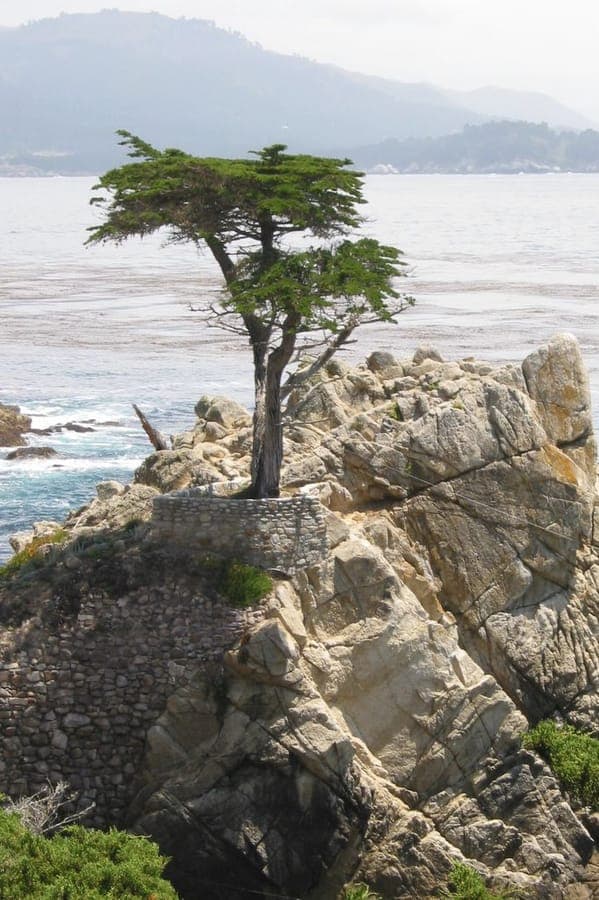
The Monterey or Macrocarpa cypress (Cupressus macrocarpa) is an impressive, large-scale conifer from the Cupressaceae family, originally from the Monterey Peninsula in California. This is an evergreen tree with an open, spreading form and golden-green aromatic foliage.
Appearance and Bloom
The Monterey cypress grows as a large, wide-spreading tree that can reach 20-30 meters tall. Young trees have a conical form, but as it matures it becomes more spreading and majestic. The foliage is finely scaly, golden-green and strongly fragrant when rubbed. The bark is reddish-brown and fissured. Male and female cones are yellowish-green.
Ideal Location
The Monterey cypress prefers full sun with at least 6-8 hours of direct sunlight. It is notably wind-tolerant and is often used in coastal regions. The tree appreciates sea air and performs better in coastal environments than many other conifers. Protection against extreme wind gusts prevents damage.
Soil
Well-draining soil is essential. The tree accepts dry to moderately moist soil. pH around 6.0-7.5 is optimal. Sandy to clay-like soil with organic material is ideal. Prefers not over-rich soil; too much nutrition can produce weak growth.
Diseño gratis
¿Quieres ver Monterey cypress: complete guide en tu jardín? Crea un diseño gratis ahora.
Watering
Once established, the Monterey cypress is reasonably drought-tolerant, although it appreciates more moisture than Arizona cypress. Water regularly for the first years after planting. Once established, supplemental water especially during prolonged droughts.
Pruning
Minimal pruning is needed; the natural form is usually very attractive. Removing dead wood and strongly inward-growing branches can be done in late winter. Heavy pruning can be done to maintain form if it becomes too large.
Maintenance Calendar
Spring: Water newly planted trees regularly. Summer: Monitor for watering in dry periods. Autumn: Minimal maintenance; tree prepares for winter. Winter: No specific maintenance; tree is fairly winter-hardy.
Winter Hardiness
The Monterey cypress is moderately winter-hardy in zones 8-10. It tolerates temperatures to about -7 to -9 degrees Celsius, but prefers warmer climate. In colder zones damage may occur; it works better in zones with less extreme winters.
Companion Plants
Other coastal-tolerant plants such as pittosporum, escallonia and certain grasses work well. Maritime plants such as sage and rosemary combine well. Avoid water-loving underplanting.
Closing
The Monterey cypress is a majestic, coastal-hardy conifer ideal for maritime gardens. Its wind-tolerance and sea-air preference make it perfect for coastal locations and sheltered coastal valley gardens. Discover more conifers on gardenworld.app/en and gardenworld.app/nl
¿Quieres ver Monterey cypress: complete guide en tu jardín? Crea un diseño gratis ahora.
Sube una foto, elige un estilo y obtén un diseño fotorrealista con lista de plantas en menos de un minuto.
Más de 10.000 jardines diseñados
Sin tarjeta de crédito


Plantas similares
Cupressus macnabiana: complete guide
Cupressus macnabiana
The Fragrant Cypress offers elegant growth with fine, aromatic foliage. Perfect for temperate climates and as specimen trees in contemporary gardens.
Cupressus guadalupensis: complete guide
Cupressus guadalupensis
The Guadalupe cypress: an elegant conifer for gardens. Complete cultivation guide for this Mexican cypress. Information about care, location, form and maintenance.
Austrocedrus chilensis: complete guide
Austrocedrus chilensis
Discover Austrocedrus chilensis, the Chilean Cedar ornamental conifer. Elegant specimen with fine foliage and columnar form for permanent structure.