
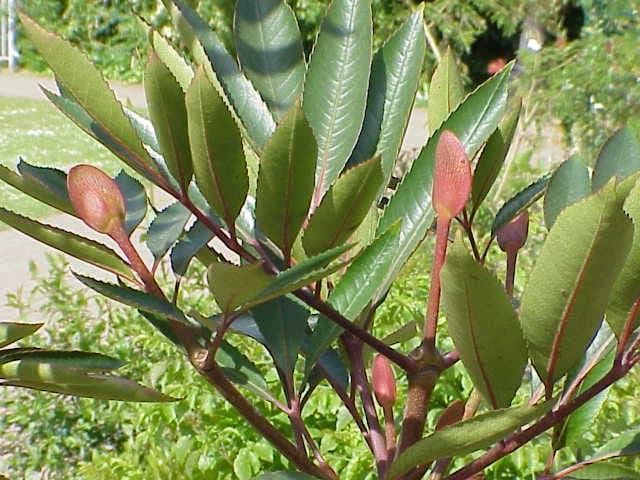
Kurt Stüber [1] / CC BY-SA 3.0, via Wikimedia Commons
Cunonia capensis: complete guide
Cunonia capensis
¿Quieres ver Cunonia capensis: complete guide en tu jardín?
1 minuto, sin tarjeta de crédito
Overview
Cunonia capensis, also known as the butterspoon tree or red alder, is an evergreen tree naturally occurring in the Cape Province and KwaZulu-Natal of South Africa. This exotic tree belongs to the Cunoniaceae family and is highly valued by gardeners interested in South African flora. With its impressive leaf structure and refined flowers, Cunonia capensis is a special addition for milder climates.
Although originally of South African origin, this tree can grow in temperate to warm climates outside South Africa, provided protected conditions are available.
Appearance & Bloom
Cunonia capensis grows into a medium-sized tree, typically 5-15 meters tall under ideal conditions. The tree has a compact, upright growth pattern with glossy, compound leaves arranged in dense pairs along the stems. The leaves have characteristic shine and give the tree elegant appearance even outside the flowering period.
Flowers appear in dense clusters, white to pink-tinted, appearing in late spring through early summer. The fruits are small, interesting capsular shapes that are botanically interesting.
Ideal Location
Cunonia capensis thrives best in bright positions with some protection from harsh midday sun, especially in very warm climates. The tree prefers a position with 4-6 hours of direct sunlight daily, optionally supplemented with filtered light during the rest of the day.
The tree is suitable for protected gardens and more subtropical climates. In temperate climates, a south-southwest facing position works well, tempering afternoon heat and providing winter protection.
Soil
Cunonia capensis prefers well-draining, slightly acidic soils. Add compost to the planting hole to create a rich growing environment. The tree can tolerate various soil types, provided drainage is ensured. Heavy clay soil should be improved with sand and compost to prevent waterlogging.
The tree can be sensitive to chalky (alkaline) soils, so acidic to neutral soils are preferred.
Diseño gratis
¿Quieres ver Cunonia capensis: complete guide en tu jardín? Crea un diseño gratis ahora.
Watering
In the first year after planting, regular watering is essential for establishing strong root structure. Once established, the tree can become less water-dependent, although it appreciates regular watering, especially during dry periods.
The tree prefers consistent moisture, not dry periods followed by excessive watering. A mulch layer aids moisture retention and protects against extreme temperatures.
Pruning
Cunonia capensis requires minimal pruning for structure, although early formation in younger years is beneficial. Remove dead or damaged branches as needed. Light trimming in spring helps maintain a compact, symmetrical form.
The tree heals only slowly from pruning, so be sparing with large cuts.
Maintenance Calendar
March-April: Light trimming for shape. Check for disease occurrences. May-July: Regular watering. Observation of bloom. August-September: Repeat moisture intake. Seed collection for interested parties. October-February: Minimal maintenance. Protection in cold winters.
Winter Hardiness
Cunonia capensis is not cold-hardy in freezing climates. In zones 8-11, the tree can grow outdoors. In colder climates, container cultivation works better, with winter protection or relocation to protected areas.
Companion Planting
Cunonia capensis pairs well with other South African plants or other subtropical species. The tree also works well as a specimen plant.
Closing Thoughts
Cunonia capensis is a unique tree bringing exotic elegance to milder temperate gardens. For more plant recommendations and garden inspiration, visit gardenworld.app. Discover how to integrate unique subtropical elements into your garden design.
¿Quieres ver Cunonia capensis: complete guide en tu jardín? Crea un diseño gratis ahora.
Sube una foto, elige un estilo y obtén un diseño fotorrealista con lista de plantas en menos de un minuto.
Más de 10.000 jardines diseñados
Sin tarjeta de crédito


Plantas similares
Acer pycnanthum: complete guide
Acer pycnanthum
Acer pycnanthum, the Japanese swamp maple, is a fast-growing tree with early red flowers and brilliant autumn color, ideal for damp garden settings.
Freeman maple: complete guide
Acer × freemanii
Everything about the Freeman maple (Acer x freemanii): a fast-growing shade tree with spectacular autumn colour for large gardens.
Silver vine: complete guide
Actinidia polygama
Discover silver vine (Actinidia polygama): a hardy climbing plant with silvery foliage, loved by gardeners and cats alike.