
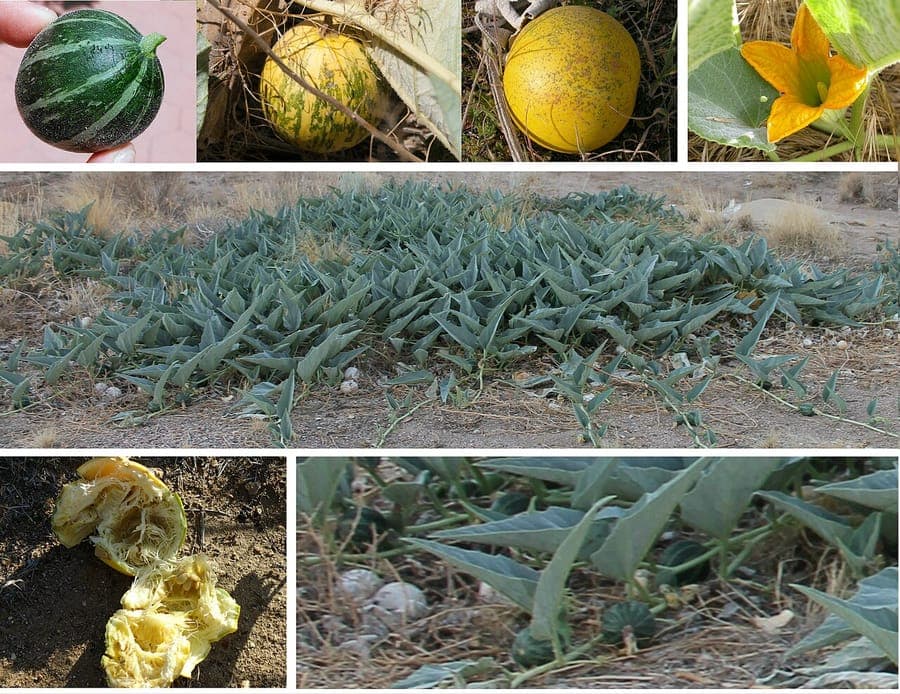
Photographs: Up, from left to right: Paigeblue08, Paul Asman and Jill Lenoble, "Photography by Curtis Clark", "Copyright by Curtis Clark". Middle: Paigeblue08. Bottom left: CharleBernardo. Bottom right: Paigeblue08. Montage by RoRo / CC BY-SA 3.0, via Wikimedia Commons
Prairie gourd: complete guide
Cucurbita foetidissima
¿Quieres ver Prairie gourd: complete guide en tu jardín?
1 minuto, sin tarjeta de crédito
Overview
The Prairie gourd (Cucurbita foetidissima), also called buffalo gourd or calabazilla, is a robust vining plant from the Cucurbitaceae family. This native North American desert plant grows from Mexico to the US and is known for its large yellow flowers and characteristic round, bright yellow fruits. Though inedible due to extreme bitterness and foul odor, this plant is valued by landscape designers for its dramatic visual impact and extreme drought tolerance.
Appearance and bloom
The Prairie gourd grows 5-6 meter vines with large, coarse, grayish-green leaves. The flowers are large, bright yellow, and appear from May to August in clusters. Each flower is approximately 5-7 centimeters wide and attracts many pollinators. In autumn, characteristic round, smooth fruits develop to about 10 centimeters diameter, bright yellow, very striking in the garden.
Ideal location
Choose a warm, full-sun location with at least 8 hours of direct sunlight daily for Prairie gourd. This plant tolerates extreme heat and bright sun well. Plant near a pergola or trellis for support. Avoid shady locations where the plant struggles to grow.
Soil
The Prairie gourd grows well in poor, dry soils where other plants struggle. Sandy, gravelly soils are preferred. Avoid rich, moist soils that stimulate excessive foliage. Alkaline soils (pH 7-8.8) are well tolerated. Drainage is essential; avoid waterlogging completely.
Diseño gratis
¿Quieres ver Prairie gourd: complete guide en tu jardín? Crea un diseño gratis ahora.
Watering
Once established, Prairie gourd is extremely drought-tolerant. Water well at planting, then water very sparingly. In regular rainfall, the plant grows without supplemental water. During persistent drought, occasional watering may help, but the plant thrives best with minimal feeding and water.
Pruning
Pruning is usually unnecessary. The plant grows naturally in a compact form. Remove only dead vines or stems. To keep size in check, light pruning in late spring may be done, but this can limit blooming and fruit set.
Maintenance calendar
May/June: Vigorous growth period, blooming begins. July/August: Full bloom, fruit set. September/October: Fruits ripen to yellow. November/December: Plant dies back in cold. January/February: Winter dormancy in mild climates.
Winter hardiness
Prairie gourd is hardy to about -5 to 0C in temperate climates. In cold areas it is grown annually as an annual. In warm zones (8-11) it may be perennial, regrowing from roots. Plant on southwest-facing exposure for extra protection.
Companion plants
Combine Prairie gourd with other xeric plants like agaves, yuccas, and sedums. Low-growing groundcovers like stonecrop work well in foreground. Ornamental grasses for contrast and texture. Avoid moisture-loving plants nearby.
Closing
Prairie gourd is a dramatic, challenging plant perfect for water-conscious gardens and dry regions. With its striking yellow flowers and fruits, it provides years of interest. Seedlings can be purchased online or seeds direct-sown in warm soil. Discover more garden designs on gardenworld.app for dry, water-efficient gardens.
¿Quieres ver Prairie gourd: complete guide en tu jardín? Crea un diseño gratis ahora.
Sube una foto, elige un estilo y obtén un diseño fotorrealista con lista de plantas en menos de un minuto.
Más de 10.000 jardines diseñados
Sin tarjeta de crédito


Plantas similares
Kiwano: complete guide
Cucumis metuliferus
Everything about growing kiwano: location, soil, watering, and harvesting this striking African horned cucumber with spiny orange fruits.
Sponge gourd: complete guide
Luffa aegyptiaca
Full guide to growing sponge gourd (Luffa aegyptiaca): sowing, care, harvesting edible fruits and drying natural loofah sponges in your garden.
Cucumis prophetarum: complete guide
Cucumis prophetarum
Wild cucumber is a fascinating climbing plant with remarkable spiky fruits. Learn how to grow this exotic annual from seed to harvest for decorative interest.