
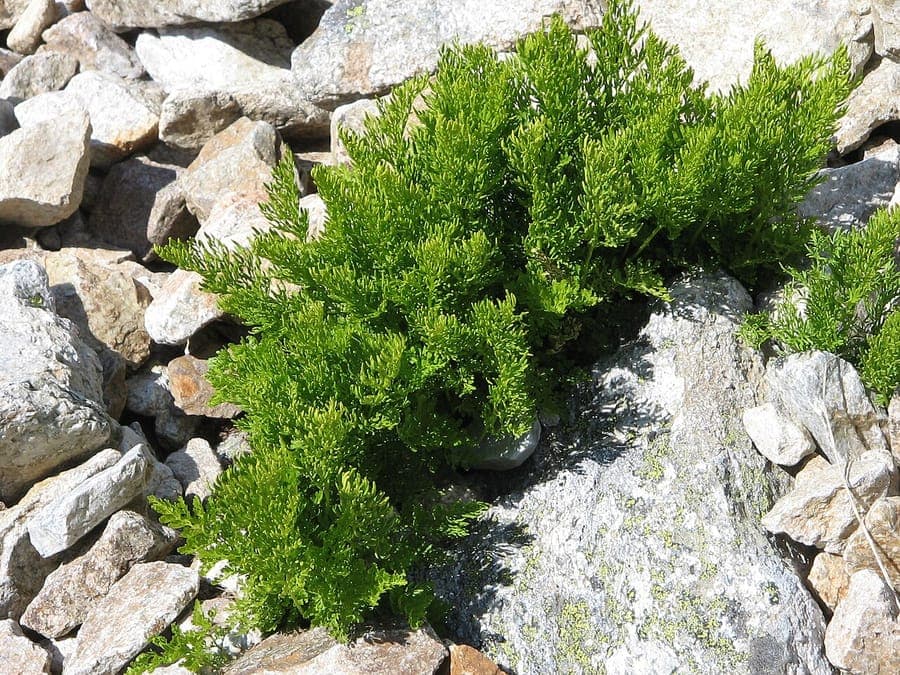
Meneerke bloem / CC BY-SA 4.0, via Wikimedia Commons
Cryptogramma crispa: complete guide
Cryptogramma crispa
¿Quieres ver Cryptogramma crispa: complete guide en tu jardín?
1 minuto, sin tarjeta de crédito
Overview
Cryptogramma crispa, better known as Parsley fern, is an enchanting small fern originating from mountain regions of Europe and Asia. This fern grows in compact clusters to approximately 15-25 centimeters tall. With its curly fronds and preference for cool, moist conditions, this fern is ideal for rock gardens and alpine gardens.
Unlike many larger ferns, Cryptogramma crispa has a delicate, fine-textured appearance contrasting with most other plants. The plantlet grows from a shallow root system out of small rock crevices.
Appearance and structure
The Parsley fern has two types of leaves. Sterile fronds are deeply divided and have a fine, lace-like texture. Fertile fronds are narrower and more rolled, with spores on the underside.
Fronds are green and have a very fine, curly texture resembling parsley, hence the common name. Total height remains small, usually between 15 and 25 centimeters.
Ideal location
Place this fern in shade, preferably in a rock or alpine garden. It grows well on rock faces, between stones, and in crevices. The plant prefers cool conditions and will not thrive in warm, dry locations.
Ensure good drainage and protection from direct wind. In very hot climates, shading from larger plants is beneficial.
Soil
Use well-draining soil with plenty of stone grit. The plant grows better in poor soils than rich ones. Avoid heavy clay or loam, which causes water stagnation.
Add fine stone grit and sand to planting soil. In rock gardens, plant it between stones where water drains quickly.
Diseño gratis
¿Quieres ver Cryptogramma crispa: complete guide en tu jardín? Crea un diseño gratis ahora.
Watering
Water evenly, especially during the growing period. Cryptogramma crispa loves moist but well-draining conditions. Water regularly in summer, less in winter.
In well-drained rock gardens, rainwater will usually suffice. Avoid complete drying, which damages the plant.
Pruning
Minimal pruning work required. In spring, remove dead and discolored fronds. This promotes clean growth.
Avoid interfering with growing points. Let the plant assume its natural form.
Maintenance calendar
March-April: Remove dead fronds, water carefully May-June: Monitor moisture levels, ensure regular water July-August: Water well maintained, shade monitoring September-October: Prepare for winter, reduce water November-February: Minimal maintenance
Winter hardiness
Cryptogramma crispa is very frost hardy and grows in mountain areas with severe winters. Can tolerate winters to -30 degrees Celsius without needing protection. This makes it ideal for cold climates.
Companion plants
Pairs well with:
- Saxifraga spp. (saxifrage)
- Sempervivum spp. (houseleek)
- Sedum spp. (stonecrop)
- Armeria maritima (sea pink)
- Silene acaulis (moss campion)
Conclusion
For alpine garden and rock builders, Cryptogramma crispa offers a delicate, frost-hardy fern. With its small size, fine texture, and preference for cool conditions, it adds an element of elegance to mountainous projects. Try this fern in your rock garden or alpine landscape.
For Dutch version, visit gardenworld.app/nl For French version, visit gardenworld.app/fr
¿Quieres ver Cryptogramma crispa: complete guide en tu jardín? Crea un diseño gratis ahora.
Sube una foto, elige un estilo y obtén un diseño fotorrealista con lista de plantas en menos de un minuto.
Más de 10.000 jardines diseñados
Sin tarjeta de crédito


Plantas similares
American rockbrake: complete guide
Cryptogramma acrostichoides
Full guide to American rockbrake fern: ideal location, soil, watering, winter hardiness and garden companions for shady rock gardens.
Longleaf brake fern: complete guide
Pteris longifolia
Everything about Pteris longifolia: ideal location, soil, watering, winter care and companion plants for this tropical fern.
Rough Maidenhair Fern: complete guide
Adiantum hispidulum
Discover the Rough Maidenhair Fern, an elegant, low-growing fern from tropical regions with delicate fine-textured foliage. Perfect for humid, shaded locations and humid indoor environments.