
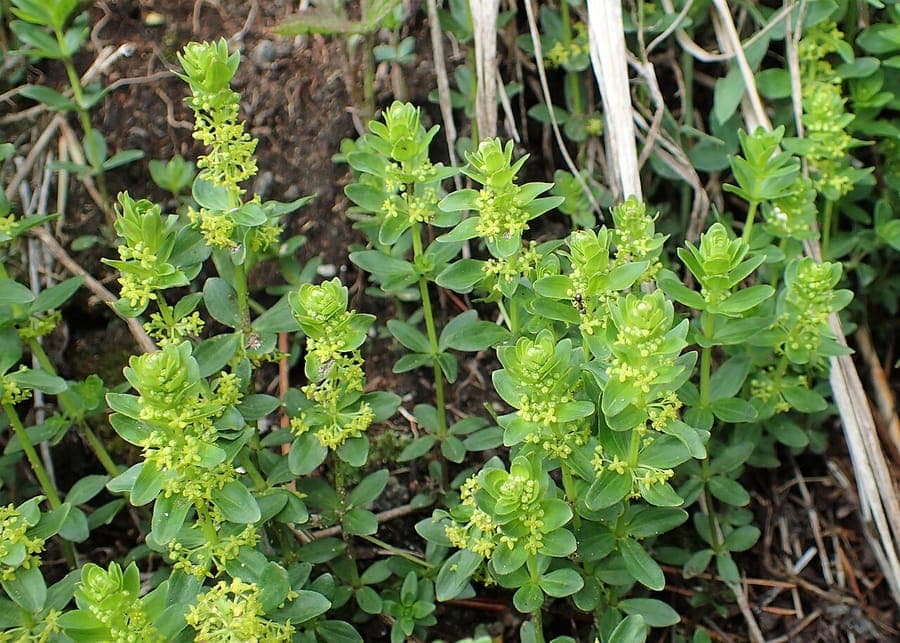
Krzysztof Ziarnek, Kenraiz / CC BY-SA 4.0, via Wikimedia Commons
Cruciata glabra: complete guide
Cruciata glabra
¿Quieres ver Cruciata glabra: complete guide en tu jardín?
1 minuto, sin tarjeta de crédito
Overview
Cruciata glabra, commonly called glabrous crosswort or spring bedstraw, is a delicate woodland plant that brings subtle elegance to shaded garden spaces. This member of the Rubiaceae family spreads naturally across Central and Southern Europe, extending to Central Siberia and the Caucasus. With her delicate yellow flowers and modest growing habits, she represents a charming addition to shadowy garden corners.
This herbaceous perennial thrives in moist, humus-rich soils and develops through underground rhizomes. The plant reaches a modest height and spreads carefully through the soil. For gardeners seeking a soft, natural woodland effect, Cruciata glabra offers an ideal choice.
Appearance and Bloom
Cruciata glabra distinguishes itself with narrow, opposite-arranged leaves along the stems. From May through July, delicate bright yellow flower clusters emerge. These small blooms attract beneficial insects and emit a subtle fresh scent.
The plant achieves a modest height of approximately 30 to 40 centimeters and spreads via underground rhizomes. Leaf shapes are narrow to lanceolate, giving the plant an elegant, refined appearance. After flowering, small seeds develop that naturally disperse.
Ideal Location
Cruciata glabra thrives best in partial shade to full shade. This plant performs poorly in direct sunlight and grows better beneath trees or against north-facing walls. A position with filtered morning sun and protection from midday rays is ideal.
In natural gardens, Cruciata glabra spreads along woodland edges and beneath deciduous trees. Position the plant alongside other low-growing groundcovers, and combine with shade-loving companions such as dead nettle and ivy.
Soil
Cruciata glabra prefers moist, humus-rich soils with a pH between 5.5 and 6.5. The plant struggles in dry, sandy grounds. Before planting, work organic matter or garden compost into the planting hole.
Although tolerant of various soil types, this plant thrives best beneath trees where leaf litter naturally increases humus content. This enrichment maintains natural soil moisture and nutrients. When planting in cultivated gardens, add extra leaf mold or freshly made compost.
Watering
Cruciata glabra enjoys consistently moist soil, especially during spring and summer growing seasons. Ensure the plant never fully dries out, particularly during weeks without rainfall. Regular watering with pure water supports plant vigor.
During hot, dry periods, water two to three times weekly depending on soil composition and local climate. However, avoid persistent waterlogging, which causes root rot. Add mulch to retain soil moisture and buffer temperature fluctuations.
Diseño gratis
¿Quieres ver Cruciata glabra: complete guide en tu jardín? Crea un diseño gratis ahora.
Pruning
Cruciata glabra requires minimal pruning. Remove faded flowers to maintain appearance and encourage continued blooming. After flowering (late July), light cutting back stimulates compact growth, though this remains optional.
Since the plant spreads via underground rhizomes, monitor unwanted expansion by removing growth where undesired. Remove dead or damaged foliage immediately.
Maintenance Calendar
In spring (March-April), check plants for winter desiccation and apply mulch. During bloom (May-July), ensure adequate moisture and remove faded flowers. After blooming (August), prune lightly and add fertilizer. In autumn (September-October), prepare plants for winter protection. Cover beds with leaf mold or moss against frost.
Winter Hardiness
Cruciata glabra is fairly winter hardy and tolerates temperatures down to approximately -15 degrees Celsius. In mild climates, the plant survives winter without extra protection. In severe winters (cold and dry), mulch protection with leaf mold or straw is recommended, especially for young plants.
In temperate climates across the Netherlands, Belgium, and France, the plant overwinters without problems. German gardeners in harsher regions might consider additional protection.
Companion Plants
Cruciata glabra combines beautifully with other shade-loving groundcovers. Try this plant with:
- Dead nettle (Lamium) for soft, low coverage
- Ivy (Hedera helix) for vertical structure
- Ivy varieties for year-round green
- Violets (Viola) for additional color
- Sedges (Carex) for interesting leaf forms
These combinations create a natural woodland effect in your front yard.
Conclusion
Cruciata glabra is a subtle yet valuable addition to shaded gardens. Her delicate yellow flowers provide color without excess, and her simple care requirements make her ideal for beginning gardeners. Combine with other shade-loving plants for a lush, natural effect.
For more information about front yard transformation visit gardenworld.app where you can explore professionally designed gardens. To purchase Cruciata glabra, visit garden centers in your area for detailed plant advice.
For more inspiration and designs, visit gardenworld.app!
¿Quieres ver Cruciata glabra: complete guide en tu jardín? Crea un diseño gratis ahora.
Sube una foto, elige un estilo y obtén un diseño fotorrealista con lista de plantas en menos de un minuto.
Más de 10.000 jardines diseñados
Sin tarjeta de crédito


Plantas similares
Oregon bedstraw: complete guide
Galium oreganum
Everything about Oregon bedstraw (Galium oreganum): shade planting, soil requirements, care and use as a low groundcover in woodland and shade gardens.
Awned woodruff: complete guide
Asperula aristata
Full guide to growing Asperula aristata, the awned woodruff: sunny location, alkaline soil, minimal watering, and companion plants for dry or rock gardens.
Purple woodruff: complete guide
Asperula purpurea
Full guide to Asperula purpurea, purple woodruff: sunny sites, chalky soil, watering, pruning, winter hardiness and companion plants for rock and dry gardens.