
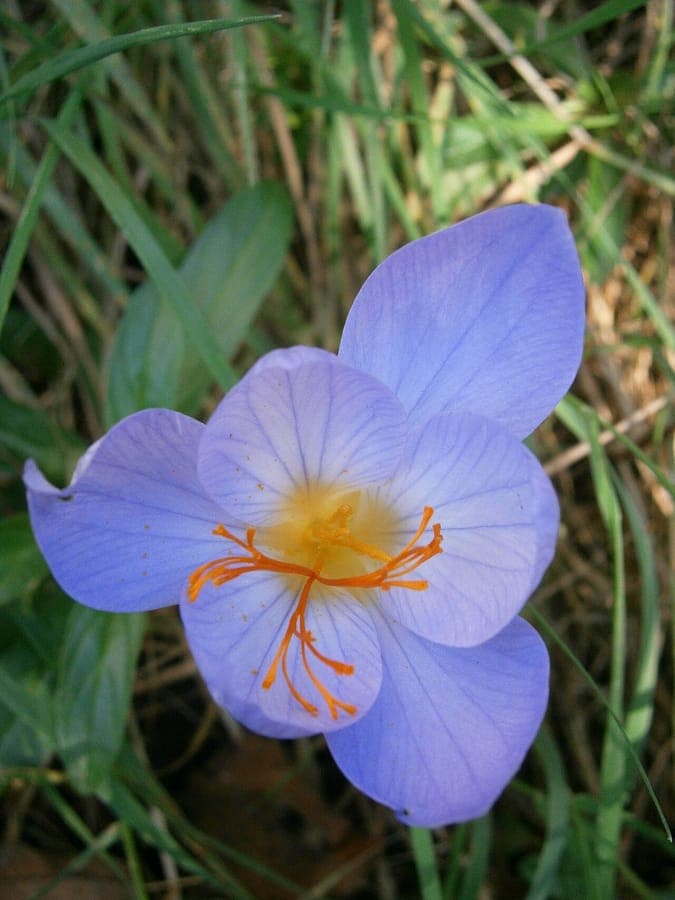
Meneerke bloem / CC BY-SA 3.0, via Wikimedia Commons
Bieberstein's crocus: complete guide
Crocus speciosus
¿Quieres ver Bieberstein's crocus: complete guide en tu jardín?
1 minuto, sin tarjeta de crédito
Overview
Bieberstein's crocus (Crocus speciosus) is a captivating autumn bloomer from the Iridaceae family, native to the Caucasus. This compact bulb is known for its striking purple flowers with silvery threads, which stand bright against green foliage. At just 10-15 centimeters tall, these crocuses form perfect groundcovers for borders, rock gardens, and lawn edges. Each bulb produces multiple flowers spread over two weeks.
Appearance and bloom
Bieberstein's crocus blooms in September and October with deep purple, sometimes almost blue flowers that open wide in sunlight. The flowers often feature silvery veining. Narrow, grass-like leaves appear first green and develop fully only after blooming. A single bulb can produce 5-7 flowers, making masses very impressive when planted in groups of 25-50.
Ideal location
Choose a sunny location with at least 6-8 hours of direct sunlight for Bieberstein's crocus. The flowers close in shade and poor weather. A south-facing wall or border edge works excellently. Protect from strong autumn storms by positioning against a wall or shrub.
Soil
Bieberstein's crocus grows in virtually all soil types, provided drainage is good. Shallow, nutrient-poor soil is well tolerated. Excessive moisture is harmful due to rot risk. Ensure sand or gravel in heavy soils. Neutral to slightly acidic soil reaction is preferred.
Diseño gratis
¿Quieres ver Bieberstein's crocus: complete guide en tu jardín? Crea un diseño gratis ahora.
Watering
Water well after planting so soil adheres well around bulbs. Regular water during dry autumn conditions. Once established, these crocuses are very drought-tolerant. Excessive moisture during growing season should be avoided due to root rot risk.
Pruning
Pruning is not applicable. Allow flowers to set seed before removing them. Wilted flower bracts can be carefully removed. Wait until foliage yellows before removing so bulbs can ripen properly.
Maintenance calendar
August: Plant bulbs. September/October: Full blooming period. November: Seed setting, foliage yellowing. December/January: Dormancy. February/March: Preparation for next season.
Winter hardiness
Bieberstein's crocus is very hardy to -15C and can stay outdoors in temperate climates. The plant grows well throughout Europe and North America. This crocus requires a cold period for blooming.
Companion plants
Combine Bieberstein's crocus with autumn-blooming chrysanthemums, asters, and ornamental grasses. Late-season tulips and narcissus offer contrast. Low-growing groundcovers like thyme pair nicely beneath. Group bulbs in clusters of 25-50 for maximum effect.
Closing
Bieberstein's crocus brings color and life to the autumn garden when other flowers fade. With minimal care and automatic returns each year, these elegant bulbs provide decades of enjoyment. Order your bulbs now and plant directly into borders. Discover more garden designs on gardenworld.app for detailed planting plans and professional consultations.
¿Quieres ver Bieberstein's crocus: complete guide en tu jardín? Crea un diseño gratis ahora.
Sube una foto, elige un estilo y obtén un diseño fotorrealista con lista de plantas en menos de un minuto.
Más de 10.000 jardines diseñados
Sin tarjeta de crédito


Plantas similares
Iris tingitana: complete guide
Iris tingitana
Iris tingitana, the Morocco iris, is the bulb species behind the Dutch iris: early blue-violet blooms that need a sunny, well-drained position.
Iris hookeri: complete guide
Iris hookeri
Hooker's Iris is a compact North American native plant with blue flowers. Low-growing and moisture-loving water plant.
Siskiyou iris: complete guide
Iris bracteata
Complete guide to Iris bracteata, the Siskiyou iris: location, soil, bloom cycle, watering, pruning and companion plants for this rare Pacific Coast iris.