
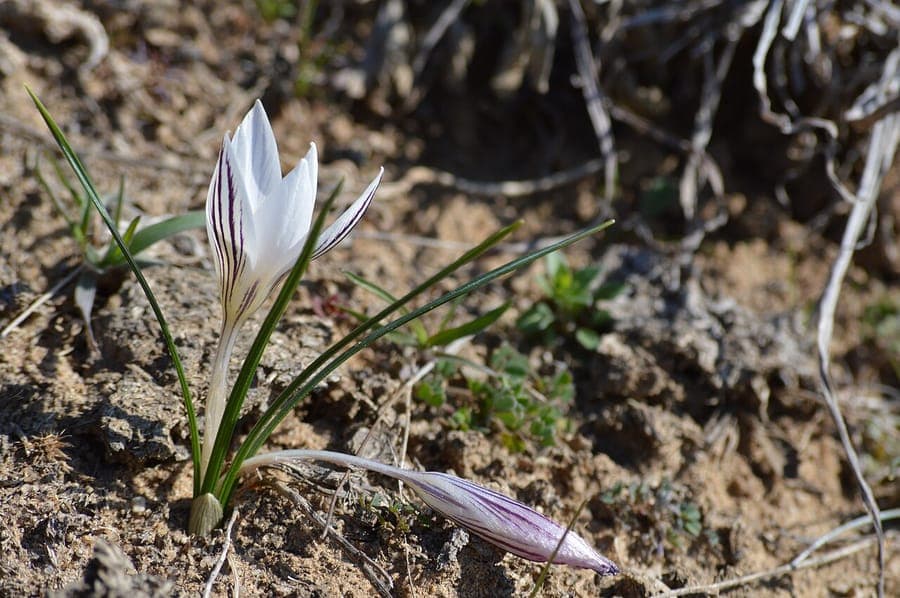
Sergey Nikonov / CC BY 4.0, via Wikimedia Commons
Cloth-of-Gold Crocus: complete guide
Crocus reticulatus
¿Quieres ver Cloth-of-Gold Crocus: complete guide en tu jardín?
1 minuto, sin tarjeta de crédito
Overview
Crocus reticulatus, commonly known as Cloth-of-Gold Crocus or Net Crocus, is a delightful miniature spring bulb native to the Caucasus region and adjacent areas spanning from Moldavia to Transcaucasus. This charming species is prized for its delicate golden-yellow flowers that appear remarkably early in spring, often among the first of the season.
Despite its diminutive stature, Crocus reticulatus brings outsized joy and wonder to gardens. Its finely netted and striped petals give the flower its scientific name. Perfect for naturalization, alpine troughs, scree gardens, and as an early beacon in spring borders.
Appearance and bloom
Crocus reticulatus reaches only 5 to 10 centimeters in height. The flowers are bright golden-yellow, often with finer veining or darker markings visible under examination. The petals are elegantly textured and delicate, making this species particularly valuable for close study.
Flowers typically open in March-April, timing dependent on regional weather. The grass-like foliage remains low and unobtrusive, dying back discreetly after flowering. Many plants flower even earlier, sometimes in February in milder regions.
Bonus: this crocus carries a delicate fragrance that attracts early pollinators.
Ideal location
Full sun to light shade works well. Choose warm, sunny locations where water doesn't accumulate in winter. This crocus excels on sunny slopes, in dry raised beds, on tufa walls, and even in green roofs.
Alpine troughs and rockeries provide perfect homes, offering excellent drainage and protected exposure. In full shade, flowering diminishes and plants eventually disappear.
Southern exposures and warm microclimates ensure earliest flowering.
Soil
Excellent drainage is non-negotiable. Heavy clay must be amended with sand or grit. This crocus thrives in chalk-based, neutral to slightly acidic soils.
For containers and troughs, use alpine potting mix: equal parts sand, gravel, and compost, with minimal soil component. Never use heavy, compacted, or clay-based substrates.
The plant also thrives in very poor soils, making it ideal for wild gardens and naturalized drifts.
Diseño gratis
¿Quieres ver Cloth-of-Gold Crocus: complete guide en tu jardín? Crea un diseño gratis ahora.
Planting and treatment
Plant bulbs in October or November at approximately 5 centimeters depth. Space 5-10 centimeters apart in naturalistic groupings. Once established, these bulbs persist for many years with minimal intervention.
Never plant crocuses individually - massed plantings of 15-25+ bulbs create maximum visual impact. Drift naturally through borders and lawns for authentic, garden-like effects.
Watering
Once established, Crocus reticulatus tolerates dry soils well. Regular watering is unnecessary. Simply ensure water doesn't pool during growth phases.
In containers, water regularly until flowering finishes, then gradually reduce. During summer dormancy, keep almost dry - this crocus rests best in dry conditions.
Maintenance calendar
August: Source and receive bulbs, store in cool, dry conditions. October-November: Planting time; ensure excellent drainage. March-April: Flowering period; admire blooms; count early pollinators. May-June: Foliage grows; seeds ripen; never mow or cut until leaves yellow. July-August: Summer dormancy, keep dry.
Winter hardiness
This crocus is exceptionally hardy to approximately -15 to -20 degrees Celsius. It requires no winter protection, even in northern gardens. The bulb sleeps soundly through harsh winters and emerges reliably each spring.
Propagation
Crocus reticulatus naturally propagates via seed-producing bulblets. To increase stock:
- Sow fresh seed (May-June) on alpine potting mix and stratify naturally
- Or carefully separate small daughter bulbs from mature corms
- Expect several years before seedlings reach flowering size, but the wait is rewarding
Companion plants
This crocus pairs beautifully with:
- Helleborus niger for late-winter structure
- Ipheion (Springstar) for contrasting blue tones
- Scilla and Chionodoxa for deeper purple-blue
- Doronicum for warm yellow echo
- Carex and sedges for textural foliage
- Gaura lindheimeri for summer interest
Closing
Crocus reticulatus is a hardy, low-maintenance, and strikingly beautiful early spring treasure that returns reliably year after year. This species demands minimal care and delivers joy at the season's outset.
Source these crocuses from specialist bulb suppliers and quality garden centers. Plant generous groups in October and revel in the golden display come March. For more spring-flowering bulbs and design inspiration, visit gardenworld.app.
¿Quieres ver Cloth-of-Gold Crocus: complete guide en tu jardín? Crea un diseño gratis ahora.
Sube una foto, elige un estilo y obtén un diseño fotorrealista con lista de plantas en menos de un minuto.
Más de 10.000 jardines diseñados
Sin tarjeta de crédito


Plantas similares
Iris tingitana: complete guide
Iris tingitana
Iris tingitana, the Morocco iris, is the bulb species behind the Dutch iris: early blue-violet blooms that need a sunny, well-drained position.
Iris hookeri: complete guide
Iris hookeri
Hooker's Iris is a compact North American native plant with blue flowers. Low-growing and moisture-loving water plant.
Siskiyou iris: complete guide
Iris bracteata
Complete guide to Iris bracteata, the Siskiyou iris: location, soil, bloom cycle, watering, pruning and companion plants for this rare Pacific Coast iris.