
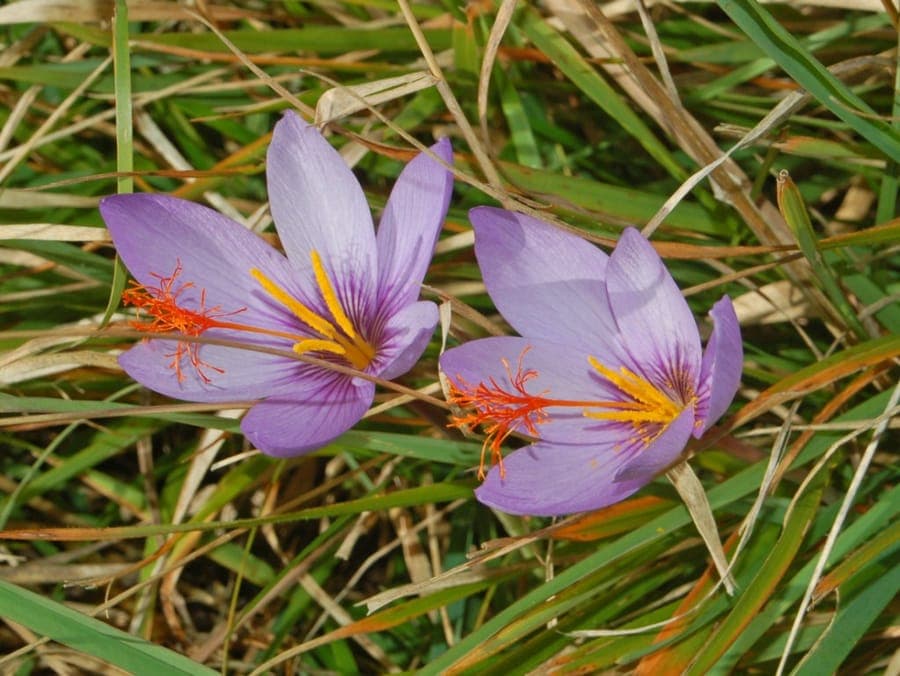
Hectonichus / CC BY-SA 3.0, via Wikimedia Commons
Crocus ligusticus: complete guide
Crocus ligusticus
¿Quieres ver Crocus ligusticus: complete guide en tu jardín?
1 minuto, sin tarjeta de crédito
Overview
Crocus ligusticus, commonly known as Ligurian Crocus or Middle Crocus, is a rare and subtle autumn-flowering crocus native to Liguria in northern Italy and adjacent regions of France. Belonging to the Iridaceae family, this plant is renowned for its elegant blue flowers that bloom in autumn when most other garden plants are fading.
As a mountain plant from the Maritime Alps, Crocus ligusticus has adapted to well-drained, calcium-rich soils. In gardens, it is increasingly used in rock gardens, alpine borders, and as a decorative element under shrubs because it requires minimal maintenance and blooms reliably year after year.
Appearance and Bloom
Crocus ligusticus is an extremely compact bulb plant reaching only 10-15 cm tall. The leaves are very narrow, grass-like, and gray-green in color. Flowers emerge directly from the ground in October and November, before the leaves are fully developed.
The flowers are sky blue to purple-blue in color with a light violet undertone. Each bulb produces 1-3 flowers. The flowers are relatively large for the plant size - up to 3 cm in diameter - with 6 petals. Flowers open fully in sunny weather and close in the evening or during poor conditions.
Ideal Location
Crocus ligusticus thrives in full sun to light shade. A location receiving at least 5-6 hours of direct sunlight daily ensures good flowering. The plant can also grow in half-shade but produces fewer flowers. In full shade, the plant grows poorly.
The plant tolerates windy locations well. Ensure the plant is not under dripping trees, as excessive moisture can cause damage. Ideal is a fast-draining slope or raised border.
Soil
Crocus ligusticus makes high demands on drainage and grows best in well-drained, calcium-rich soils. The plant grows perfectly in gravelly, stony, or sandy soil. Heavy clay soils must be avoided as they cause root rot.
The plant tolerates acidic to neutral soil but grows even better in lightly alkaline soil with pH between 6.5 and 8.0. For optimal growth, grit or gravel can be added to heavy soils.
Watering
After planting, young bulbs require only minimal watering. Once established, Crocus ligusticus is extremely drought-tolerant and typically requires no supplemental water. The plant thrives in dry conditions.
During growth periods (autumn and early spring), some moisture can help, but excessive water must be avoided. In wet winters, ensure extra drainage to prevent root rot.
Diseño gratis
¿Quieres ver Crocus ligusticus: complete guide en tu jardín? Crea un diseño gratis ahora.
Pruning
Crocus ligusticus requires no pruning. Leave faded flowers on the plant until they naturally fall off. This helps the plant form seeds and store energy in the bulb for next year.
Remove dead foliage only in late spring (May) when completely dried. This helps the plant withdraw nutrients back into the bulb.
Maintenance Calendar
August-September: Bulbs can be planted. Prepare soil. October-November: Flowering period. Enjoy the blue blooms. December-January: Plant continues growing in mild winters. Seed formation occurs. February-March: Bulbs withdraw energy. Foliage still growing. April-May: Foliage withers. Leave until completely dry. June-July: Plant is dormant. No maintenance needed.
Winter Hardiness
Crocus ligusticus is excellent winter hardy, tolerating temperatures to -20 to -25 degrees Celsius. This makes it perfect for harsh winter conditions across Europe. The bulb can remain in the ground and does not need to be dug up.
Young bulbs require no special winter protection. Mature bulbs are completely winter hardy and can remain in the ground for years without problems.
Companion Plants
Crocus ligusticus works well in combination with other autumn-flowering and alpine plants. Good planting combinations include:
Colchicum (Autumn Crocus) - for late summer and early autumn flowers. Cyclamen (Cyclamen) - for autumn blooms. Sedum (Stonecrop) - for texture and year-round greenery. Saxifraga (Saxifrage) - for rock gardens and texture. Leontopodium (Edelweis) - for alpine ensemble.
Plant Crocus ligusticus in groups of 5-7 for maximum effect.
Closing
Crocus ligusticus is a rare and valuable addition to any garden that appreciates autumn flowering. The elegant blue flowers, compact growth, and exceptional hardiness make this a perfect plant for rock gardens, alpine borders, and under shrubs.
Although less known than spring-flowering crocuses, this Ligurian Crocus certainly deserves more attention from gardening enthusiasts. Available from specialized crocus propagators and alpine plant nurseries, this jewel from Liguria will transform your autumn with blue blooms.
If you seek an alpine plant with autumn flowering and minimal maintenance requirements, Crocus ligusticus is an excellent, underrated choice. Visit gardenworld.app for more plant tips. When you want to transform your garden with alpine jewels and seasonal interest, gardenworld.app offers expert guidance.
¿Quieres ver Crocus ligusticus: complete guide en tu jardín? Crea un diseño gratis ahora.
Sube una foto, elige un estilo y obtén un diseño fotorrealista con lista de plantas en menos de un minuto.
Más de 10.000 jardines diseñados
Sin tarjeta de crédito


Plantas similares
Iris tingitana: complete guide
Iris tingitana
Iris tingitana, the Morocco iris, is the bulb species behind the Dutch iris: early blue-violet blooms that need a sunny, well-drained position.
Iris hookeri: complete guide
Iris hookeri
Hooker's Iris is a compact North American native plant with blue flowers. Low-growing and moisture-loving water plant.
Siskiyou iris: complete guide
Iris bracteata
Complete guide to Iris bracteata, the Siskiyou iris: location, soil, bloom cycle, watering, pruning and companion plants for this rare Pacific Coast iris.