
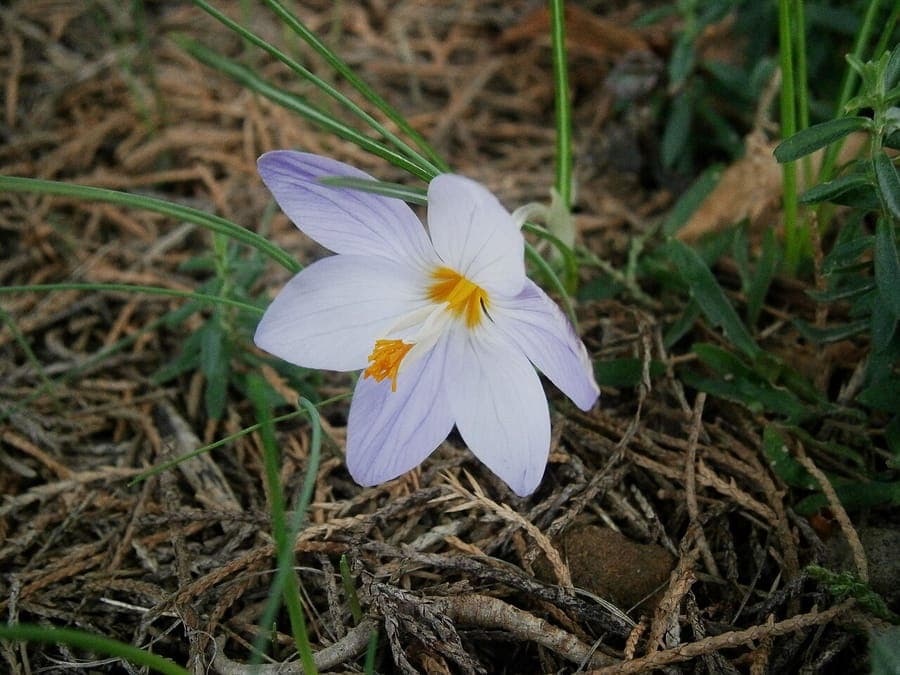
Meneerke bloem / CC BY-SA 3.0, via Wikimedia Commons
Crocus laevigatus: complete guide
Crocus laevigatus
¿Quieres ver Crocus laevigatus: complete guide en tu jardín?
1 minuto, sin tarjeta de crédito
Overview
Crocus laevigatus, commonly known as smooth crocus, is a charming tiny early-spring flower in the Iridaceae family (iris family). This delicate plant grows naturally around the Greek archipelago and islands in the Aegean Sea. The distinguishing feature of this plant is its early and prolonged blooming (October through March, depending on region), which represents the first sign of bloom in many gardens. With minuscule flowers displaying unusual color patterns and bird-free growth habits, Crocus laevigatus adds charm and early seasonal interest to rock gardens, borders, and containers.
Appearance and Bloom
Crocus laevigatus is an extremely small bulb, typically just 5-10 cm tall. The leaves are minuscule, grass-like, and emerge simultaneously with flowers. This distinguishes it from many other crocuses that delay leaf emergence until blooming finishes. The flowers are unquestionably the most attractive part - very small flowers (3-5 cm tall), typically a dark purple-mauve color with considerable variation. Many specimens display striped or spotted patterns on inner petals. The flowers are also highly fragrant - a sweet, delicate scent for which gardeners prize the plant. Blooming occurs from October through March, depending on region, making it a valuable early-season provider.
Ideal Location
Crocus laevigatus thrives in full sun to partial shade (minimum 3-4 hours sunlight). Position on slopes with good visibility in rock gardens. The plant accepts shade under falling leaves, unlike many other crocuses, and can therefore grow as underplanting beneath deciduous trees. Suitable for stone troughs (containers), scree gardens (gravel gardens), rocky border fronts, and containers. It's an ideal plant for gardeners with limited space because it stays very small.
Soil
Crocus laevigatus requires exceptionally well-draining soil - probably the least forgiving of all crocuses regarding heavy soils. In rock gardens, add gravel, sand, and small stones so the soil becomes highly porous. The plant accepts poor to moderately fertile soils and actually grows better in non-fertilized soils. A neutral to slightly alkaline pH is ideal. Mulch with gravel around bulbs to maintain drainage and prevent bulb rot.
Diseño gratis
¿Quieres ver Crocus laevigatus: complete guide en tu jardín? Crea un diseño gratis ahora.
Watering
Crocus laevigatus is drought-tolerant once established. Water newly planted specimens moderately in the first growing season. Thereafter the plant requires minimal watering. In rain-rich climates it requires no supplemental water. During very dry seasons, water sparingly. Avoid overwatering or standing water around bulbs, which causes rot. In temperate climates, rainfall alone may suffice.
Pruning
Crocus laevigatus requires no pruning - it's a very small bulb requiring no shaping. After blooming, carefully remove spent flowers, though this is optional. Allow foliage to remain until it fully yellows and dies (this accumulates energy for next year). No other pruning is needed.
Maintenance Calendar
Autumn: Plant bulbs in September or October. Water moderately until growth begins. Autumn/Winter: Enjoy early-season blooming from October through March, depending on region. Spring: Allow foliage to remain until it dies back. Summer: Bulbs rest; no special care needed. This is a very low-maintenance plant.
Winter Hardiness
Crocus laevigatus is fully hardy and tolerates temperatures to approximately -20°C (USDA Zones 5-8). This is an extremely cold-tolerant plant and grows well in northern climates. In fact, it flourishes best in temperate to cold regions and may struggle in very warm climates. The plant requires winter chilling for good blooming, making it unsuitable for very warm zones.
Companion Plants
Crocus laevigatus grows well with other early-season bulbs: Eranthis hyemalis (winter aconite), Galanthus (snowdrop), Helleborus (Christmas rose). In rock gardens, associate with other alpine mini-bulbs and small herbaceous plants. These combinations create stunning rock gardens with early-season blooming spanning many months. Avoid moisture-loving or aggressive companions that might overshadow small bulbs.
Closing Thoughts
Crocus laevigatus is a delicate, early-season flower perfect for rock gardens and small spaces. With very early blooming (October-March), attractive flowers, minuscule stature, and low maintenance, this plant delivers benefits for years. Its bird-free character makes it interesting for avid bulb collectors. Suitable for small gardens, stone troughs, and containers. Available through specialized suppliers for enthusiastic early-season bulb gardeners.
Visit gardenworld.app for comprehensive early-season plant advice and rock garden design. Gardenworld.app delivers photorealistic rock gardens emphasizing early-season interest and mini-bulbs.
¿Quieres ver Crocus laevigatus: complete guide en tu jardín? Crea un diseño gratis ahora.
Sube una foto, elige un estilo y obtén un diseño fotorrealista con lista de plantas en menos de un minuto.
Más de 10.000 jardines diseñados
Sin tarjeta de crédito


Plantas similares
Iris tingitana: complete guide
Iris tingitana
Iris tingitana, the Morocco iris, is the bulb species behind the Dutch iris: early blue-violet blooms that need a sunny, well-drained position.
Iris hookeri: complete guide
Iris hookeri
Hooker's Iris is a compact North American native plant with blue flowers. Low-growing and moisture-loving water plant.
Siskiyou iris: complete guide
Iris bracteata
Complete guide to Iris bracteata, the Siskiyou iris: location, soil, bloom cycle, watering, pruning and companion plants for this rare Pacific Coast iris.