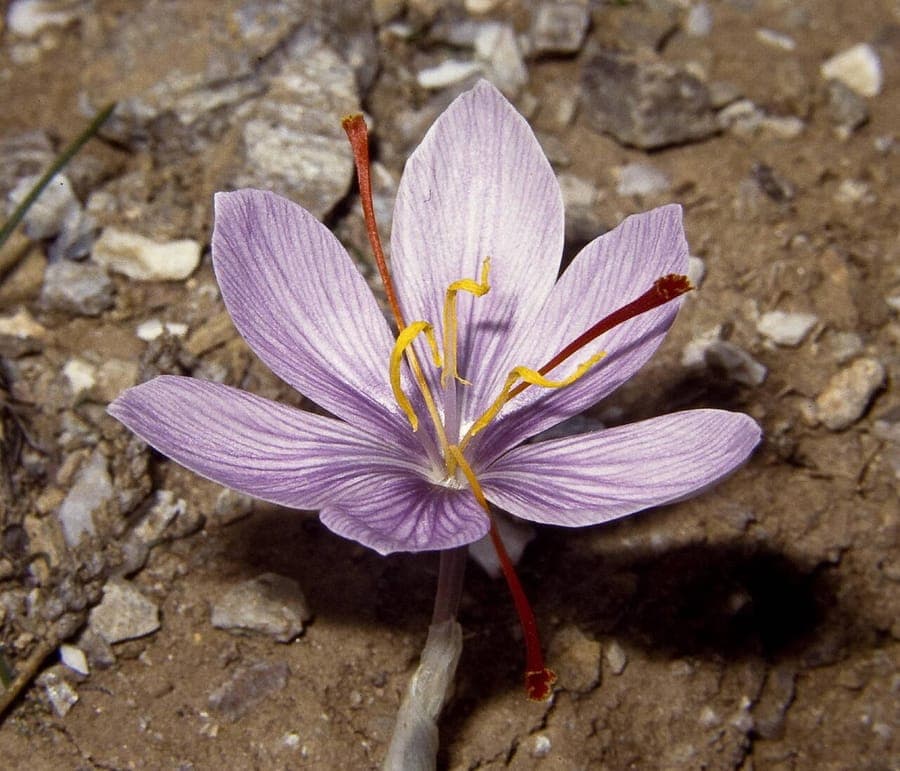
Peter coxhead / CC BY-SA 3.0, via Wikimedia Commons
Crocus cartwrightianus: complete guide
Crocus cartwrightianus
¿Quieres ver Crocus cartwrightianus: complete guide en tu jardín?
Diseño completo en HD: 7,99 €
Overview
Crocus cartwrightianus is a delightful wild crocus species from Greece and the island of Crete. This autumn-flowering crocus is celebrated for its delicate purple flowers that appear in October-November.
Ideal for those seeking something unique to add to their garden. The tiny bulbs occupy minimal space but deliver tremendous aesthetic value during autumn.
Appearance & bloom
Grows from very small bulbs into flowers approximately 5-10 centimeters tall. The blooms have six petals in pure purple to deeper purple coloring, sometimes with lighter purple stripes. The style is red to orange-colored.
Flowers typically open in afternoon sunlight and close at evening. This creates a changing bloom period that offers daily interest. The leaves are green and narrow, almost grass-like.
Ideal location
Performs best in sunny to semi-shaded locations. In the wild, this crocus grows in mountainous Mediterranean terrain. Provide plenty of sunlight - at least 4-5 hours of direct daily sunlight.
Plant this crocus in rock gardens, between stones, along pathways, or in alpine plantings.
Soil
Thrives best in well-draining, slightly sandy soil. This plant hates waterlogging. If you work with clay or heavy soil, improve drainage by adding sand, perlite, or gravel.
In pots, use a mixture of cactus or alpine potting soil with extra drainage material.
Vista previa gratis
¿Quieres ver Crocus cartwrightianus: complete guide en tu jardín? Crea una vista previa gratis de tu diseño.
Watering
After planting in September-October, this crocus needs little watering. Autumn and winter rains usually provide adequate moisture. In dry autumns, light watering helps.
During bloom in October-November, some supplemental water can be beneficial. After bloom, provide minimal water.
Pruning
Requires no pruning. You can pinch off spent flowers to prevent self-seeding. Allow foliage after bloom to rest undisturbed so energy returns to the bulbs.
Maintenance calendar
September: Plant bulbs. October: Leaves and flowers appear. October-November: Full bloom. December: Bloom concludes. January-February: Leaf fall. March-June: Dormancy period. July-August: Dry season.
Winter hardiness
Extremely winter-hardy. It tolerates temperatures down to -20 degrees Celsius. In northern European gardens it grows outdoors year-round without protection.
Frost damage is rarely a concern. In fact, frost helps trigger bulbs from dormancy.
Companion plants
Crocus cartwrightianus pairs beautifully with other autumn-flowering plants. Try combining with Colchicum autumnale or other crocus species.
Closing
Crocus cartwrightianus is a jewel of a plant. With its delicate purple flowers in autumn, this Mediterranean crocus brings genuine charm to your garden.

Míralo en tu jardín
Mira Crocus cartwrightianus en tu jardín
Una foto de tu jardín y unas preguntas. En un minuto aproximadamente ves el resultado.
Pruébalo con una fotoReconoce esta planta en tu propio jardín. Reconocer una planta
Plantas similares
Crocus pallasii: complete guide
Crocus pallasii
Pallas's saffron is a unique autumn-flowering crocus from Balkans to the Levant. Discover this rare Mediterranean beauty.
Saffron: complete guide
Crocus sativus
How to grow Crocus sativus: care, flowering season, soil and ideal site. Suitable for gardens in temperate climates.