
Etrusko25 / CC BY-SA 3.0, via Wikimedia Commons
Silvery crocus: complete guide
Crocus biflorus
¿Quieres ver Silvery crocus: complete guide en tu jardín?
1 minuto, sin tarjeta de crédito
Overview
Crocus biflorus, also known as silvery crocus or two-flowered crocus, is an early-blooming bulb from the Iridaceae family. With its silvery-white flowers, it is one of the first spring signals in the garden. This Sicilian endemic blooms as early as February-March, bringing color when most gardens are still bare.
The plant grows from small corms and reaches only 8-15 cm in height. This makes it ideal for front borders, lawns, and rock gardens. The flowers usually appear in pairs, hence the name 'biflorus'.
Appearance & Bloom Cycle
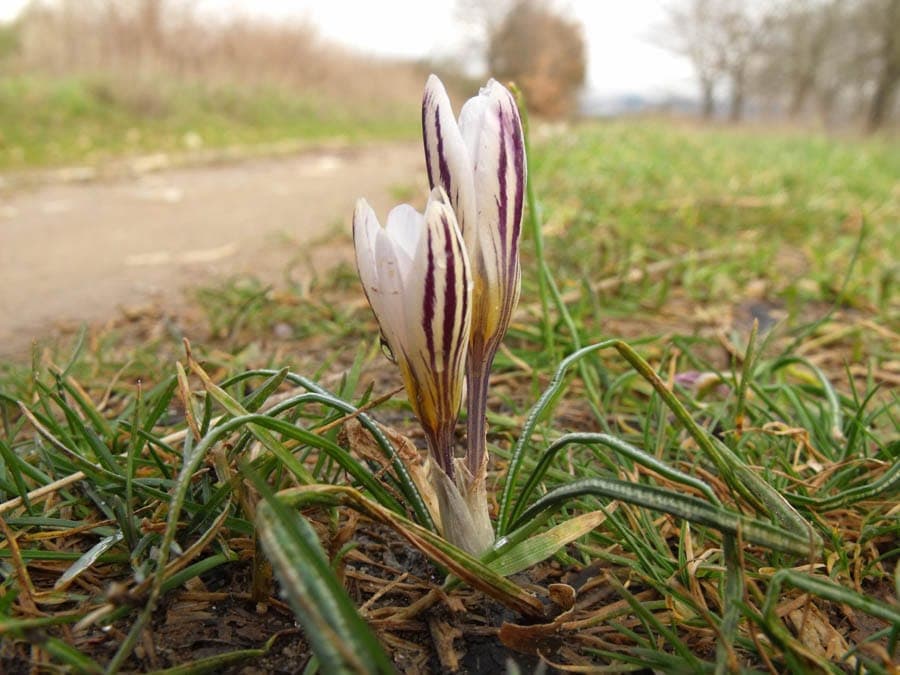
Crocus biflorus blooms from February to March with elegant, silvery-white flowers. The petals are often striped or spotted with purple or blue. Each flower opens in the sun and closes at night.
Narrow, linear foliage appears with or shortly after flowers. The plant reaches a maximum height of 15 cm. Each corm typically produces two flowers (hence the botanical name biflorus), though this varies.
After blooming, flowers and foliage gradually die back as the plant stores energy in the corms for next year.
Ideal Location
Choose a sunny to partially shaded spot. Minimum 3-4 hours of daily sunlight is ideal. Flowers open better in full sun.
In lawns, the plant remains low and does not compete with grass. In borders, place at the front where early color stands out. Avoid complete shade.
Soil Requirements
Crocus biflorus is not fussy about soil types. Good drainage is essential, however. In heavy clay soils, work in sand for improved drainage.
Neutral to slightly acidic (pH 6.0-7.5) is ideal. The plant also grows in poor, dry soils. Established crocus patches can grow in the same soil for years without replenishment.
Watering
Water well after planting. Subsequently, the plant needs little water. Rainfall is usually sufficient. However, avoid wet, marshy conditions that cause rot.
Once established, supplemental watering is unnecessary; winter and spring rainfall suffices. In dry springs, light watering helps.
Diseño gratis
¿Quieres ver Silvery crocus: complete guide en tu jardín? Crea un diseño gratis ahora.
Pruning
Pruning is not necessary. After blooming, allow foliage to yellow and die back before lifting corms. This allows the plant to store energy.
Faded flowers can be removed for tidiness, but this is optional.
Maintenance Calendar
September-October: Plant corms in prepared ground, 5-8 cm deep, 5-8 cm apart.
November-January: Winter dormancy in the soil. No water needed beyond normal rainfall.
February-March: Blooming period. Enjoy the flowers. Keep lightly moist.
April-May: Foliage dies back. Do not interrupt this process.
June-September: Summer dormancy. The plant rests.
Winter Hardiness
Crocus biflorus is winter-hardy to USDA zone 3 (-40°C). This is a very cold-hardy plant suitable for all Dutch climate zones. In most regions, no protection is needed.
Corms remain in the soil and regrow year after year. In very wet winters, rot can occur; good drainage is therefore essential.
Companion Plants
Crocus biflorus combines beautifully with other early bloomers such as snowdrops and the white crocus variety C. tommasinianus. Also attractive with low winter groundcover and heather flora.
In lawns, combine with other crocus species for season extension. Good with small daffodils.
Plant under deciduous trees that have not yet leafed out for overhead coverage.
Availability & Purchase
Crocus biflorus corms are available from major garden centers, September through December. Select large, healthy corms without damage or mold.
Usually packaged in boxes of 10-15 pieces. More detailed advice and planting schedules are available on gardenworld.app.
Summary
Crocus biflorus is a reliable, easy early bloomer that brings color to the spring garden when little else flowers. Plant corms in autumn for blooms the following spring. The plant returns each year and gradually increases.
With minimal care and water, this crocus grows trouble-free for years. Ideal for natural effects in lawns and borders. Explore more plant advice on gardenworld.app.
¿Quieres ver Silvery crocus: complete guide en tu jardín? Crea un diseño gratis ahora.
Sube una foto, elige un estilo y obtén un diseño fotorrealista con lista de plantas en menos de un minuto.
Más de 10.000 jardines diseñados
Sin tarjeta de crédito


Plantas similares
Iris tingitana: complete guide
Iris tingitana
Iris tingitana, the Morocco iris, is the bulb species behind the Dutch iris: early blue-violet blooms that need a sunny, well-drained position.
Iris hookeri: complete guide
Iris hookeri
Hooker's Iris is a compact North American native plant with blue flowers. Low-growing and moisture-loving water plant.
Siskiyou iris: complete guide
Iris bracteata
Complete guide to Iris bracteata, the Siskiyou iris: location, soil, bloom cycle, watering, pruning and companion plants for this rare Pacific Coast iris.