
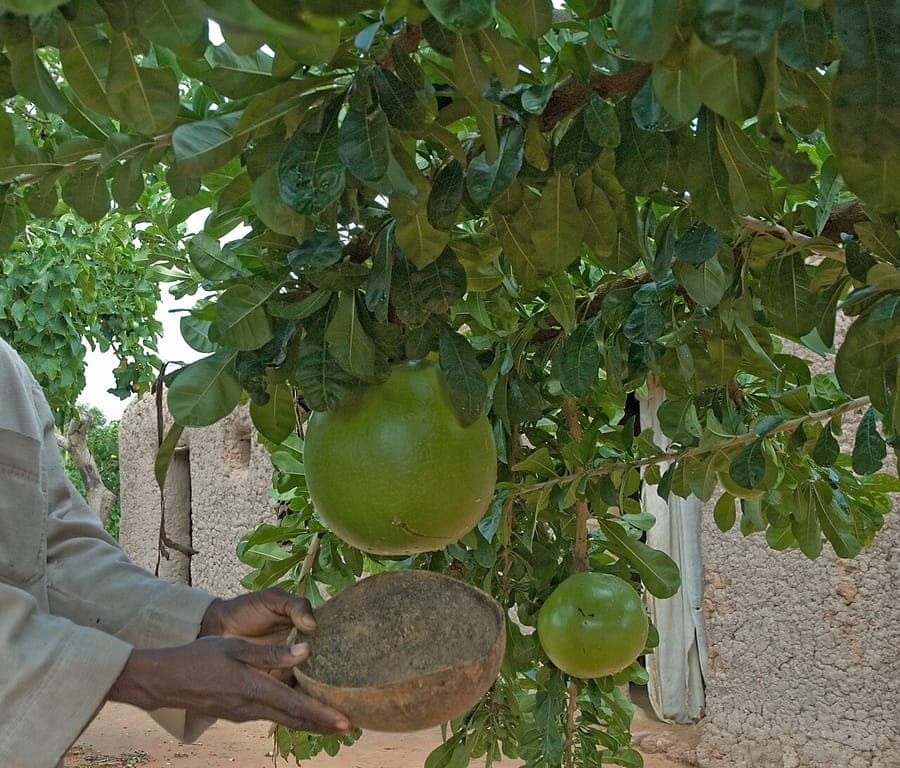
Rik Schuiling / TropCrop-TCS / CC BY-SA 4.0, via Wikimedia Commons
Calabash: complete guide
Crescentia cujete
¿Quieres ver Calabash: complete guide en tu jardín?
1 minuto, sin tarjeta de crédito
Overview
The Calabash, scientifically known as Crescentia cujete, is a fascinating tropical tree native to Mexico through Venezuela and the Caribbean region. This tree is renowned for its unique, large gourd-shaped fruits that have been historically used for household purposes and decorative applications.
Appearance and Bloom
The Calabash grows as a medium to large tree with an open crown form. Leaves are lance-shaped and green, arranged in clusters. The most striking feature is the large, round to oval fruits that emerge directly from the trunk and branches. These fruits can reach up to 25 cm in diameter and have a hard, woody shell that changes color from green to yellow-brown. The flowers are yellow and inconspicuous, but they produce the characteristic fruits.
Ideal Location
The Calabash thrives best in full sun with at least 6-8 hours of direct sunlight daily. This tree requires warmth and can only grow outdoors in tropical or subtropical climates. In temperate zones, it can only be cultivated in greenhouses or conservatories. The tree appreciates shelter from strong winds due to its open branch structure.
Soil
Well-draining, fertile soil is essential. The Calabash prefers soil with pH 6.0-7.5. Add organic matter such as compost or leaf mould to improve soil structure. Good drainage is crucial to prevent root rot, so adding sand helps in heavy soils.
Diseño gratis
¿Quieres ver Calabash: complete guide en tu jardín? Crea un diseño gratis ahora.
Watering
Regular watering is important, especially during the growing season. Keep the soil consistently moist but not waterlogged. In winter, watering can be reduced if the tree enters dormancy. Water at the base of the tree; avoid wetting foliage which can encourage diseases.
Pruning
Moderate pruning helps maintain tree form and improve air circulation. Remove dead or damaged wood. Since fruits emerge on the trunk, minimize pruning of main branches. Pruning is best performed in early spring before new growth starts.
Maintenance Calendar
Spring: Apply fertilizer, begin regular watering as growth starts. Summer: Keep soil moist, check for pests. Autumn: Reduce watering as temperatures decline. Winter: Minimal maintenance; water sparingly.
Winter Hardiness
The Calabash is not hardy in temperate climates. It cannot tolerate temperatures below 10-12 degrees Celsius. In average zones, it must be grown in a heated greenhouse or as a houseplant.
Companion Plants
In tropical gardens, companion plants help create microclimate. Smaller understorey plants such as tropical ferns and shade-preferring green plants work well. Avoid direct competition for water and nutrients.
Closing
The Calabash is an exotic and unique tree that impresses with its unusual fruits. While it requires specific tropical conditions, a successfully established tree will provide long-term interest and fruit production. For gardens in northern Europe, it works better in greenhouse settings. Discover more tropical trees on gardenworld.app/en and gardenworld.app/nl
¿Quieres ver Calabash: complete guide en tu jardín? Crea un diseño gratis ahora.
Sube una foto, elige un estilo y obtén un diseño fotorrealista con lista de plantas en menos de un minuto.
Más de 10.000 jardines diseñados
Sin tarjeta de crédito


Plantas similares
Tabebuia pallida: complete guide
Tabebuia pallida
Full growing guide for Tabebuia pallida: location, soil, watering, pruning, hardiness and companion plants for this tropical trumpet tree.
Northern catalpa: complete guide
Catalpa speciosa
Everything about northern catalpa (Catalpa speciosa): bold white flowers, fast growth, and how to grow this striking tree in your garden.
Desert willow: complete guide to Chilopsis linearis
Chilopsis linearis
Complete growing guide for desert willow (Chilopsis linearis): sun, soil, flowering, pruning, and winter care for this spectacular flowering small tree.