
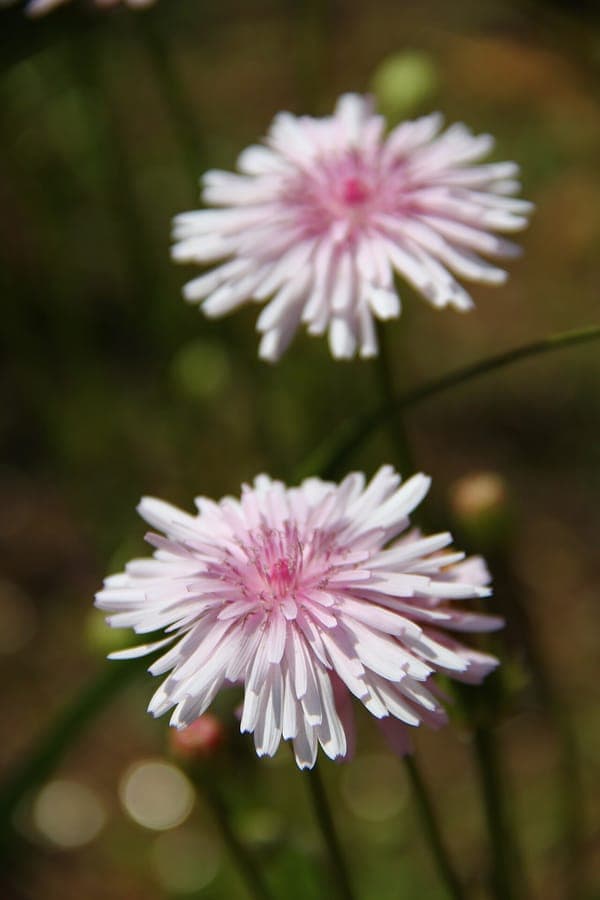
Roozitaa / CC BY-SA 3.0, via Wikimedia Commons
Crepis rubra: complete guide
Crepis rubra
¿Quieres ver Crepis rubra: complete guide en tu jardín?
1 minuto, sin tarjeta de crédito
Overview
Crepis rubra, known as red hawk's-beard or pink hawk's-beard, is a charming annual wildflower named for its pink to red flowers. With its warm, delicate flower colour and elegant growth form, this Mediterranean plant is a striking addition to sunny borders, dry rocky areas and cottage gardens.
This plant offers gardeners an easy, economical way to quickly add colour to garden designs. It grows rapidly and blooms abundantly without requiring much maintenance.
Appearance and Bloom
Crepis rubra forms loose rosettes with fine, hairy leaves. The plant reaches a height of 20-50 cm and develops slender, upright stems.
The flowers are this species' defining feature: beautiful pink to red blooms approximately 1-1.5 cm across, gathered in loose clusters. Flowers appear from April to June in southern ranges, through July in more northern areas.
Following flowering, distinctive feathery seedheads develop, keeping the plant decorative even after blooming finishes.
Ideal Location
Crepis rubra grows best in full sun, requiring at least 6-8 hours of direct sunlight daily. This ensures the most intense flower colour and compact growth.
The plant is highly suitable for warm, sunny locations and Mediterranean settings. It tolerates wind better than many other Crepis species due to its more compact growth.
Soil Requirements
This species demands well-draining, moderately fertile soils. Sandy, loamy and rocky grounds are ideal. It grows remarkably well in less fertile soils and tolerates drought excellently.
A pH between 6.0 and 7.5 suits it well. Heavy clay soils can be improved with sand and gravel to enhance drainage.
Watering and Moisture Management
Crepis rubra is extremely drought-tolerant once established. Watering is only needed during extreme dry periods. Excessive moisture must be avoided as it can cause root rot.
For young plants after planting, water regularly for several weeks until they've developed good root systems. After establishment, supplemental water is rarely needed.
Diseño gratis
¿Quieres ver Crepis rubra: complete guide en tu jardín? Crea un diseño gratis ahora.
Seed Sowing and Propagation
Crepis rubra self-seeds readily and plants can be grown from seed. Seeds can be sown directly into ground in spring or autumn. They germinate quickly in warm, light conditions.
Some gardeners allow plants to produce seedheads for natural self-seeding next season, creating a spontaneous, natural garden look.
Pruning and Maintenance
Deadheading stimulates further blooming and keeps plants compact. Leave some flowers to produce seedheads for next season.
After season's end, plants can be completely removed as this annual species dies. However, allow seedheads to drop for natural self-seeding.
Maintenance Calendar
Early Spring (March-April): Sow seeds, thin seedlings. Late Spring (April-May): Regular watering of young plants. Summer (June-July): Deadheading, minimal maintenance. Autumn (September-October): Allow seedheads to mature and naturally disseminate.
Winter Hardiness
Crepis rubra is not winter hardy and serves as annual cultivation. In frost-free zones it may occasionally overwinter. In temperate climates it grows only in the warm season.
Companion Planting
Crepis rubra works wonderfully in mixed borders with other Mediterranean wildflowers, Spanish lavender and opuntia. The pink-red colour contrasts beautifully with yellow flowers of other Crepis species.
Use it also in dry gravels, as filler in cottage gardens and in large pots with other cacti and drought-tolerant plants.
Closing Thoughts
Crepis rubra is a spectacular annual wildflower that quickly brings colour to your garden. With its pink-red flowers, low maintenance requirements and drought-tolerant nature, it's perfect for gardeners seeking easy, cheerful garden design.
Seeds are readily available from seed merchants and specialist shops. Mature plants can be purchased at garden centers in spring and early summer. For designs and inspiration visit gardenworld.app/en and gardenworld.app/nl.
¿Quieres ver Crepis rubra: complete guide en tu jardín? Crea un diseño gratis ahora.
Sube una foto, elige un estilo y obtén un diseño fotorrealista con lista de plantas en menos de un minuto.
Más de 10.000 jardines diseñados
Sin tarjeta de crédito


Plantas similares
Crepis mollis: complete guide
Crepis mollis
Discover northern hawk's-beard (Crepis mollis), a robust European wildflower with yellow flowers. Our complete guide on growing requirements, maintenance and ideal locations.
Crepis micrantha: complete guide
Crepis micrantha
Discover small-flowered hawk's-beard (Crepis micrantha), an elegant Mediterranean wildflower with yellow blooms. Read our comprehensive guide on cultivation, care and ideal growing locations.
Crepis sancta: complete guide
Crepis sancta
Discover holy hawk's-beard (Crepis sancta), a widely distributed Mediterranean wildflower with yellow flowers. Our comprehensive guide on cultivation, care and optimal growing locations.