
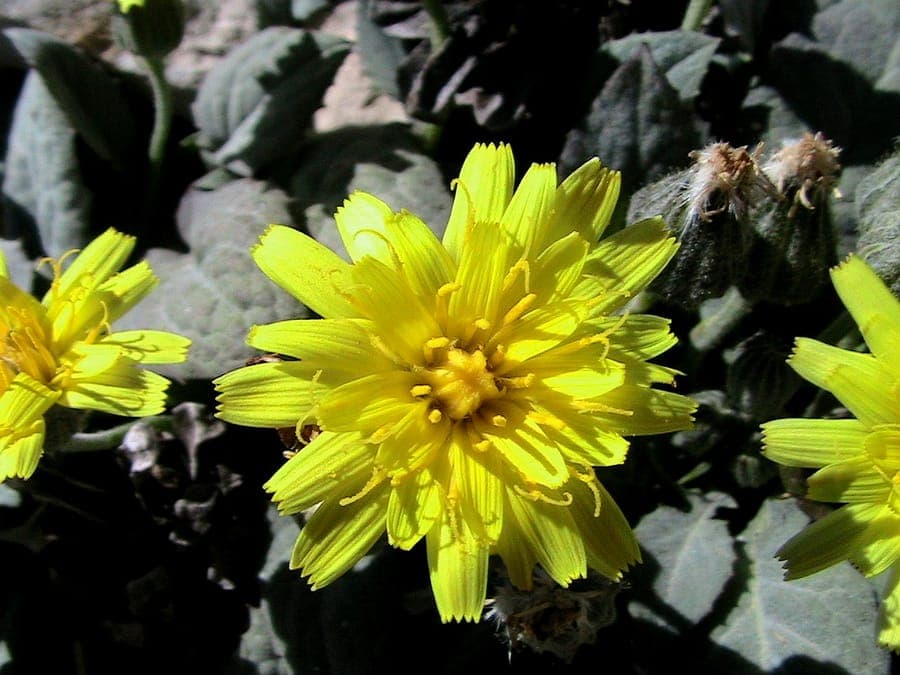
Isidre blanc / CC BY-SA 4.0, via Wikimedia Commons
Pygmy hawksbeard: complete guide
Crepis pygmaea
¿Quieres ver Pygmy hawksbeard: complete guide en tu jardín?
1 minuto, sin tarjeta de crédito
Crepis pygmaea, known as pygmy hawksbeard or crépide naine, is a tiny alpine herb in the Asteraceae family. Native to Central and Southwestern Europe, this species is renowned for its delicate yellow flowers and compact form.
Overview
Pygmy hawksbeard is an exceptionally small plant, reaching only 5-10 centimeters tall. With its minuscule leaf rosettes and fine yellow flowers, it is a true jewel for alpine rock gardens. This plant grows in high mountain areas between 1500-2800 meters elevation.
Appearance & Bloom
The plant forms compact rosettes of fine, hairy leaves. From July through August, a few to several dozen tiny yellow flowers appear on thin stems. These flowers are so small that a magnifying glass is useful for appreciating all details. Flowers are followed by feather-like seed pods.
Ideal Location
Place in full sun on a steep mountainous slope or in an alpine rock garden. This plant requires perfect drainage and ideally a rock crevice where it can establish. Partial shade in very hot climates is acceptable but not ideal.
Soil
Alpine grit mixture with minimal organic matter. Sandy, poor soils are preferred. pH between 6.5 and 7.5 is ideal. In containers: 70 percent alpine grit, 30 percent compost. This plant tolerates nutrient-poor soil without difficulty.
Diseño gratis
¿Quieres ver Pygmy hawksbeard: complete guide en tu jardín? Crea un diseño gratis ahora.
Watering
Moderate water during growth period. Ensure water does not pool around the plant. During dry periods, water regularly but do not soak. Keep dry in winter. Excessive water is lethal.
Pruning
No pruning needed. Remove dead leaves in spring if desired. This plant maintains itself well.
Maintenance Calendar
May through July: preparation for bloom. July through August: flowering period with regular monitoring. September through October: winter preparation. November through April: winter dormancy.
Winter Hardiness
Winter hardy to USDA zone 4a (-30 degrees Celsius). This alpine plant tolerates extreme cold beautifully. No winter protection needed in temperate regions.
Companion Plants
Combine with other tiny alpine species: Sedum, Saxifraga, Androsace, and miniature Phlox. Create an alpine patchwork with diverse micro-plants.
Closing Thoughts
Pygmy hawksbeard is a precious plant for alpine enthusiasts. Though difficult to find commercially, it is worth seeking out. Very slow growing, but patience rewards you with years of blooms.
Specialty alpine plant nurseries stock this species. Check their websites. Gardenworld.app helps with alpine garden design.
¿Quieres ver Pygmy hawksbeard: complete guide en tu jardín? Crea un diseño gratis ahora.
Sube una foto, elige un estilo y obtén un diseño fotorrealista con lista de plantas en menos de un minuto.
Más de 10.000 jardines diseñados
Sin tarjeta de crédito


Plantas similares
Calendula stellata: complete guide
Calendula stellata
Complete guide to Calendula stellata, the star-flowered marigold from Sicily: location, soil, watering and companion planting tips.
Korean chrysanthemum: complete guide
Chrysanthemum x rubellum
Chrysanthemum x rubellum is a hardy autumn perennial with single pink to copper flowers from August to November. Care and combinations.
Helianthus divaricatus: complete guide
Helianthus divaricatus
Helianthus divaricatus is a North American woodland sunflower with yellow summer blooms, ideal for naturalistic borders and shady edges.