
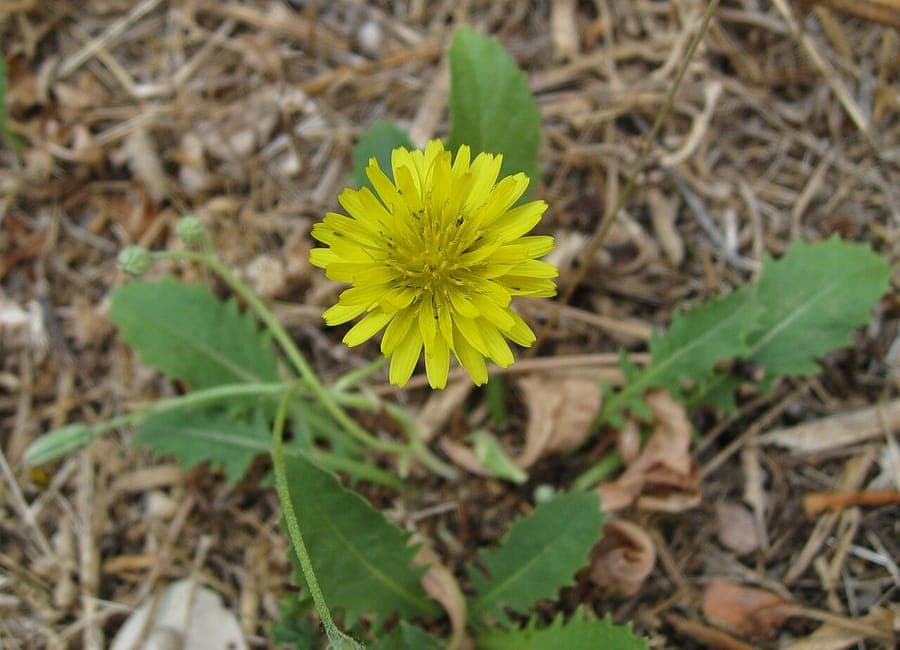
Alogiraf / CC BY-SA 3.0, via Wikimedia Commons
Crepis bursifolia: complete guide
Crepis bursifolia
¿Quieres ver Crepis bursifolia: complete guide en tu jardín?
1 minuto, sin tarjeta de crédito
Overview
Crepis bursifolia, commonly known as Italian hawksbeard or Italian hawksbit, is an attractive Mediterranean plant in the Asteraceae family (daisy family). This delicate species grows naturally throughout the Mediterranean region (native to Italy, France, Spain, North Africa, and the Canary Islands) and thrives in dry, full-sun locations. The plant is characterized by abundant tiny yellow flowers arranged in loose panicles, combined with interesting, deeply divided foliage. Although individually small, Crepis bursifolia adds character and bright yellow color to Mediterranean and dry gardens.
Appearance and Bloom
Crepis bursifolia is a low-growing, herbaceous plant, typically 30-60 cm tall. The leaves are fascinatingly shaped - deeply divided, quasi-rosette at the base, which explains its scientific name (bursifolia = purse-leaf). These foliage pieces are green and create a silky texture. The flowers are tiny, yellow, and numerous, appearing in loose, branching panicles from April through July. Each individual flower is only several millimeters across, but their cumulative effect is spectacular when thousands bloom simultaneously.
Ideal Location
Position Crepis bursifolia in full sun (minimum 6-8 hours direct sunlight daily). The plant strongly prefers warm, dry locations and won't flourish in shade. It's ideal for Mediterranean gardens, rocky slopes, stone areas, and drier plots. In temperate climates, cultivate in pots and move indoors if frost threatens. The plant is excellent for wildflower meadows and can be used in flower meadows with other dry-site lovers.
Soil
Crepis bursifolia requires exceptionally well-draining soil - heavier soils can be problematic. Sandy, calcareous soils are strongly preferred. Amend heavy clay with sand, gravel, or perlite so the mixture is highly porous. The plant accepts poor to moderately fertile soils and can even thrive in nutrient-poor sand. A neutral to slightly alkaline pH (7.0-7.5) is ideal, though it also accepts mildly acidic soils. Mulch with gravel pieces rather than organic material to maintain drainage.
Watering
Established Crepis bursifolia is extremely drought-tolerant. Water newly planted specimens moderately (once every two weeks) during the first growing season. Thereafter, watering can be drastically reduced. In dry, Mediterranean climates, supplemental watering may be unnecessary entirely. Avoid overwatering or standing water, both of which cause rot.
Diseño gratis
¿Quieres ver Crepis bursifolia: complete guide en tu jardín? Crea un diseño gratis ahora.
Pruning
Crepis bursifolia requires minimal pruning. After blooming, you can remove spent flowers to stimulate additional blooming, though this is optional. The plant maintains a compact form and doesn't need regular cutting. If it becomes too large, prune it back, but avoid drastic cutting. Most gardeners allow the plant to grow in its natural shape.
Maintenance Calendar
Spring: Sow seeds directly in ground in early spring. Plant nursery-raised specimens in spring too. Moderate watering until new growth appears. Summer: Enjoy blooming from April through July. Autumn: Collect seed for next season. Winter: In temperate climates protect against frost; no special care otherwise. This plant is minimally demanding and delivers benefits for years.
Winter Hardiness
Crepis bursifolia is semi-hardy and tolerates temperatures to approximately -5 to -10°C under favorable conditions. In many temperate European climates (Britain, Netherlands, northern France) it can grow outdoors without protection, though young plants may need frost protection. In harsher climates (below -10°C) cultivate in pots you can move indoors. In very warm climates it grows best as a cool-season flower (autumn-sow for spring blooming).
Companion Plants
Crepis bursifolia thrives alongside other Mediterranean wildflowers and dry-site lovers. Combine with other Asteraceae such as Anthemis, Helichrysum, and Centaurea. Also associate with other drought-tolerant bloomers: Papaver (poppy), Delphinium, and low-growing Salvia. These combinations create colorful, wildflower-like garden effects requiring minimal watering. Avoid moisture-loving companions.
Closing Thoughts
Crepis bursifolia is a charming, drought-tolerant wildflower perfect for Mediterranean gardens and dry, full-sun locations. With minimal care, interesting foliage, and yellow blooms over many months, this plant delivers benefits for years. It suits both large and small gardens, adding distinctive flair to Mediterranean and rocky flower meadows. Available through specialized suppliers and online retailers for gardeners seeking Mediterranean character.
Visit gardenworld.app for comprehensive Mediterranean plant advice and garden design. Gardenworld.app delivers photorealistic gardens emphasizing wildflower-like plantings and drought-tolerant landscapes.
¿Quieres ver Crepis bursifolia: complete guide en tu jardín? Crea un diseño gratis ahora.
Sube una foto, elige un estilo y obtén un diseño fotorrealista con lista de plantas en menos de un minuto.
Más de 10.000 jardines diseñados
Sin tarjeta de crédito


Plantas similares
Calendula stellata: complete guide
Calendula stellata
Complete guide to Calendula stellata, the star-flowered marigold from Sicily: location, soil, watering and companion planting tips.
Korean chrysanthemum: complete guide
Chrysanthemum x rubellum
Chrysanthemum x rubellum is a hardy autumn perennial with single pink to copper flowers from August to November. Care and combinations.
Helianthus divaricatus: complete guide
Helianthus divaricatus
Helianthus divaricatus is a North American woodland sunflower with yellow summer blooms, ideal for naturalistic borders and shady edges.