
Nadiatalent / Public domain, via Wikimedia Commons
Crataegus punctata: complete guide
Crataegus punctata
¿Quieres ver Crataegus punctata: complete guide en tu jardín?
1 minuto, sin tarjeta de crédito
Overview
The dotted hawthorn (Crataegus punctata), also known as hillside hawthorn, is an impressive shrub from the Rosaceae family. This North American species is renowned for its lovely white flowers, red-colored fruits and strong thorns. It is an excellent choice for hedges, wildlife shelters and ornamental gardens. The plant naturally occurs from Canada to the northern United States.
Appearance and bloom
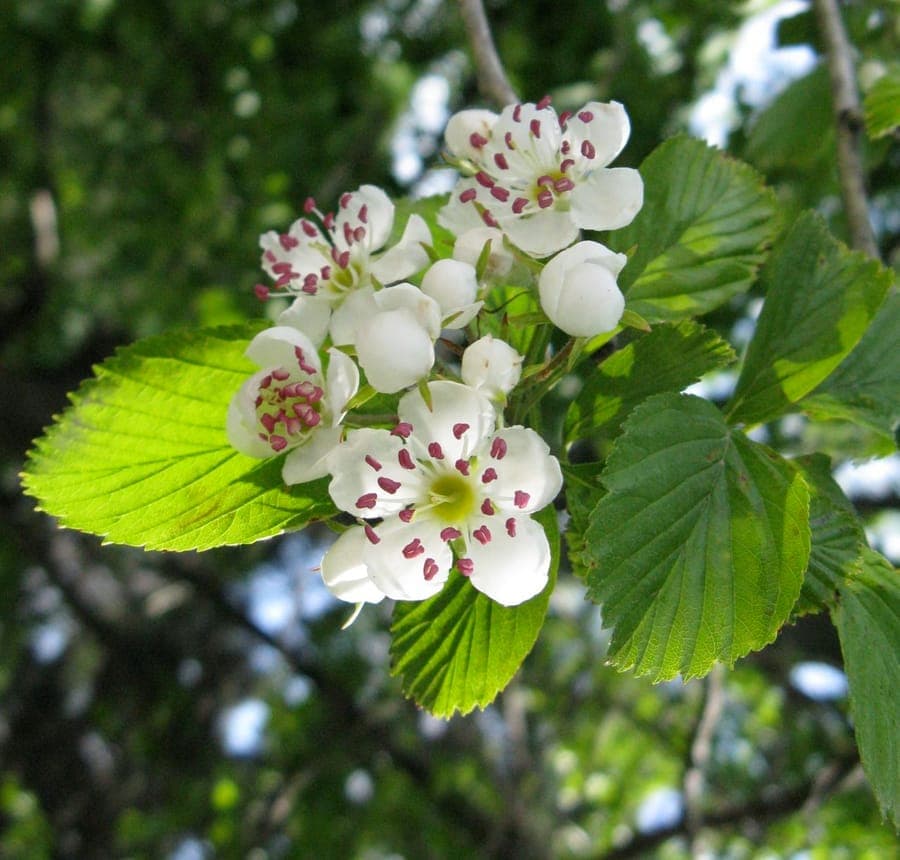
The dotted hawthorn grows into a shrub or small tree of approximately 5 to 8 meters in height, with a densely branched silhouette. The leaves are dark green, glossy and deeply cut. From May to June, an abundance of white flowers, in single or double-flowering forms, adorns the plant. These flowers attract many insects.
After flowering, the striking fruits appear: shiny red or orange, approximately 1 to 1.5 cm large, with distinct dots (speckles) on the surface. These fruits remain on the plant for a long time and are very attractive to birds.
Ideal location
The dotted hawthorn grows best in a sunny location. Ensure the plant receives at least 6 hours of direct sunlight per day. In partial shade the plant also grows well, but you risk fewer flowers and fruits. Wind is not a problem - on the contrary, this shrub is very wind-resistant.
Soil
The plant is not choosy regarding soil type. A well-draining, moderately fertile soil is ideal. Heavy clay soils can be improved with some compost or sand to promote water drainage. The plant tolerates chalky soils very well. Ensure well-draining soil, as waterlogging is not pleasant.
Watering
After planting, the dotted hawthorn needs regular water, especially during dry periods. Once established, the plant is quite drought-tolerant. Water when the soil feels dry on the surface. In hot summers, extra water may be needed. Avoid waterlogging by ensuring rainwater drains well.
Diseño gratis
¿Quieres ver Crataegus punctata: complete guide en tu jardín? Crea un diseño gratis ahora.
Pruning
The dotted hawthorn grows naturally well and compact. Pruning is not really necessary, but you can shape it in February to March. Remove dead branches and crossing branches. If you use the shrub as a hedge, you can trim it in June and September. Be careful: the thorns are sharp!
Maintenance calendar
January-February: Winter maintenance. Remove dead or damaged branches after frost periods.
March-April: Start of growing season. Optionally prune for shape.
May-June: Bloom time. Enjoy the white flowers and insect visits.
July-September: Fruit setting. The red fruits become visible.
October-November: Autumn colors appear. Birds eat the fruits.
December: Preparation for winter. Add mulch around the base.
Winter hardiness
The dotted hawthorn is a very hardy plant. This shrub tolerates temperatures down to -20 degrees Celsius without problems. No winter protection is needed. The plant retains its charm even in the winter garden with its structure and persistent fruits.
Particularly good with this plant
The combination of beautiful blooms, attractive fruits and bird food makes this hawthorn very valuable. Use this plant in combination with other species like berberis, ilex or prunus for a varied hedge. Also beautiful in combination with perennials like lythrum or calamagrostis.
Final remarks
The dotted hawthorn is a robust, versatile plant that enlivens your garden. With minimal care, this plant grows for years without problems. Ideal for landscapes, hedges and wildlife gardens. You can find this plant at garden centers. GardenWorld.app also offers useful tips for integrating this beautiful shrub into your front yard. Visit gardenworld.app for more inspiration.
¿Quieres ver Crataegus punctata: complete guide en tu jardín? Crea un diseño gratis ahora.
Sube una foto, elige un estilo y obtén un diseño fotorrealista con lista de plantas en menos de un minuto.
Más de 10.000 jardines diseñados
Sin tarjeta de crédito


Plantas similares
Siberian crab apple: complete guide
Malus x robusta
Complete guide to the Siberian crab apple (Malus x robusta): location, soil, pruning, winter hardiness and the best companion plants for your garden.
Chinese flowering crabapple (Malus x spectabilis): complete guide
Malus x spectabilis
Meet the Chinese flowering crabapple (Malus x spectabilis): a classic spring bloomer with carmine buds and pink blossom.
Potentilla crassinervia: complete guide
Potentilla crassinervia
Potentilla crassinervia, the Corsican cinquefoil, grows wild on Corsica and Sardinia's peaks. Discover how to grow this hardy alpine rock garden gem.