
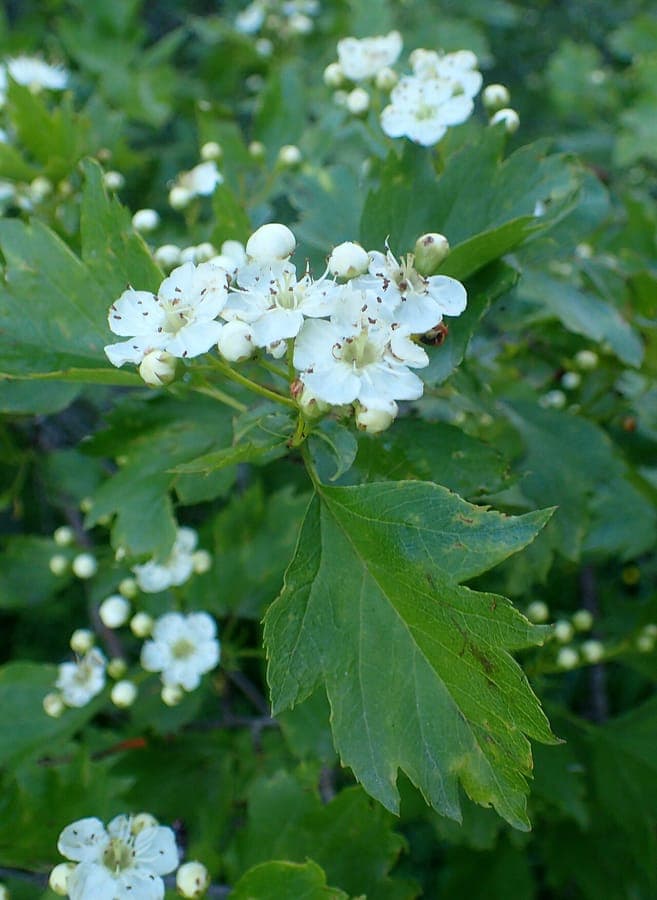
Krzysztof Ziarnek, Kenraiz / CC BY-SA 4.0, via Wikimedia Commons
Crataegus nigra: complete guide
Crataegus nigra
¿Quieres ver Crataegus nigra: complete guide en tu jardín?
1 minuto, sin tarjeta de crédito
Overview
Crataegus nigra, also called Hungarian-thorn or Pannonian Black Hawthorn, is a robust East European hawthorn species. Distinguished by its strong branching structure, delicate white flowers, and especially its dark, nearly black fruits.
Significantly hardier and more weather-resistant than many other hawthorn varieties. In northern European gardens grows excellently and forms dense hedges.
Appearance & bloom
Grows into a shrub or small tree reaching 4-6 meters in natural conditions. Branches are finely divided with small thorns. During May-June, white flowers sometimes with pink tinges appear in dense clusters. Frost-hardy and attract many pollinators.
Leaves are small, deep green, finely incised with three to five lobes. In autumn, foliage turns golden-yellow to red before falling. Fruits are distinctive feature - dark brown to black.
Ideal location
Extremely versatile. Thrives in both sunny and semi-shaded locations. Highly wind-tolerant, making it suitable for windy coastal and open countryside areas.
Plant in open gardens, as boundary plants, along property lines, or in wildlife-friendly hedges.
Soil
Not particular about soil type. Thrives on both dry and moist soils. Nearly all soil types work - from sandy to clay-based.
Extremely salt-tolerant. Well-drained soil prevents waterlogging during very wet winters.
Diseño gratis
¿Quieres ver Crataegus nigra: complete guide en tu jardín? Crea un diseño gratis ahora.
Watering
After planting, water regularly during first growing season, especially during dry periods. Established plants are drought-tolerant and need hardly any supplemental water.
Young newly planted shrubs should be kept more moist.
Pruning
Can be shaped as hedge plant through regular pruning in June-July and August. Use pruning shears carefully due to thorns - use appropriate gloves.
For more natural growth, minimize pruning. Dead or damaged branches can be removed any season.
Maintenance calendar
January-February: Prune dormant plants. April-May: Full bloom. June-July: First summer pruning. September-October: Fruits ripen to black. November-December: Leaf fall.
Winter hardiness
Extremely winter-hardy. Tolerates temperatures down to -25 degrees Celsius. Fully adapted to European winters.
Even in harshest winters performs well without special protection. Bird-friendly fruits often remain on branches well into winter.
Companion plants
Grows beautifully with other wildlife-friendly hedge plants. Combine with hawthorn, dog rose and rowan for extra variety.
Closing
Fantastic choice for anyone wanting to establish a strong wildlife-friendly hedge. With beautiful flowers, dark fruits and exceptional winter hardiness creates real value in any garden.
¿Quieres ver Crataegus nigra: complete guide en tu jardín? Crea un diseño gratis ahora.
Sube una foto, elige un estilo y obtén un diseño fotorrealista con lista de plantas en menos de un minuto.
Más de 10.000 jardines diseñados
Sin tarjeta de crédito


Plantas similares
Hawthorn: complete guide
Crataegus monogyna
Learn how to grow and care for Hawthorn (Crataegus monogyna): ideal location, pruning, soil needs, and companion plants for UK and European gardens.
Eglantine: complete guide
Rosa rubiginosa
Discover Rosa rubiginosa, the fragrant wild rose ideal for low-maintenance, wildlife-friendly gardens across temperate climates.