
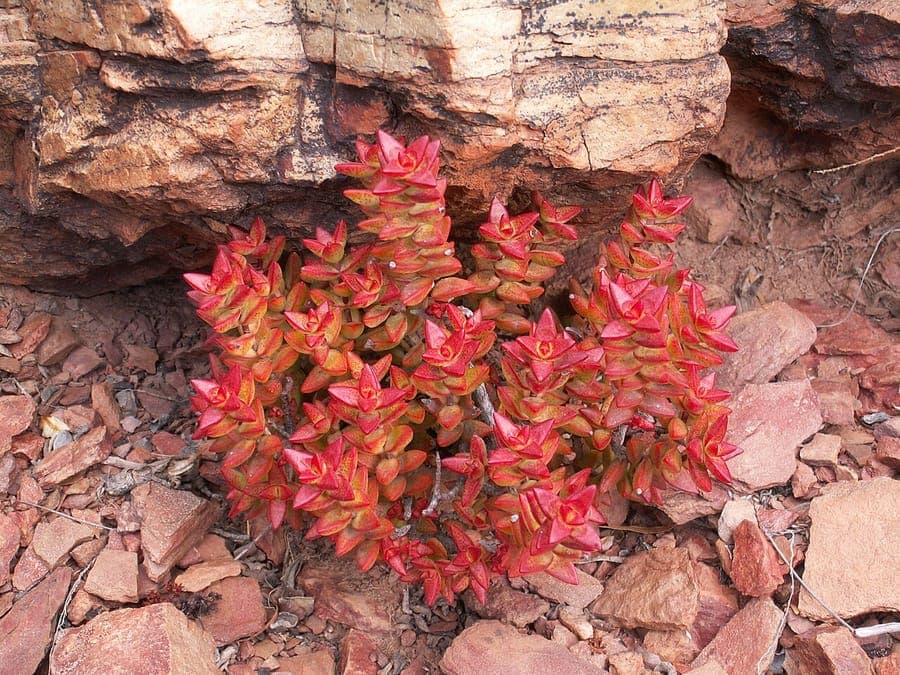
Winfried Bruenken (Amrum) / CC BY-SA 2.5, via Wikimedia Commons
Crassula rupestris: complete guide
Crassula rupestris
¿Quieres ver Crassula rupestris: complete guide en tu jardín?
1 minuto, sin tarjeta de crédito
Overview
The Rosary plant (Crassula rupestris), also known as Concertina plant or Sosaties, is a unique low-growing succulent native to South Africa. This extraordinary succulent develops characteristic rope-like structures - stems with leaf pairs that twist around each other like a twisted cord. This supremely easy-care plant reaches only 15-30 centimeters in height, spreading slowly to form interesting ground-covering colonies.
For front garden design, this plant is a treasure for minimalist, Mediterranean, or contemporary garden styles. Its exotic form demands virtually no watering or feeding. Perfect for dry locations, rocky slopes, or spaces where conventional plants surrender to drought.
Appearance and Bloom
The Rosary plant distinguished itself through its highly characteristic rope-like growth pattern. Two rows of leaves twist continuously around the stem, creating rope-like formations when examined. Each leaf pair sits densely packed, creating an incredibly compact arrangement. Foliage is green to gray-green, thick-walled and succulent.
In autumn (October-November), tiny white to pink flowers appear in dense clusters at stem tips. These are subtle yet charming. Blooming results in seed-set, though propagation through seed is unnecessary - broken stem fragments root effortlessly in the right conditions.
Ideal Location
The Rosary plant demands full sun to extremely bright locations. Minimum 5-6 hours of direct sunlight ensures compact, healthy specimens. Partial shade results in elongation and weakness. No wind protection needed - this species is extremely robust.
Ideal positions: roof gardens, stone steps, rock gardens, between paving stones, along driveways. Any dry, sunny location where conventional plants struggle. Also suitable for container cultivation on sunny windowsills.
Soil
The Rosary plant shows almost no soil preference - even poor, dry, rocky ground suits it perfectly. The crucial factor is rapid drainage. Sand, gravel, and rocky substrates are ideal. Amend standard garden soil generously with sand or grit for enhanced drainage.
Plant in highly draining soil mixture: 1 part garden soil, 1 part sand, 1 part perlite or gravel. Water retention is undesirable. Foot rot through waterlogging represents the only real danger. Mulching is not recommended.
Diseño gratis
¿Quieres ver Crassula rupestris: complete guide en tu jardín? Crea un diseño gratis ahora.
Watering
Here lies the key to success: watering must be minimal. For established plants, natural rainfall suffices in normal summers. Supplemental watering during growth period (May-August) only once every two weeks, applied very sparingly.
In winter, provide no water whatsoever - even for container specimens. Dry winters trigger winter blooming. For potted plants: water only when soil feels completely dry, then apply very cautiously. Excessive watering proves fatal - inducing rapid rot.
Pruning
Pruning is almost unnecessary. The plant grows slowly and naturally assumes a compact form. Simply remove dead or damaged stems when observed. Propagation via stem breakage is effortless - allow broken pieces to dry several weeks, plant in sand, and provide minimal water.
Maintenance Calendar
May-June: Place plant outdoors or check established specimens. July-August: Extremely sparse watering, no feeding required. September-October: Halt watering, observe flower development. November-January: Keep completely dry, prepare frost protection for container plants. February-April: Prepare new growth period, water very cautiously initially.
Winter Hardiness
The Rosary plant is not fully winter-hardy in the Netherlands or Belgium, though more resilient than many succulents. It survives temperatures above -3 to -5 degrees Celsius without damage, especially when kept dry. Container-grown specimens winter better indoors in cool, dry, well-lit locations.
In front gardens on very dry, well-drained sites, it can overwinter outdoors with minor frost protection (loose rocks, dry leaf cover). It cannot tolerate wet conditions combined with cold.
Companion Plants
The Rosary plant works beautifully in rock gardens with other South African succulents: various Aloes, Sempervivum, and Sedum species. Dry, grass-like plants (Stipa, Festuca glauca) provide nice contrast. For Mediterranean-style gardens: combine with lavender, rosemary, thyme.
In containers: stunning combinations with low Echeveria, Sempervivum, or Delosperma species. Minimalist aesthetic preferred.
Closing Thoughts
The Rosary plant is perfect for gardeners freed from watering and feeding schedules. Its unique form and maintenance-free character make it a secret weapon for minimal front garden designs. Available through online plant retailers, cactus specialists, and quality nurseries.
Doubt that vegetation can be this maintenance-free? Try the Rosary plant. You'll fall in love with its distinctive beauty and never-failing reliability - perfect for gardenworld.app users with limited time but exquisite taste.
¿Quieres ver Crassula rupestris: complete guide en tu jardín? Crea un diseño gratis ahora.
Sube una foto, elige un estilo y obtén un diseño fotorrealista con lista de plantas en menos de un minuto.
Más de 10.000 jardines diseñados
Sin tarjeta de crédito


Plantas similares
Sedum nevadense: complete guide
Sedum nevadense
Discover Sedum nevadense, the stunning alpine stonecrop from the Pyrenees. Expert care tips, growing requirements, and design ideas for rock gardens.
Aizoon stonecrop: complete guide
Phedimus aizoon
Everything about Phedimus aizoon - the frost-tolerant aizoon stonecrop from Siberia with bright yellow flowers. Planting, care and garden use.
Roseroot: complete guide
Rhodiola rosea
Everything about roseroot (Rhodiola rosea): a tough hardy succulent ideal for rock gardens, green roofs, and dry sunny positions.