
Christer T Johansson / CC BY 3.0, via Wikimedia Commons
Red Treasure: complete guide
Crassula perfoliata
¿Quieres ver Red Treasure: complete guide en tu jardín?
1 minuto, sin tarjeta de crédito
Overview
Crassula perfoliata, commonly known as Red Treasure, is a mesmerizing succulent native to the Cape Provinces and surrounding regions of southern Africa. The common name references the plant's distinctive growth pattern, where leaves arrange alternately along the stem in a characteristic perfoliate manner.
With its compact form, striking reddish coloration, and minimal care requirements, Crassula perfoliata is ideal for modern gardens, xeriscapes, dry borders, and container collections. It thrives both indoors and outdoors in suitable climates.
Appearance and bloom
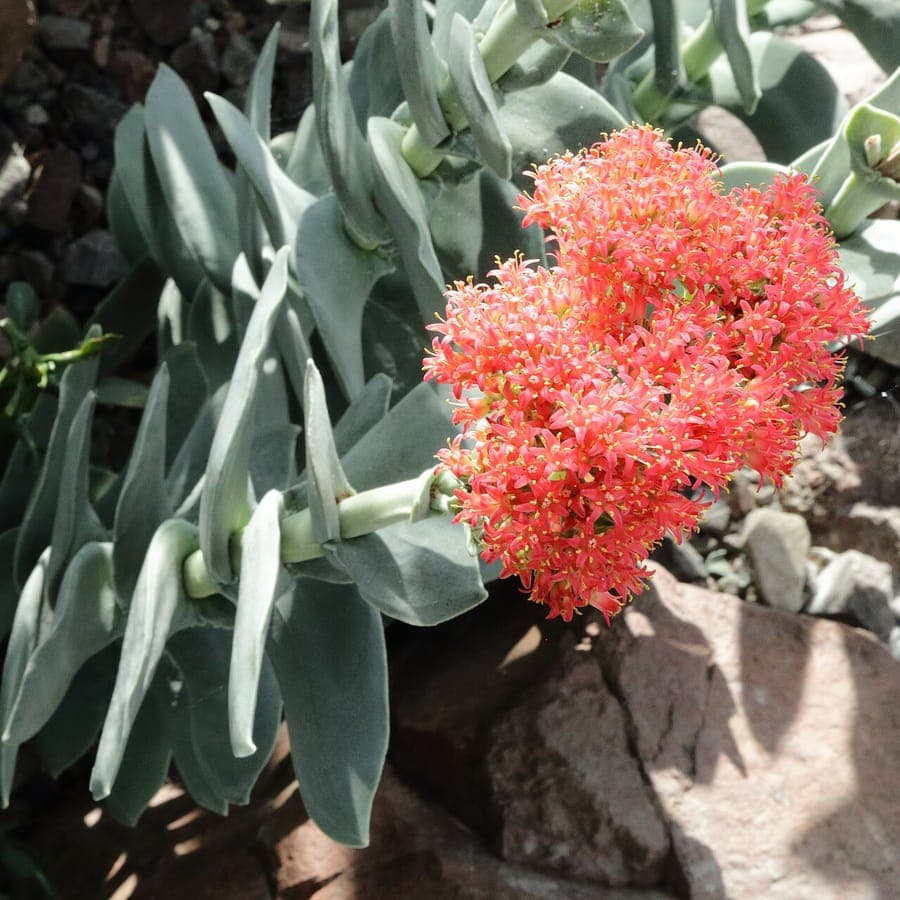
This compact succulent typically reaches 30 to 50 centimeters tall, with dense rosettes of fleshy, reddish to deep crimson leaves that clasp the stems in opposing pairs. In bright, sunny conditions, the foliage develops deep red and burgundy tones - truly striking.
During summer, delicate clusters of small red flowers appear at the plant's apex. While not showy, these nectar-rich blooms attract bees and other beneficial insects.
Under optimal conditions, the foliage remains colorful year-round. In reduced light, the leaves shift toward greener tones without losing charm. The plant's sculptural form makes it valuable even between blooming cycles.
Ideal location
Full sun is essential for optimal red coloration. Position this plant in the brightest location available - south-facing walls, sun-baked terraces, or raised beds in direct exposure.
Indoors, place on sunny south-facing windowsills. Without adequate light, the plant becomes pale green and stretched, losing ornamental value.
Crassula perfoliata is not frost-hardy and must be brought indoors before freezing temperatures arrive. In containers, this is easily managed by moving pots under shelter or into unheated greenhouses.
Soil
Excellent drainage is non-negotiable. Standard potting soil retains too much moisture. Instead, use:
- Specialized cactus and succulent mix
- Homemade mix: standard potting soil amended with 40-50 percent perlite, coarse sand, or pumice
- For outdoor beds: very gritty, sandy loam with minimal organic matter
Raised beds filled with course gravel and minimal soil work perfectly for warm-season outdoor cultivation alongside Sedum and other architectural plants.
Diseño gratis
¿Quieres ver Red Treasure: complete guide en tu jardín? Crea un diseño gratis ahora.
Watering
Crassula perfoliata is a true xerophyte, extremely drought-tolerant. Overwatering is the primary killer. Water only when the soil is completely dry - this may take several weeks.
During the growing season (spring-summer), water once every two to three weeks. In autumn and winter, reduce to monthly or less. Always err on the side of dryness.
In containers, water thoroughly until drainage holes release water, then allow complete drying before the next watering cycle.
Propagation and forming
This succulent is exceptionally easy to propagate from individual leaves. Remove leaves gently, allow them to dry for several days, then place on dry potting mix or sand until roots and new rosettes emerge.
Pruning is unnecessary, but mature plants that become leggy benefit from removing lower leaves or taking cuttings to restart. This encourages dense, compact growth.
Maintenance calendar
March: Inspect for winter damage, provide first careful watering. April-June: Growing season, water every 2-3 weeks, protect from night frosts. July-August: Flowering period, minimal watering. September-October: Prepare for dormancy, cease fertilizing. November-February: Winter dormancy indoors, extremely minimal watering.
Winter hardiness
Crassula perfoliata is NOT frost-hardy in northern climates. Temperatures below 5 degrees Celsius damage or kill the plant. Move indoors in September to a cool, well-lit location (8-12 degrees Celsius is ideal).
Even with protection, freezing temperatures are dangerous. Container cultivation simplifies overwintering significantly.
Companion plants
In dry borders and container gardens, pair with:
- Aeonium varieties for architectural contrast
- Sedum species for textural interplay
- Ornamental grasses like Festuca for movement
- Agave and other dramatic succulents
- Aloe and Haworthia for variegated interest
Grouping true succulents together creates impact far greater than mixed plantings.
Closing
Crassula perfoliata offers sculptural beauty with minimal fuss. For those beginning xeriscaping projects or building container collections, this South African treasure is essential. Sourced from specialist succulent nurseries and online retailers worldwide.
With careful watering and optimal positioning, this remarkable plant rewards you for decades. Explore more drought-tolerant plants and design inspiration at gardenworld.app.
¿Quieres ver Red Treasure: complete guide en tu jardín? Crea un diseño gratis ahora.
Sube una foto, elige un estilo y obtén un diseño fotorrealista con lista de plantas en menos de un minuto.
Más de 10.000 jardines diseñados
Sin tarjeta de crédito


Plantas similares
Sedum nevadense: complete guide
Sedum nevadense
Discover Sedum nevadense, the stunning alpine stonecrop from the Pyrenees. Expert care tips, growing requirements, and design ideas for rock gardens.
Aizoon stonecrop: complete guide
Phedimus aizoon
Everything about Phedimus aizoon - the frost-tolerant aizoon stonecrop from Siberia with bright yellow flowers. Planting, care and garden use.
Roseroot: complete guide
Rhodiola rosea
Everything about roseroot (Rhodiola rosea): a tough hardy succulent ideal for rock gardens, green roofs, and dry sunny positions.