
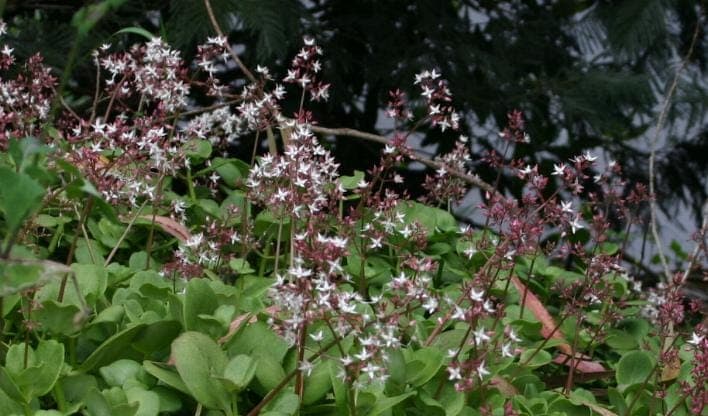
Wikimedia Commons / CC BY-SA 3.0, via Wikimedia Commons
Crassula multicava: complete guide
Crassula multicava
¿Quieres ver Crassula multicava: complete guide en tu jardín?
1 minuto, sin tarjeta de crédito
Overview
Crassula multicava, better known as Cape Province pygmyweed, is a fascinating succulent originating from South Africa. This plant is a subshrub with small, dense foliage and impressive pink flowers. With a maximum height of approximately 30-60 centimeters, the plant forms a compact, beautiful mass.
Unlike many succulents, Crassula multicava enjoys moist soils and grows well in partial shade. This makes it unique and valuable for gardeners who cannot use traditional succulents in their shadier gardens.
Appearance and bloom
The Cape Province pygmyweed has very small foliage. Leaves are opposite, linear to lance-shaped, and approximately 1-2 cm long. They are dark green to brownish-red, which varies depending on light levels.
Blooming is the strength of this plant. In winter (November-December in the South), dense, pink flower clusters appear. These are very abundant and practically cover the entire plant, creating a spectacular appearance. Flowers are small but extremely numerous and pleasantly fragrant.
Ideal location
Place Crassula multicava in a sheltered spot with partial shade to full sun. In very hot climates, partial shade offers benefits. The plant grows well against a south-facing wall, where it captures warmth and receives protection.
Ideal as a front plant in borders, in pots, or as groundcover. The plant contributes greatly to winter flower abundance.
Soil
Unlike many succulents, Crassula multicava grows well in moderately moist soil. Provide well-draining soil with organic material. pH can be neutral to slightly acidic.
Add compost and sharp sand for better drainage. Although the plant prefers moister soil than typical succulents, avoid waterlogging.
Diseño gratis
¿Quieres ver Crassula multicava: complete guide en tu jardín? Crea un diseño gratis ahora.
Watering
Water moderately and regularly. During growing period (spring-summer), keep soil evenly moist but not wet. During dormancy (autumn-winter), restrict water significantly, though complete drying should be avoided.
The plant tolerates short dry spells but flourishes in moderately moist conditions. This distinguishes it from classic succulents.
Pruning
Minimal pruning work needed. After blooming (January), you can remove withered flower clusters. This promotes later flower formation.
In early spring (March), you can carefully shorten excessively long stems to encourage a more compact form.
Maintenance calendar
April-May: Monitor dry periods, water regularly June-August: Standard summer maintenance, watch moisture September-October: Prepare for bloom, water less November-December: Enjoy blooms, water minimally January-February: Remove spent flowers
Winter hardiness
Crassula multicava is frost-sensitive and cannot tolerate frost. In cold climates, grow this plant in pots brought indoors for winter or as an annual. In Mediterranean climates, it may possibly overwinter outdoors in sheltered locations.
Companion plants
Pairs well with:
- Agapanthus spp. (agapanthus)
- Sedum spp. (stonecrop)
- Sempervivum spp. (houseleek)
- Cortaderia selloana (pampas grass)
- Gaura lindheimeri (gaura)
Conclusion
Crassula multicava is a special succulent for those who step away from traditional dry gardens. With its preference for moisture, partial shade, and spectacular winter blooming, it adds much to modern gardens. Try this plant if you seek something different from the usual succulents.
For Dutch version, visit gardenworld.app/nl For French version, visit gardenworld.app/fr
¿Quieres ver Crassula multicava: complete guide en tu jardín? Crea un diseño gratis ahora.
Sube una foto, elige un estilo y obtén un diseño fotorrealista con lista de plantas en menos de un minuto.
Más de 10.000 jardines diseñados
Sin tarjeta de crédito


Plantas similares
Sedum nevadense: complete guide
Sedum nevadense
Discover Sedum nevadense, the stunning alpine stonecrop from the Pyrenees. Expert care tips, growing requirements, and design ideas for rock gardens.
Aizoon stonecrop: complete guide
Phedimus aizoon
Everything about Phedimus aizoon - the frost-tolerant aizoon stonecrop from Siberia with bright yellow flowers. Planting, care and garden use.
Roseroot: complete guide
Rhodiola rosea
Everything about roseroot (Rhodiola rosea): a tough hardy succulent ideal for rock gardens, green roofs, and dry sunny positions.