
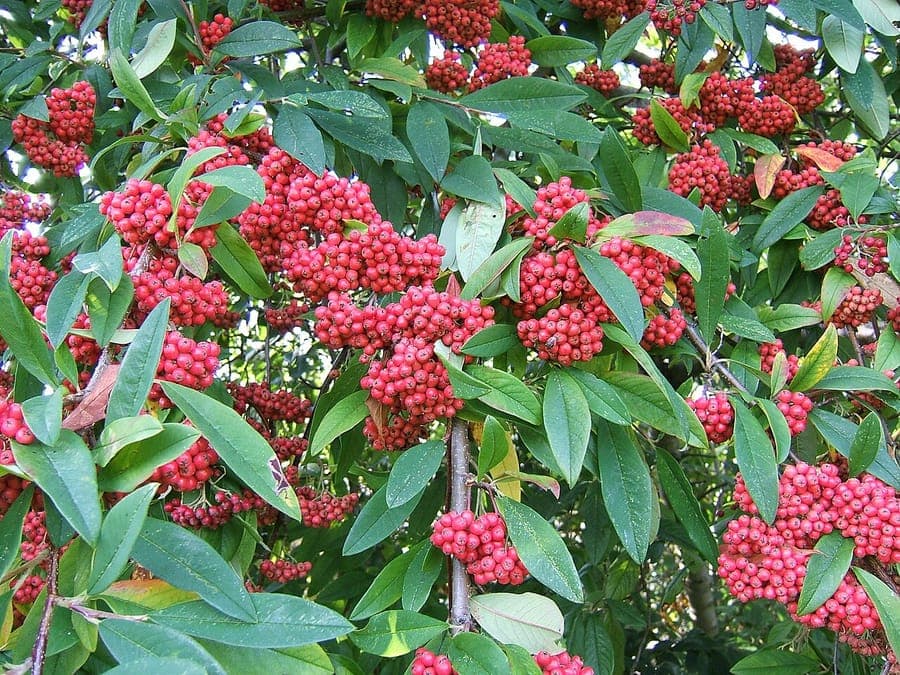
MPF / CC BY-SA 3.0, via Wikimedia Commons
Tree cotoneaster: complete guide
Cotoneaster frigidus
¿Quieres ver Tree cotoneaster: complete guide en tu jardín?
1 minuto, sin tarjeta de crédito
Overview
Cotoneaster frigidus, commonly known as tree cotoneaster or baum-zwergmispel, is a beautiful shrub from the Rosaceae family. This plant naturally occurs from the Himalayas to Tibet. Tree cotoneaster is an ideal plant for temperate climates and makes a valuable addition to gardens. This distinctive shrub offers both decorative foliage and valuable winter berries.
Appearance and Bloom
Tree cotoneaster is a stately, semi-evergreen to deciduous shrub or small tree. Without support it normally reaches 3-4 meters high but can reach up to 5 meters. The plant has oval, dark green leaves that subtly change color through the seasons.
Flowers appear in May-June in small, white clusters that are very abundant. After flowering, numerous red berries form that persist well into winter. These berries are highly decorative and feed birds when other food is scarce. The transformation from flower to berry is an important feature.
Ideal Location
Tree cotoneaster grows best in full sun to partial shade. The plant can also grow in light shade, although berry production is better in full sun. Plant it where it has room to grow in its natural form.
This is an ideal plant for larger borders, bird reserves, and as a specimen plant. It can also be pruned into a shrub or low tree form. In bird gardens it is particularly valuable.
Soil
Tree cotoneaster grows well in well-draining soils. The plant is not very fussy about soil type and can grow in various soils as long as they are not waterlogged. Heavy clay soils can be improved by adding compost or sand.
A neutral to slightly alkaline soil is ideal. The plant also grows in slightly acidic soils.
Diseño gratis
¿Quieres ver Tree cotoneaster: complete guide en tu jardín? Crea un diseño gratis ahora.
Watering
Once established, tree cotoneaster is fairly drought-tolerant. Young plants need regular water until established. Mature plants require little supplementary water in normal years.
During dry periods, watering promotes growth and berry production. Ensure drainage is good and water does not pool.
Pruning
Tree cotoneaster requires minimal pruning. You can remove dead branches in early spring. If you want a compact form, the plant can be pruned in spring. However, avoid drastic pruning that destroys the form.
It is beautiful to retain berries for their bird food and decorative value.
Maintenance Calendar
March-April: Remove dead branches May-June: Flowering period July-October: Berry development and ripening November-February: Winter, berries remain attractive
Winter Hardiness
Cotoneaster frigidus is hardy to approximately -15 degrees Celsius. The plant comes from high Himalayan elevations where severe winters are normal. Protection is usually unnecessary in temperate climates.
Companion Plants
Tree cotoneaster forms beautiful combinations with other hedge shrubs and bird food plants. Plant it together with other berry plants and hawthorn species. Native grasses provide lovely contrast. In bird gardens it is an essential element.
The red berries feed birds in winter when other food is scarce.
Conclusion
Cotoneaster frigidus is an excellent choice for temperate gardens. The decorative berries and winter hardiness make it highly valuable. Request tree cotoneaster from garden centers. Gardenworld.app helps you create the perfect design for this plant. Gardenworld.app makes it easy to incorporate bird food plants in your garden design.
¿Quieres ver Tree cotoneaster: complete guide en tu jardín? Crea un diseño gratis ahora.
Sube una foto, elige un estilo y obtén un diseño fotorrealista con lista de plantas en menos de un minuto.
Más de 10.000 jardines diseñados
Sin tarjeta de crédito


Plantas similares
Siberian crab apple: complete guide
Malus x robusta
Complete guide to the Siberian crab apple (Malus x robusta): location, soil, pruning, winter hardiness and the best companion plants for your garden.
Chinese flowering crabapple (Malus x spectabilis): complete guide
Malus x spectabilis
Meet the Chinese flowering crabapple (Malus x spectabilis): a classic spring bloomer with carmine buds and pink blossom.
Potentilla crassinervia: complete guide
Potentilla crassinervia
Potentilla crassinervia, the Corsican cinquefoil, grows wild on Corsica and Sardinia's peaks. Discover how to grow this hardy alpine rock garden gem.