
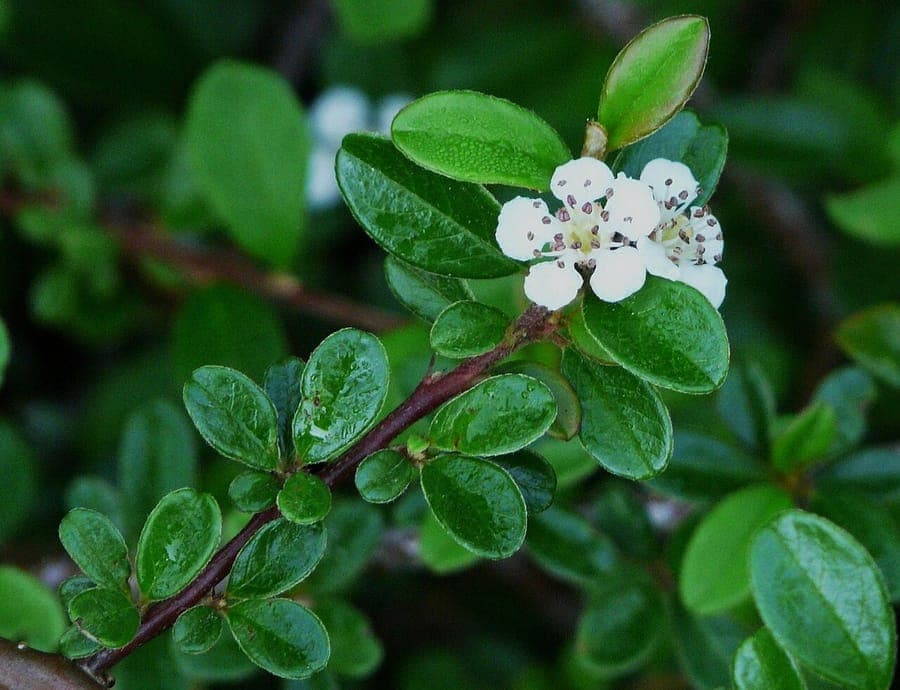
Père Igor / CC BY-SA 3.0, via Wikimedia Commons
Bearberry cotoneaster: complete guide
Cotoneaster dammeri
¿Quieres ver Bearberry cotoneaster: complete guide en tu jardín?
1 minuto, sin tarjeta de crédito
Overview
Cotoneaster dammeri, commonly known as bearberry cotoneaster, is a dependable ground-hugging shrub that thrives in both cottage gardens and modern landscapes. Native to central China, this low-growing plant spreads slowly but steadily, forming a dense mat that's excellent for stabilising slopes or softening hard edges around paths and walls. Reaching just 15–30 cm in height but spreading up to 1.5 m wide, it's one of the most reliable evergreen ground covers for temperate climates.
On gardenworld.app, you can design a planting scheme that highlights its spreading habit and seasonal colour changes.
Appearance & bloom cycle
The foliage is small, oval, and glossy dark green on top with a paler underside. In late spring, usually around May, clusters of tiny white to pale pink flowers appear, each about 1 cm across. These aren't flashy, but they're rich in nectar and highly attractive to bees and hoverflies.
By autumn, the flowers give way to an abundance of bright red berries that persist well into winter. These berries are a lifeline for birds like thrushes and blackbirds, especially during colder months when food is scarce. While the berries are toxic to humans, they're perfectly safe for wildlife. The contrast between the deep green leaves and vibrant fruit makes this plant a standout in fall and early winter.
Ideal location
Bearberry cotoneaster performs best in full sun to partial shade. In full sun, growth is denser and berry production is significantly higher. In heavy shade, the plant becomes leggy and flowers and fruit less reliably. Ideal spots include rock gardens, banks, or beneath open-canopy shrubs where other ground covers might struggle.
It's particularly useful in urban gardens with poor soil or limited space. If you're planning a low-maintenance front garden or slope, this plant fits the bill perfectly. Use gardenworld.app to visualise how Cotoneaster dammeri integrates into your garden layout, especially when paired with other low shrubs or perennials.
Soil requirements
This cotoneaster isn't picky about soil type. It grows well in sandy, loamy, or clay soils as long as drainage is good. Avoid waterlogged spots-prolonged wet feet can lead to root rot. A soil pH between 5.5 and 7.5 is ideal, but it tolerates slightly alkaline conditions.
When planting, mix in some well-rotted compost to improve soil structure, especially in compacted clay. Once established, the plant doesn't need regular feeding. A top dressing of compost in early spring is usually enough to keep it healthy.
Diseño gratis
¿Quieres ver Bearberry cotoneaster: complete guide en tu jardín? Crea un diseño gratis ahora.
Watering
During the first growing season, water weekly if rainfall is below 2.5 cm. Check the top 5 cm of soil-if it's dry, it's time to water. After the first year, Cotoneaster dammeri is quite drought-tolerant and only needs supplemental watering during extended dry spells, particularly on sandy soils.
Water at the base to avoid wetting the foliage, which can encourage fungal diseases like powdery mildew. A drip hose or watering can aimed at the root zone works best.
Pruning
Pruning isn't necessary for health, but you can trim the plant lightly in late spring or early summer to maintain shape or control spread. Avoid cutting into old wood, as it may not regrow. Never prune in autumn or winter, as you'll remove the berries that provide winter interest and food for birds.
If the plant becomes too dense, thin out a few older stems at ground level to improve air circulation and reduce disease risk.
Maintenance calendar
- January: Check for frost damage or rodent nibbling.
- February: No action needed unless removing dead stems.
- March: Clear away dead leaves and lightly fork the soil around the base.
- April: Apply a thin layer of compost for a nutrient boost.
- May: Flowers appear; ensure consistent moisture.
- June: Light trim if needed to keep within bounds.
- July: Monitor for drought stress, especially in young plants.
- August: Minimal care; watch for pests like aphids.
- September: Berries begin to ripen; enjoy the autumn colour.
- October: Leave berries intact for wildlife.
- November: No pruning; let plant prepare for winter.
- December: Protect from heavy snow load if grown on banks.
Winter hardiness
Cotoneaster dammeri is hardy in USDA zones 5 to 8, tolerating temperatures down to -20°C. In milder regions, it remains evergreen, while in colder areas, leaves may bronze or drop partially. It quickly recovers in spring with new growth.
Companion plants
Pair it with plants like lavender, sedum, or thyme for a drought-tolerant, sunny bank. Under taller shrubs like Ceanothus or escallonia, it creates a lush understorey. It also works well with spring bulbs such as crocus or muscari-plant them together so the bulbs emerge through the cotoneaster's foliage.
For a more natural look, combine with native perennials like heuchera or carex. Avoid aggressive spreaders that might smother it.
Closing
Cotoneaster dammeri earns its place in any garden with its year-round appeal, resilience, and support for wildlife. It's low-maintenance, adapts to various soils, and adds structure and seasonal interest. Whether you're covering a tricky slope or adding winter colour, this plant delivers.
You'll find it at garden centres across the UK and North America. For design inspiration, head to gardenworld.app and plan a layout that makes the most of its ground-covering strengths.
¿Quieres ver Bearberry cotoneaster: complete guide en tu jardín? Crea un diseño gratis ahora.
Sube una foto, elige un estilo y obtén un diseño fotorrealista con lista de plantas en menos de un minuto.
Más de 10.000 jardines diseñados
Sin tarjeta de crédito


Plantas similares
Siberian crab apple: complete guide
Malus x robusta
Complete guide to the Siberian crab apple (Malus x robusta): location, soil, pruning, winter hardiness and the best companion plants for your garden.
Chinese flowering crabapple (Malus x spectabilis): complete guide
Malus x spectabilis
Meet the Chinese flowering crabapple (Malus x spectabilis): a classic spring bloomer with carmine buds and pink blossom.
Potentilla crassinervia: complete guide
Potentilla crassinervia
Potentilla crassinervia, the Corsican cinquefoil, grows wild on Corsica and Sardinia's peaks. Discover how to grow this hardy alpine rock garden gem.