
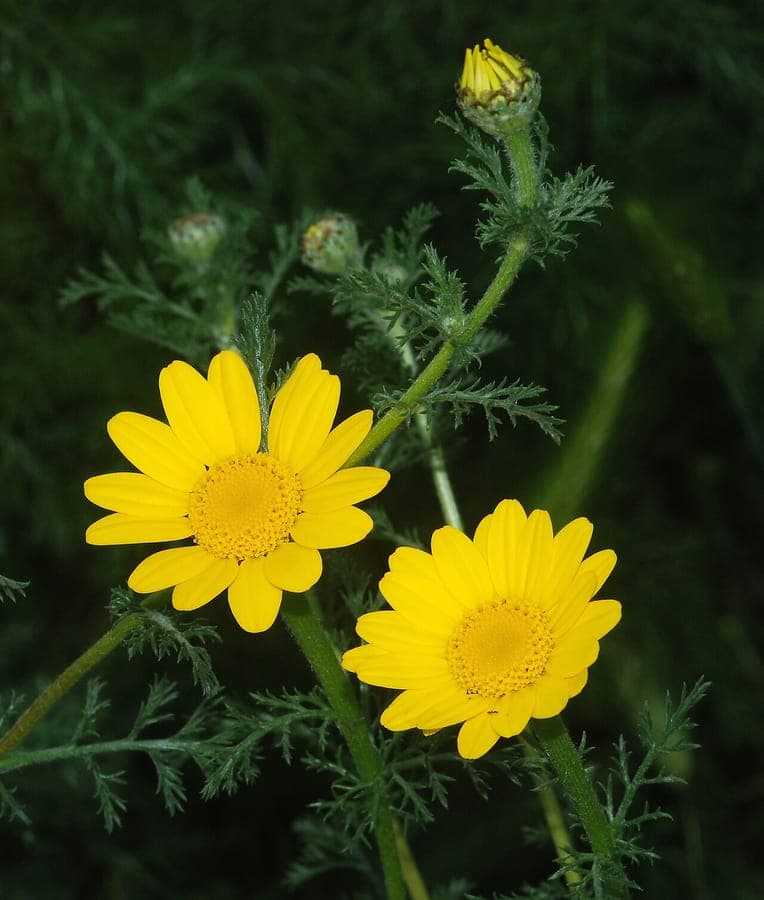
Alvesgaspar / CC BY-SA 3.0, via Wikimedia Commons
Cota tinctoria: complete guide
Cota tinctoria
¿Quieres ver Cota tinctoria: complete guide en tu jardín?
1 minuto, sin tarjeta de crédito
Overview
Cota tinctoria, better known as Golden chamomile or Dyer's chamomile, is a frost-hardy annual to biennial plant from the Asteraceae family (Daisy family). With its stunning golden-yellow flowers, this is a classic in European gardens. Historically, the plant was used to dye wool and textiles in yellow and orange shades. Today it's especially beloved by beekeepers and natural gardeners.
Appearance and Bloom
Cota tinctoria grows to 60-75 cm tall with comparable width. The plant has finely feathered foliage with a light aromatic scent. The flowers are pure yellow flower heads of approximately 2-3 cm diameter, with a yellow center. Blooming runs from May to October and is produced abundantly. Each flower head contains perhaps a hundred individual florets, attractive to bees, bumblebees, and other insects.
Ideal Location
Cota tinctoria requires full sun - at least 6 hours of direct sun daily is essential for maximum flowering. In half-shade it grows but becomes leggy and flowers much less. The plant grows well in slightly exposed locations but tolerates some shading from trees or buildings.
Soil Composition
This plant is not fussy about soil. It grows well in poor to moderately fertile soils. Heavy clay soils can be improved with sand or compost. Light, sandy soils are ideal. The plant also tolerates slightly acidic to neutral pH (6.5-7.0). Well-draining soil is essential; stagnation leads to root disease.
Diseño gratis
¿Quieres ver Cota tinctoria: complete guide en tu jardín? Crea un diseño gratis ahora.
Watering
Cota tinctoria is highly drought-tolerant once established. After the first growing season it rarely needs additional water. Young plants should receive regular water until they establish. Mature plants can withstand long dry periods without significant damage.
Pruning and Maintenance
Regularly removing spent flowers (deadheading) promotes continuous blooming and prevents self-seeding. The plant can be lightly cut back in May to June to stimulate more compact growth. In fall you can remove the plant entirely; it will self-seed if you leave some seed heads.
Maintenance Calendar
May-June: light cutting back for compact form. June-October: regular deadheading for continued blooming. October-November: leave seeds for self-propagation, or remove entirely if unwanted.
Winter Hardiness
Cota tinctoria is extremely frost-hardy and can withstand winters to -15 degrees Celsius. Mature plants are usually botanically frost-hardy. However, the plant is often grown as an annual due to its luxurious blooming in the first year.
Companion Plants
Cota tinctoria combines stunningly with purple sage, blue cornflower, red poppy, and white snowdrop. In wildflower gardens it's a must-have.
Conclusion
Cota tinctoria is for anyone seeking an easy, reliable plant with enormous flower production. Buy your seeds or plants from a garden center. Place them in full sun and enjoy months of yellow splendor. They naturally attract bees and butterflies, so you contribute to insect-friendly gardening. Visit gardenworld.app for tips on creating a full-sun wildflower border.
¿Quieres ver Cota tinctoria: complete guide en tu jardín? Crea un diseño gratis ahora.
Sube una foto, elige un estilo y obtén un diseño fotorrealista con lista de plantas en menos de un minuto.
Más de 10.000 jardines diseñados
Sin tarjeta de crédito


Plantas similares
Calendula stellata: complete guide
Calendula stellata
Complete guide to Calendula stellata, the star-flowered marigold from Sicily: location, soil, watering and companion planting tips.
Korean chrysanthemum: complete guide
Chrysanthemum x rubellum
Chrysanthemum x rubellum is a hardy autumn perennial with single pink to copper flowers from August to November. Care and combinations.
Helianthus divaricatus: complete guide
Helianthus divaricatus
Helianthus divaricatus is a North American woodland sunflower with yellow summer blooms, ideal for naturalistic borders and shady edges.